Thank Shaw for his English reading recording, which you could listen to by clicking the audio above.
感谢肖为本文提供英文朗读录音,点击上方音频可听。
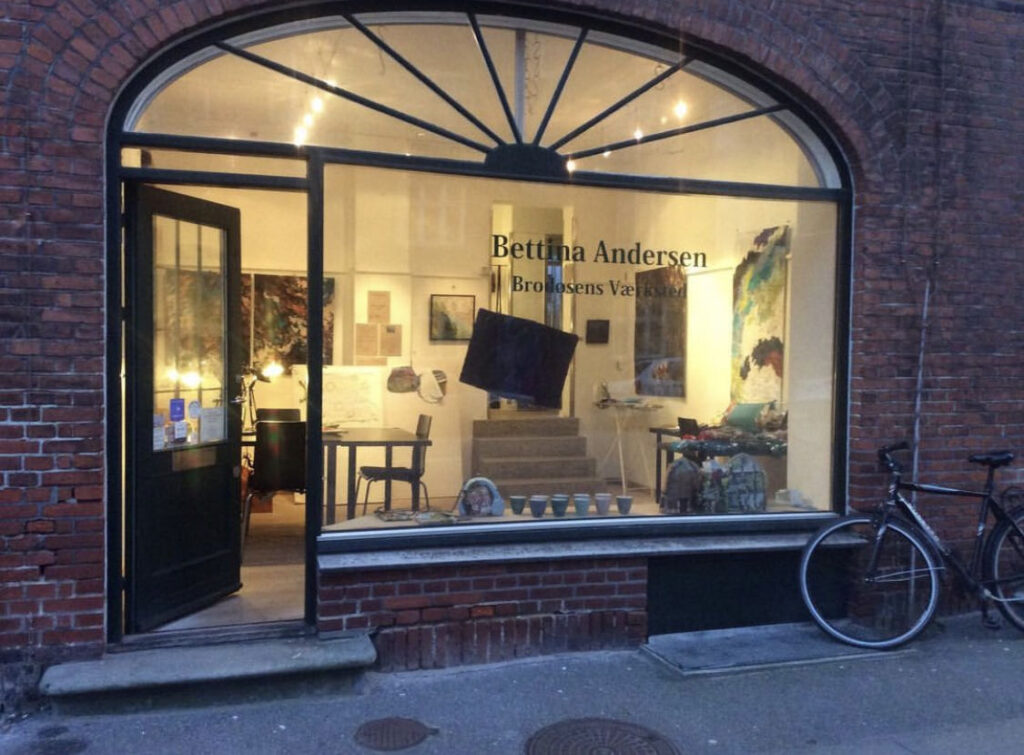
Bettina工作室门外(图片来自Bettina的Instagram)
Two weeks before I left Denmark, in late December 2023, I went to Bettina’s studio in the area of Island Brygge. Like most of the shops on the streets of Copenhagen, it had large windows through which I could see the well-designed furnishings and beautiful small objects indoors. Opening the door, Bettina nearly forgot who I was. I reminded her with a brief self-introduction.
2023年12月底,我离开丹麦的前两周,去了Bettina在Island Brygge(哥本哈根的一块水岸区域)的工作室。像哥本哈根街上的大多数店铺一样,我能透过巨大的窗户,看到里面设计精良的装修和漂亮的小物件。开门进去后,Bettina几乎忘了我是谁,于是我简单介绍了自己帮她回忆。
I joined an event of the THREAD project before May ended in 2023, with another visiting scholar Claudia. There, I met Bettina Andersen, a Danish textile artist specialising in embroidery.
2023年5月快结束时,我和另一名访问学者Claudia一起去了一次THREAD项目的活动。在那次活动中,我认识了擅长刺绣的丹麦纺织艺术家Bettina Andersen。
THREAD is a project hosted by Centre for Textile Research (CTR) at the University of Copenhagen, aiming to support women refugees in Denmark through textile-related activities. Every Tuesday afternoon, people involved in this project would gather together at a community school, to work with textiles and interact with each other.
THREAD是哥本哈根大学纺织品研究中心(CTR)牵头的一个项目,旨在通过与纺织品相关的活动帮助在丹麦的女性难民。每周二下午,参与项目的人员都会聚集在一个社区学校,做一些纺织手工艺并彼此交流。
Most of the refugees in this project learned Danish but not English. I could only use textiles rather than language to communicate with them. Anyway, I felt that they would not be interested in what a PhD student was working on. After I introduced myself, nobody seemed to care except for Bettina, who talked with me in English and asked about my research.
参与这个项目的大部分难民都学了丹麦语而不是英语,我只能用纺织品而不是语言来和他们交流。不过,我感觉她们也不会对一个博士生的工作感兴趣,介绍完自己后,只有Bettina用英文跟我交流且问我研究相关的东西。
Bettina has connections at CTR. Talking by the knitting and sewing table, I knew that she is a textile artist and owns a studio near my campus. She has also a webshop and several books about embroidery, all in Danish that were difficult for me to read. Seeing my interest in what she had done, she invited me to visit her studio when available.
Bettina认识一些CTR的人,我们一边玩着针织和缝纫一边聊天,然后我得知她是一个纺织艺术家,还有一个工作室,就在我校区附近。除了工作室,她还有一个网店和好几本关于刺绣的书,都是用丹麦语写的。见我对她做的事情感兴趣,Bettina邀请我有空时可以去她工作室看看。
I always remembered I should visit Bettina’s studio when I was in Copenhagen, not only because of my promise but also for its close distance, only around 1 km, from my office. However, I didn’t go there until I was about to leave, with my propensity to visit far-away places rather than close ones. I met Bettina in May but finally visited her shop in late December.
在哥本哈根的时候,我一直记得我要去参观Bettina的工作室,不只是因为我答应了她,还因为这个工作室离我办公室实在很近,只有大概1公里远。而由于我总优先选择远的地方参观,直到快离开丹麦了才去。我在5月认识了Bettina,却在12月底才去拜访她的店铺。
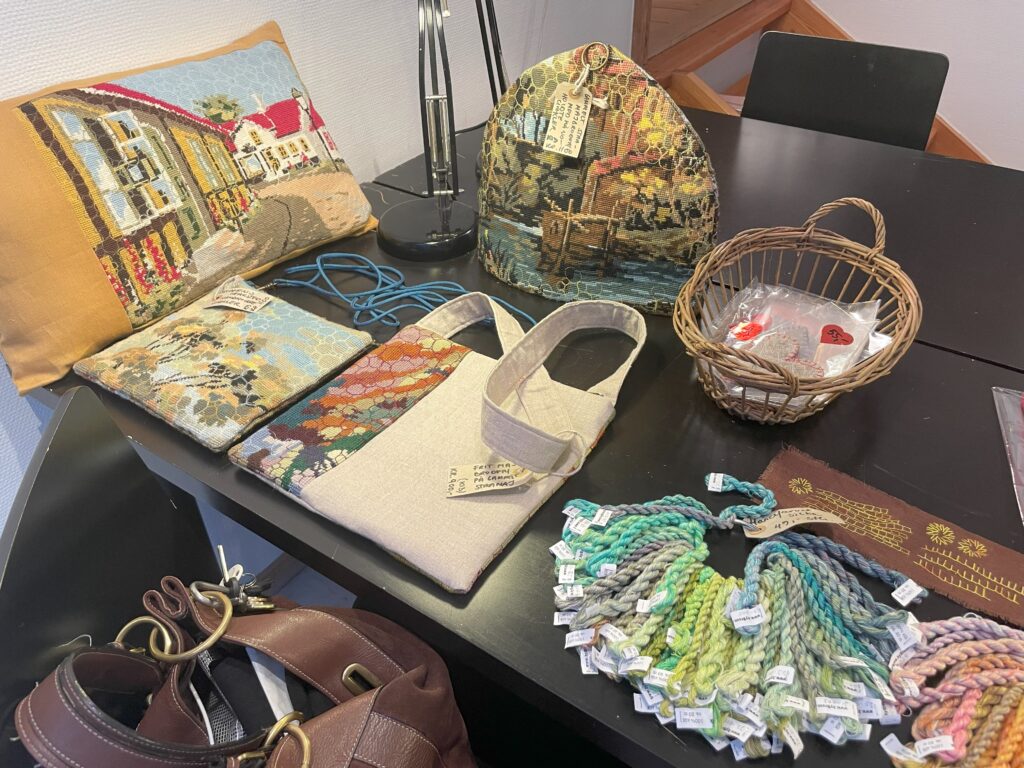
Bettina工作室里的刺绣产品
In the studio were many embroidery products designed and crafted by Bettina. Not only did she embroider textiles, but she also designed products of DIY material packages. Most of the products were home textiles with embroidery of the same style on it. I took a closer look at the embroideries and found them assembled with the cross-stitch which was very popular throughout China in around 2005. Bettina explained that they are not cross-stitch but a traditional embroidery said to be popular in the early 20th century in Denmark, whose name is stramaj.
店铺里有许多Bettina亲自设计、制作的刺绣产品。她不仅做刺绣作品,还设计DIY手工材料包。店里大部分产品都是带有同风格刺绣的家纺用品,我凑近看了看上面的刺绣,发现它们和国内2005年左右风靡的十字绣很像。Bettina解释说那不是十字绣,而是一种丹麦传统刺绣,名字叫“五月稻草(stramaj)”,据说于20世纪初在丹麦很是流行。
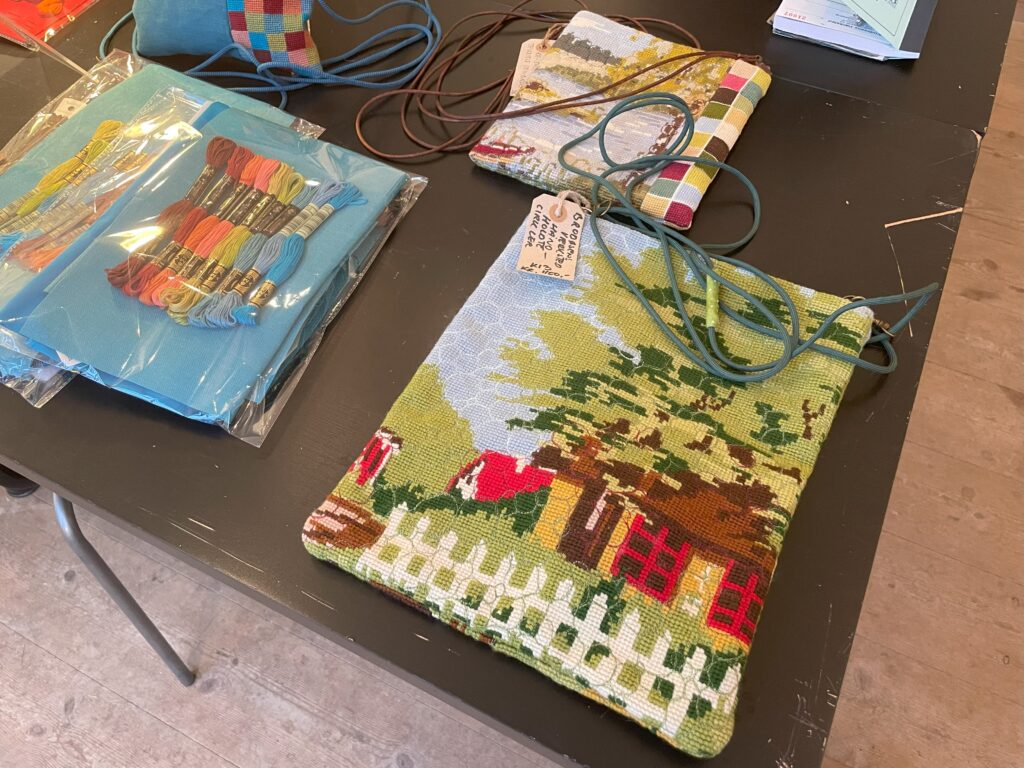
Bettina工作室里的刺绣包包和DIY手工材料包
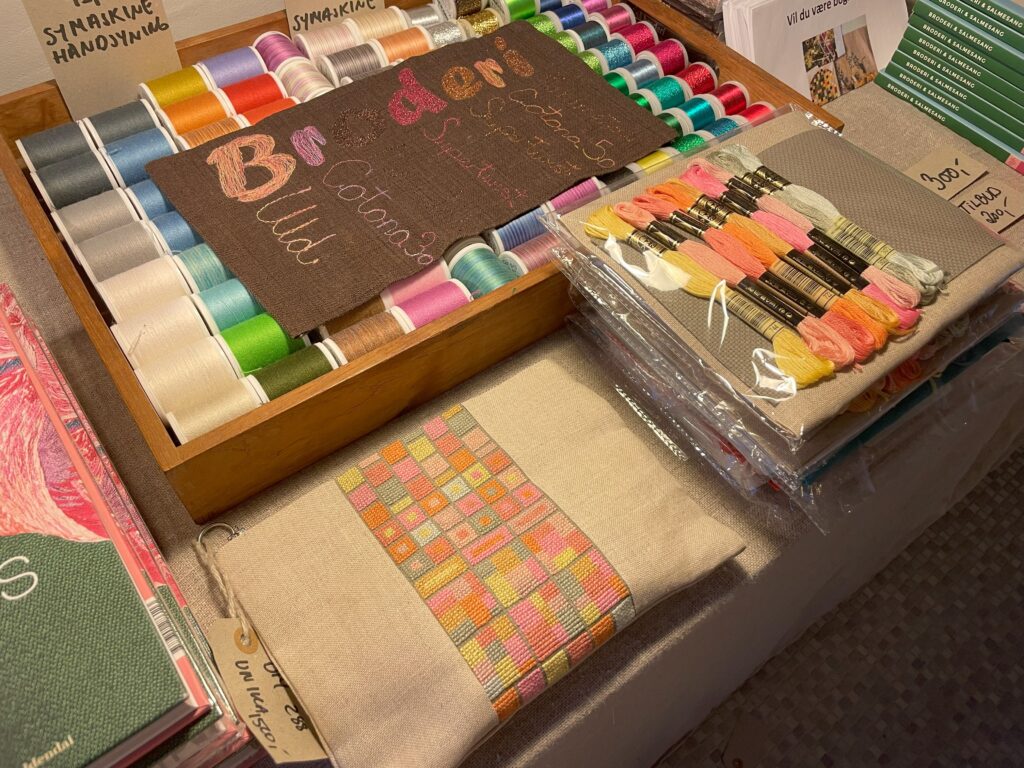
Bettina设计的DIY手工材料包
Bettina collected old stramaj embroideries from anywhere she could access. As an embroidery artist in Denmark, she would also receive old textiles from the local elder residents sometimes. She recognized the value of old textiles, cut them, repaired them, and applied them to home textile products, such as bags, cushions, wallets, and suitcases.
Bettina到处收集“五月稻草”刺绣,身为一个丹麦刺绣艺术家,她偶尔也会收到来自当地老人的古旧纺织品馈赠。她从古旧纺织品中选出她认为有价值的,对它们进行裁剪、修补,并应用于家纺产品设计,比如箱包、靠垫、坐垫、钱包等。
When repairing old stramaj embroideries or embroidering new designs, Bettina also utilised new materials, polyvinyl alcohol (PVA) film. PVA film is transparent with a property that can be washed out in hot water. Bettina sewed its film on the old embroidery, redesigned and embroidered the missing patterns on it with a reference to the remaining threads. After completing the embroidery, she washed the textile in hot water. Then, the PVA film was dissolved and the dirt on the embroidery was cleaned too.
在修复古旧刺绣或缝制新的设计时,Bettina也利用了像聚乙烯醇(PVA)薄膜这样的新材料。PVA薄膜呈半透明状,可溶于热水,Bettina将其缝在古旧刺绣上,根据原件残部图案,重新设计并绣出缺失的部分。刺绣完成后,她用热水对其进行清洗,这样PVA薄膜会被溶解,绣品也被清洁干净了。
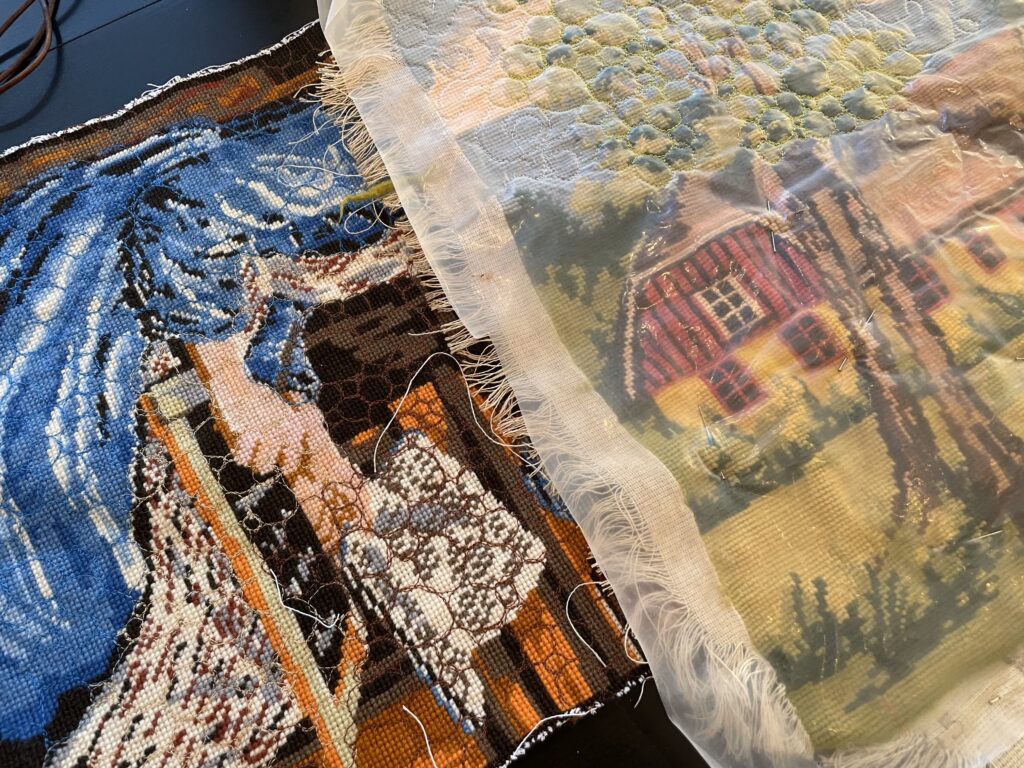
利用PVA薄膜修复并重新设计古旧“五月稻草”刺绣
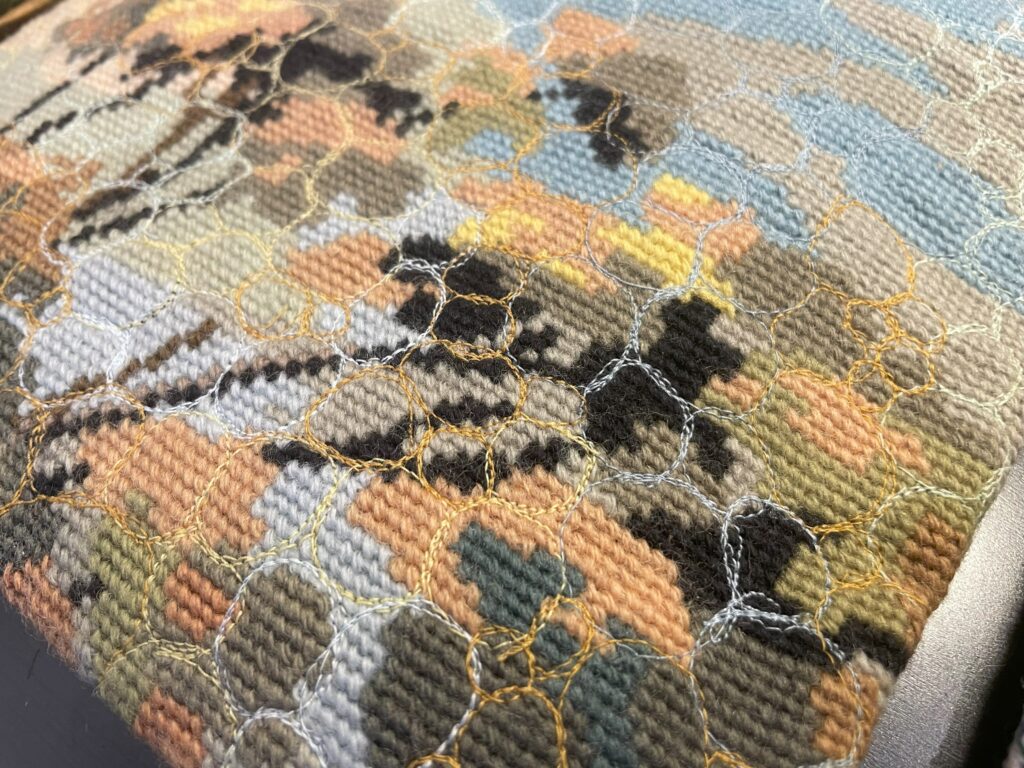
Bettina做的一件“五月稻草”刺绣细节
Memorising the name stramaj and searching it on the internet afterwards, I finally understood that stramaj is the name of the base fabric used for specific types of embroideries. This base fabric is featured with a lattice-like structure and a strongly stiffened feel, making them easy to embroider on. Traditional stramaj in Denmark is usually made with cotton or linen, strongly starched to stiffen it.
记下stramaj(五月稻草)这个名字并在事后上网查询,我终于明白它是一种用于特定类型刺绣的基布,或基底面料。这种基底面料有格状结构,质感较硬,比较方便刺绣。丹麦传统的“五月稻草”通常为棉质或麻质,通过强上浆实现较硬的质地。
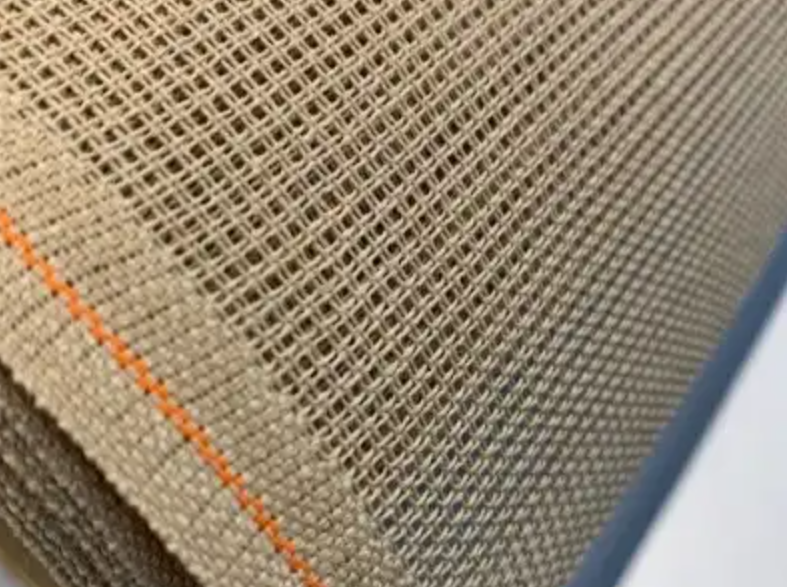
一种”五月稻草“面料
Embroidery on the base fabric stramaj is called stramaj embroidery. Cross-stitch is one of the embroidering techniques that can be applied to stramaj. In other words, cross-stitch is a kind of stramaj embroidery, while stramaj embroidery contains many other techniques.
绣在这种基布上的刺绣就是“五月稻草(stramaj)”刺绣。十字绣是可以应用于这种基布的其中一种技法,或者说,十字绣就是一种“五月稻草”刺绣,而“五月稻草“刺绣还可以有许多其它的技法。