感谢肖为本文提供英文朗读录音,点击上方音频可听(这次也有巴赫背景乐!)。Thank Shaw for his English reading recording. You can listen to it by clicking the audio above (with Bach BGM again!).
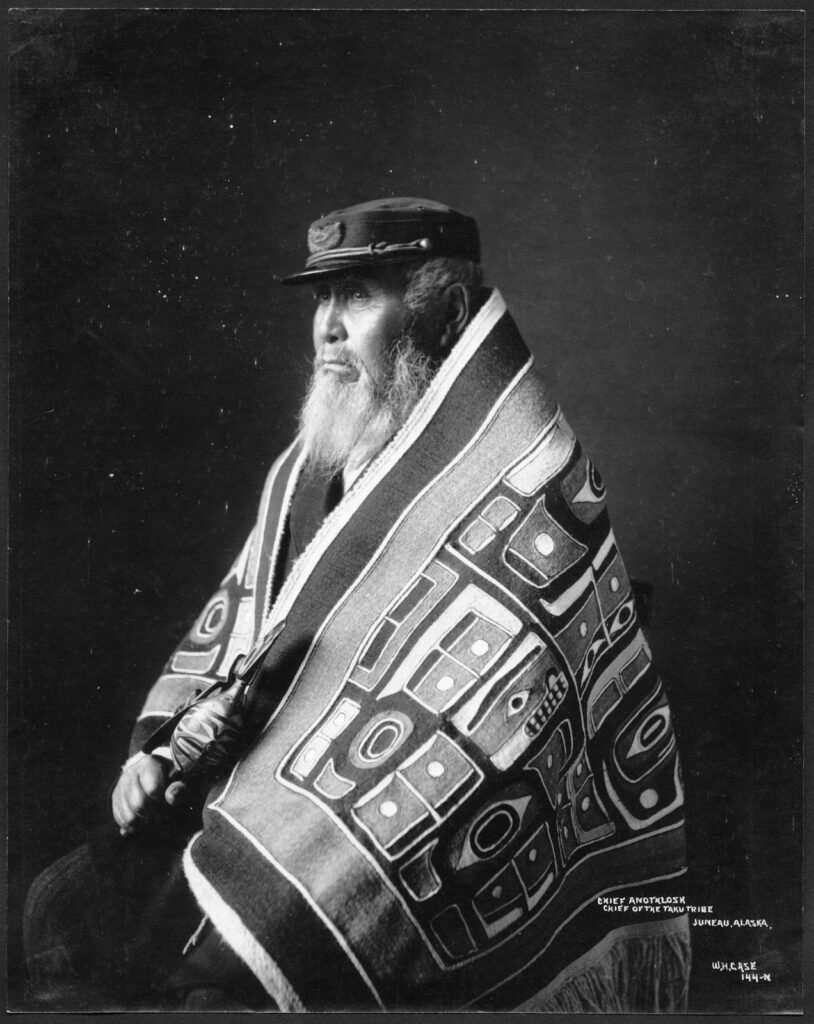
A man wearing a Chilkat blanket(Photo from the internet)
6月下雨的时候,想起了一种织物,视觉冲击感极强。我第一次见它时,听了差不多20分钟几乎没听懂的讲解,如今也完全不记得了,但我还是能想起它的样子。
On a rainy day in June, a type of fabric came to my mind. It has a striking appearance that I can still picture today, though I barely retained the words of the 20-minute explanation when I first saw it.
那是2023年6月的一次活动,研究所组了个小团一起参观丹麦国家博物馆。我不知道这活动是和哪个项目相关,当时同办公室的Magali说可以帮我登记一起去,我就去了。
It was an event in June 2023, at which CTR members visited the National Museum of Denmark together. I didn’t know which project it was for. When Magali said she could add my name to the participant list, I decided to join them.
这次活动有三个主题讲解,对应参观博物馆里三种和纺织服装相关的收藏。其中一种,也就是齐尔卡特编织毯。
There were three lectures corresponding to three textile-related collections in the museum, one of which is about a Chilkat blanket, or Chilkat robe.
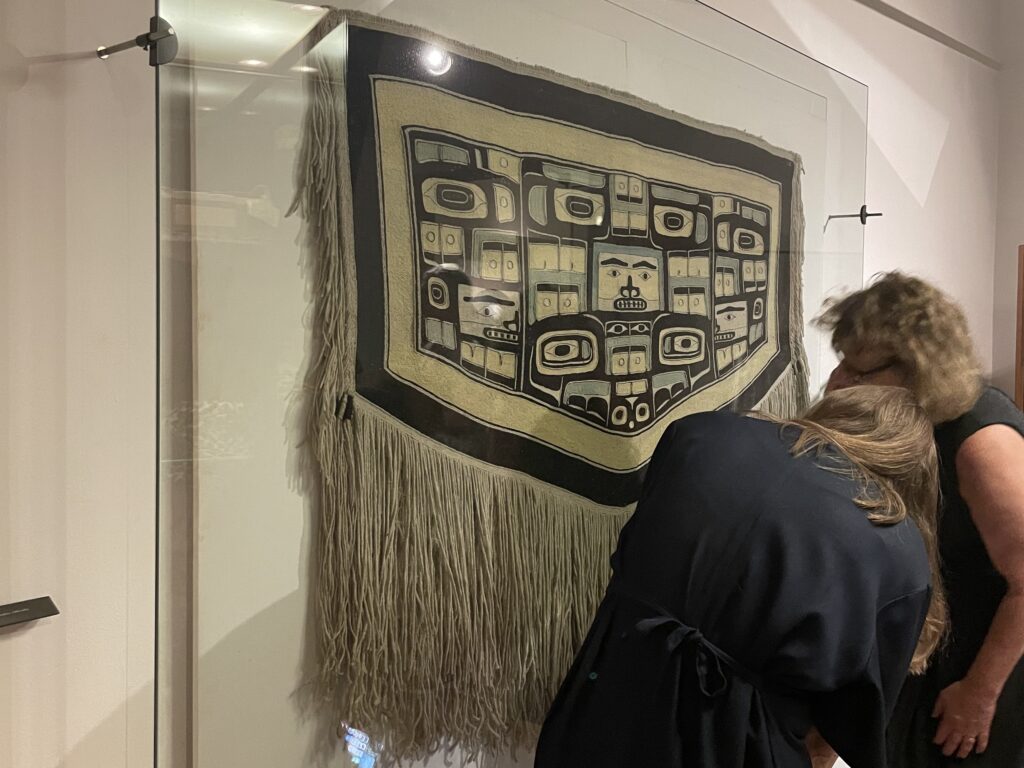
Chilkat robe displayed at the National Museum of Denmark
这是我第一次见到这种织物,我对它毫无认知,只觉得上面的图案倒是和我国良渚玉琮上的纹样有几分相似。讲解者是专门研究过这织物的学者,他讲英语有点快,我很难跟上。茫然听完后,我跟身边的同事说这织物上的图案让我想到中国的一种玉器,对方就也茫然了起来。
It was my first time seeing a Chilkat blanket. I knew nothing about it, but the pattern on it reminded me of a motif on the jade Cong of Liangzhu Culture in my home country—they look similar. The lecturer, a researcher of the blanket, spoke in rapid English that I struggled to follow. After listening in a daze, I told a colleague next to me that the pattern on the blanket reminds me of a kind of jade in China. She seemed just as bewildered as I was.
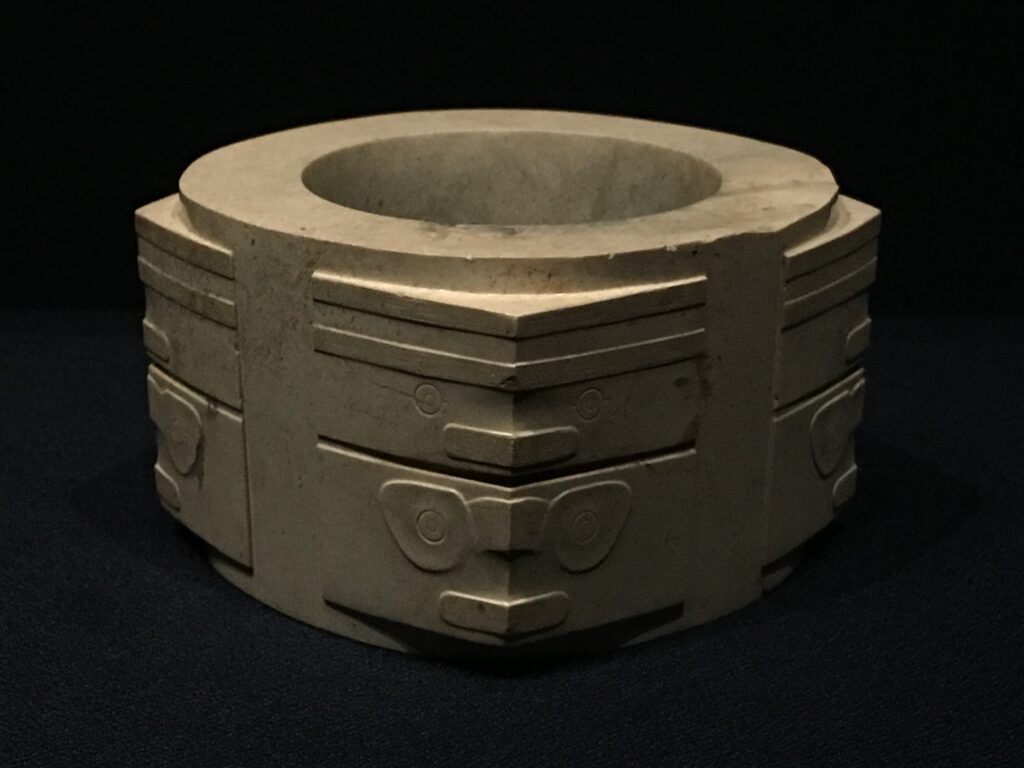
Jade Cong of Liangzhu Culture collected at Shanghai Museum
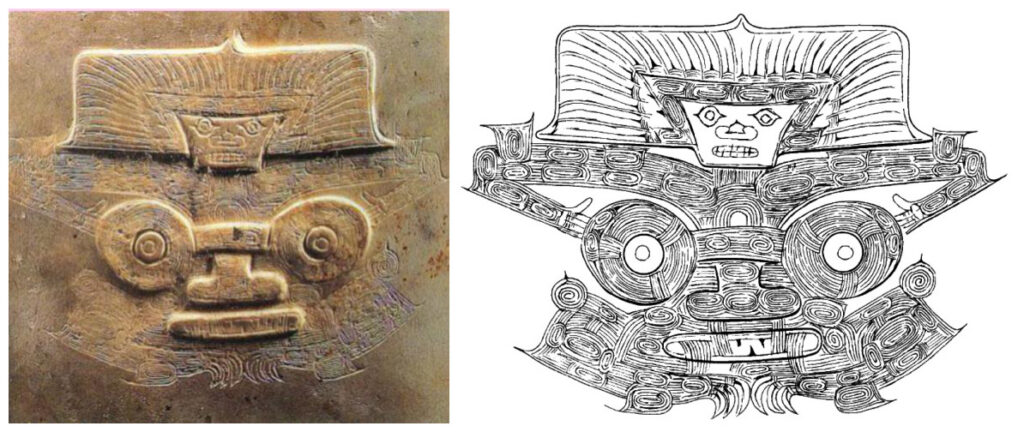
Motif on a significant Cong of Liangzhu Culture(image from the internet)
一个月后,我去瑞典北部体验极昼,顺便参观了斯德哥尔摩的几个博物馆。原本是想去远东博物馆看看是否有《纺织考古》这本书里提到的有纺织品痕迹的青铜器,不仅没看到,还发现这博物馆现在在地图上的名字叫东亚博物馆,而在博物馆内写作东方博物馆(瑞典语:Östasiatiska Museet)。这让我在找博物馆时花了点时间。
One month later, I travelled to Northern Sweden to experience the 24-hour daylight. On the way, I visited museums in Stockholm. I had planned to look for textile traces on some bronze artefacts in the Far East Museum, as mentioned in a Chinese book, Textile Archaeology. However, I didn’t find them. Nor did I find the museum quickly, since its Chinese name varied confusingly, meaning Far East Museum in the book, East Asia Museum on the map, and Orient Museum in the building (Swedish: Östasiatiska Museet; English: Museum of Far Eastern Antiquities).
此东方博物馆的门票又和另外三个博物馆绑定,同属一个组织,于是我又去参观了民族学博物馆(瑞典语:etnografiska museet)。在这里,我一眼认出了齐尔卡特毯。比起丹麦国家博物馆只有一张毯子和一个铭牌,这里给出了稍微详细点的介绍,还有编织者编织时的照片。
The ticket for this museum includes admission to another three museums that belong to the same organisation. Then, I went to the Museum of Ethnography. Here, I soon recognised a Chilkat blanket. Unlike just a blanket and a label at the National Museum of Denmark, this museum provides more details, including a photo documenting the weaving process.
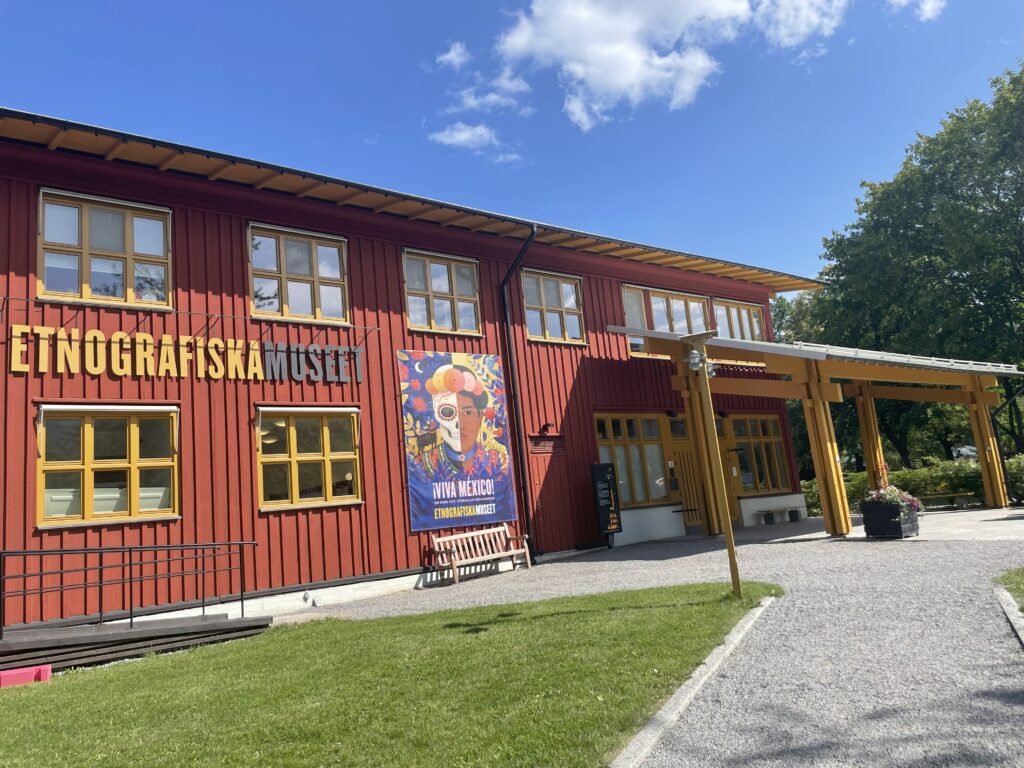
Museum of Ethnography, Sweden
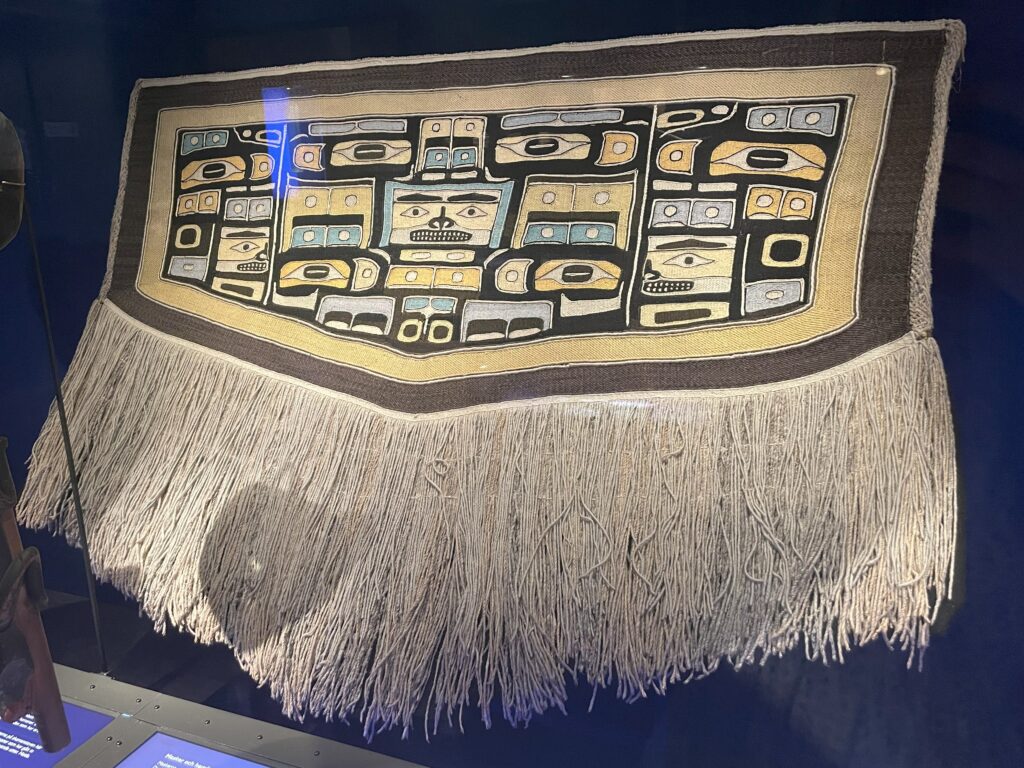
Chilkat robe displayed at the Museum of Ethnography, Sweden
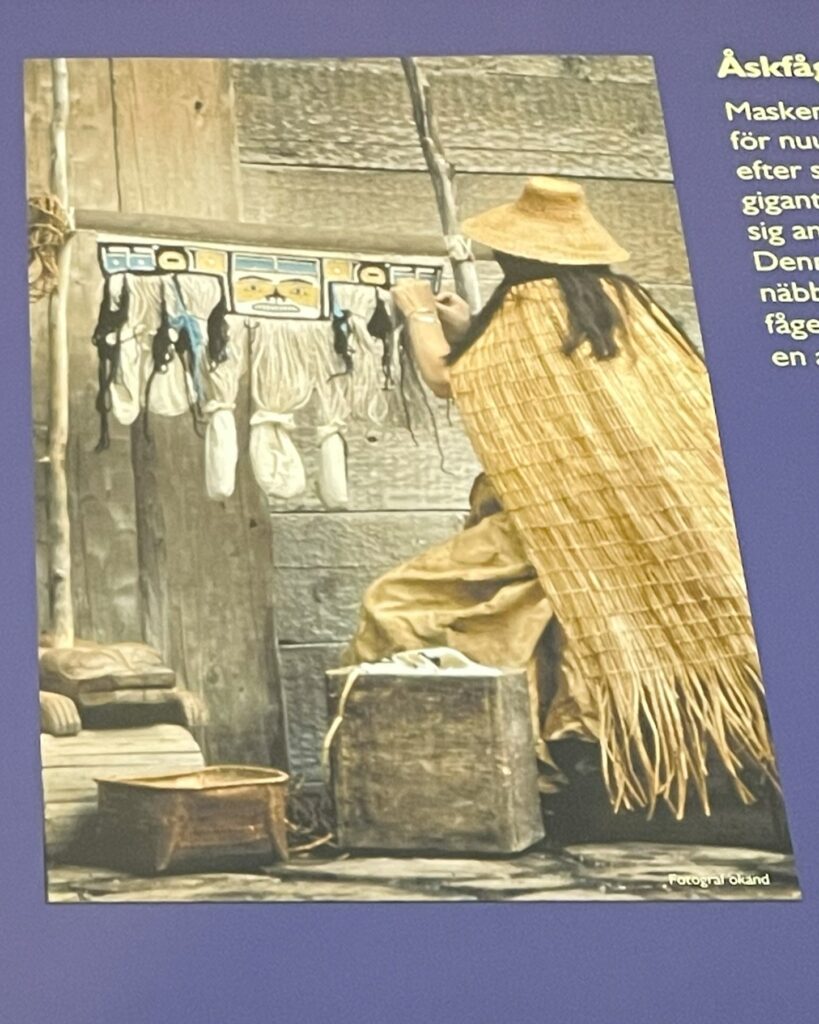
Photo of weaving a Chilkat blanket
与其它文明中带有复杂图案或技艺的物件相似,齐尔卡特毯是只有地位高的人才会穿用的织物,现在也是财富的象征。女人们编织齐尔卡特毯,上面的图案和男人们画在木头上的图案一样。特别擅长这些图案的人还被认为具有超能力。
Similar to objects containing complicated patterns or techniques in other cultures or civilisations, Chilkat blanket is only worn by high-status people. It has been a prized possession of anyone wealthy enough to own one. The blankets were woven by women, in the same patterns that the men painted on wood. And those who were particularly skilful were considered to have a supernatural power.
“齐尔卡特”是北美洲西北部阿拉斯加湾沿岸制作这种毯子最多的一支部族的名字,19世纪抵达阿拉斯加的欧洲人用这个名字称呼它们。瑞典民族学博物馆里的这件齐尔卡特毯是与美国丹佛艺术博物馆交换所得,它的经线由雪松树树皮做成,纬线是染成黑色、蓝色、绿色、黄色的羊毛线,下边留有流苏,方便穿在身上跳舞时产生摆动效果。
Chilkat is the name of a tribe that produces most of these blankets, located on the coast of Northwestern America. Europeans who arrived in Alaska in the 19th century named the distinct blankets after it. The one collected in the Museum of Ethnography in Sweden is an exchange with the Denver Art Museum in the USA. Its warps are made with cedar bark, and wefts are wool threads dyed in black, blue, green, and yellow. It has fringes at the end, for dancing with swings.
难怪我对它感到陌生,彼时的我对美洲织物几乎一无所知。不过在那之后又过了半年,我意外去美国参加了一个会议,也意外见到了晓萌的朋友Jim。会议结束后的某天,Jim带我去参观了波士顿周边位于塞勒姆的迪美博物馆。翻阅图册时,我再一次被齐尔卡特毯吸睛。(关于在美国的织物见闻,可点击阅读美洲织物)
No wonder I felt so alien when I first saw it. Back then, I knew next to nothing about textiles of the Americas. But surprisingly, half a year later, I went to the USA for a conference and then met a friend of Jody. After the conference, Jody’s friend Jim took me to the Peabody Essex Museum in Salem, just near Boston. My eyes were drawn to a Chilkat blanket once again while browsing a book showcasing the museum collections. (Click Americas to read stories about textiles in the USA)
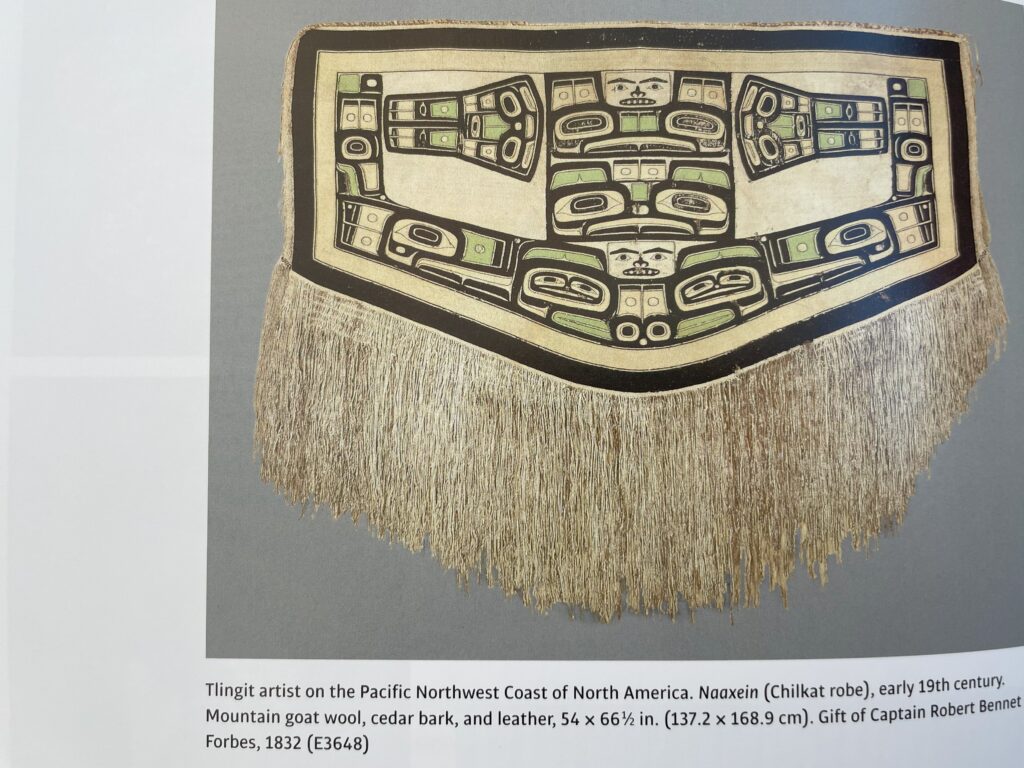
A chilkat robe in a guidebook of Peabody Essex Museum, USA
想来,在美洲的土地上,和齐尔卡特毯相遇的概率应该更高吧。毕竟,它的故事就是从这里开始的。
Come to think of it, the Americas would be a better place to encounter Chilkat blankets. After all, this is where their stories began.
Pingback: hello world