感谢肖为本文提供英文朗读录音,点击上方音频可听。Thank Shaw for his English reading recording. You can listen to it by clicking the audio above.
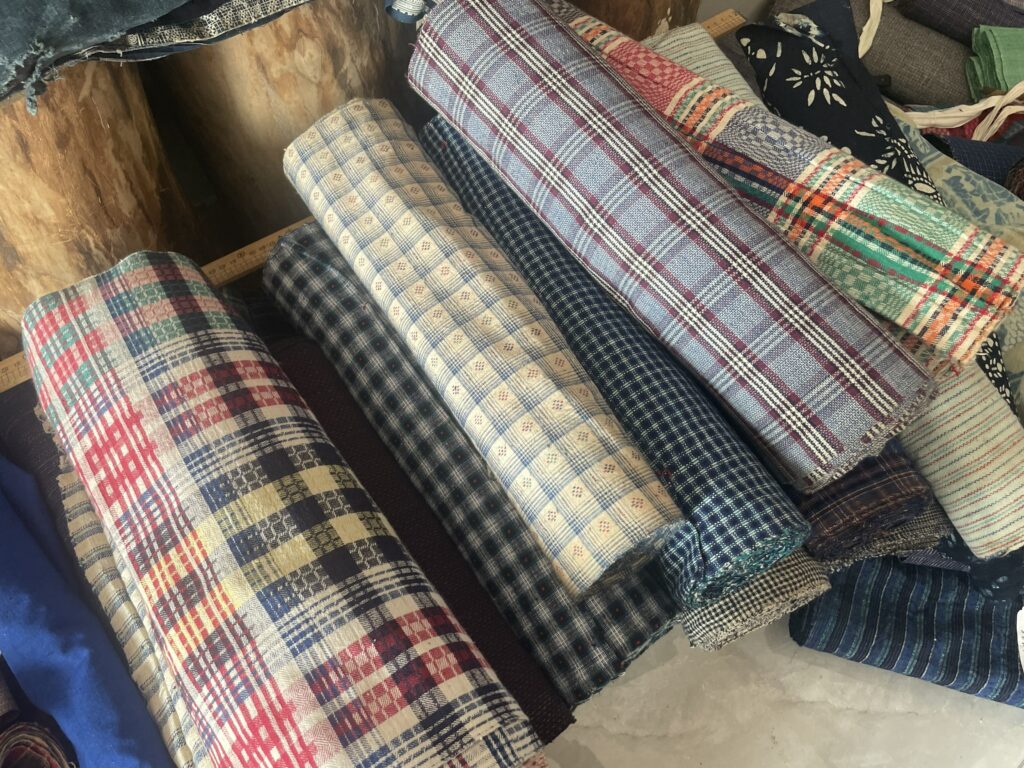
Chongming local cloth
2024年10月,我从上图还完书步行至武康路历史街区,路过一家文创店时,被窗边的一系列织物产品所吸引。
On a day in Oct 2024, I was walking to the Wukang Road Historical District after returning books at the Shanghai Library. My eyes were accidentally caught by a series of textile products in the window of a creative shop.
那是一些方形的小布袋,可以装入香料做成香囊,也可以作为小收纳袋或挂件。它们的面料看起来很有特色,即使远远地看去,也能感觉到布面的纹理颇有质感,于是我进店细看了一番。
They are small pouches that could be filled with spices to make sachets or used as little bags or pendants. Their fabrics looked quite special; even from a distance, I could sense the texture on the surface. So, I went in for a closer look.
这是一个文创设计品牌摆的临时摊位,摊主非常热情地向我介绍了它们的产品,但我的注意力都在这些产品所用的面料上。
It was a temporary stall set up by a design brand. The vendor enthusiastically introduced their products to me, but my attention was completely captured by the fabric they used.
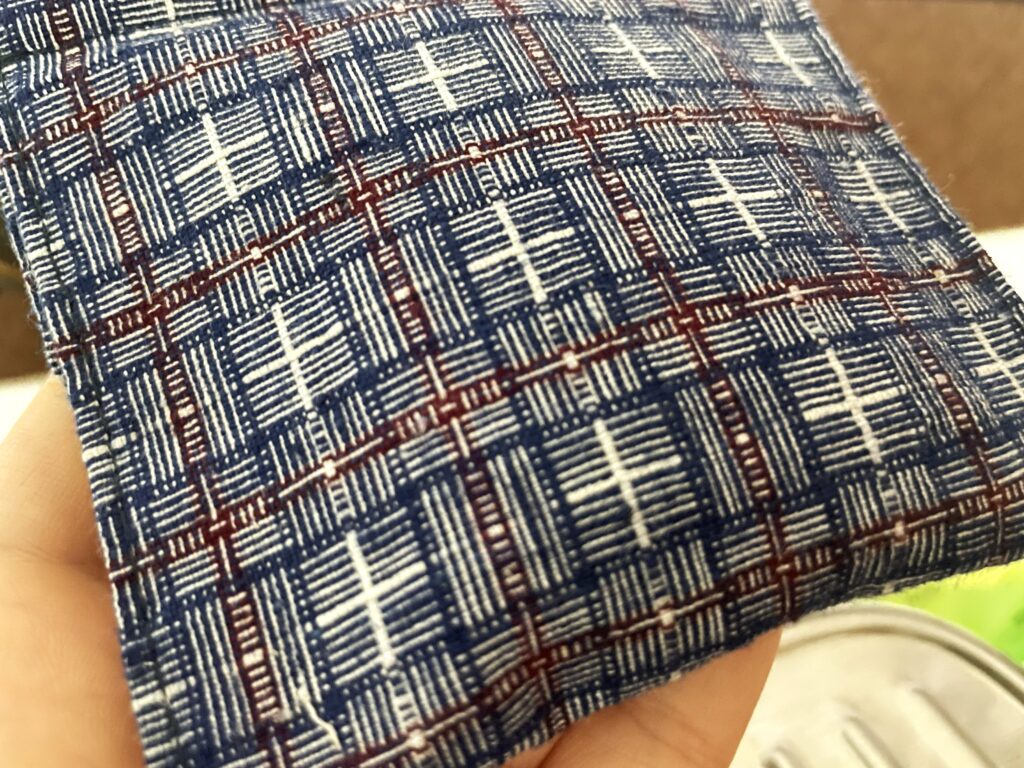
One of the small pouches I bought
交流得知,这些面料来自崇明岛,文创团队只知道它们是“崇明古布”,有一些常见的纹样。摊主告诉我,直到上世纪,崇明岛几乎家家户户都织这种布,还留给女儿做嫁妆。他们从直播平台收购了一些这样的布,将它们做成了我那天看到的文创产品。
Talking to the vendor, I got to know that these fabrics come from Chongming Island in Shanghai. She only knew it as ‘Chongming ancient cloth’ with some typical patterns. Until the last century, nearly every household on Chongming Island wove this kind of cloth, and most of the households kept the cloths as their daughters’ dowries. The creative designers sourced some of these fabrics through live-streaming platforms and turned them into the products I saw.
后来,我有时候能在网上看到这种面料,它们历史悠久,因外观质朴接地气,也被称为“土布”。在江浙一带,有时候我也能在不同的博物馆看到类似的布。
Since then, I’ve occasionally come across this kind of cloth online. They stand long in history, and are called ‘local cloth’ thanks to their simple, earthy appearance. In the Yangtze River Delta region, which Chongming Island is part of, I sometimes can see similar fabrics in different museums.
崇明岛有一位女士叫何永娣,她一直在收集土布并对其制作技艺进行研究和传承。在我去年参观香港六厂纺织艺术文化馆之前,还看到他们邀请何老师去做了与崇明土布有关的工作坊。
A woman on Chongming Island, He Yongdi, has been collecting local cloth and researching and preserving its making techniques. Before I visited CHAT in Hong Kong last year, I saw they had invited her to conduct a workshop about the Chongming cloth there.
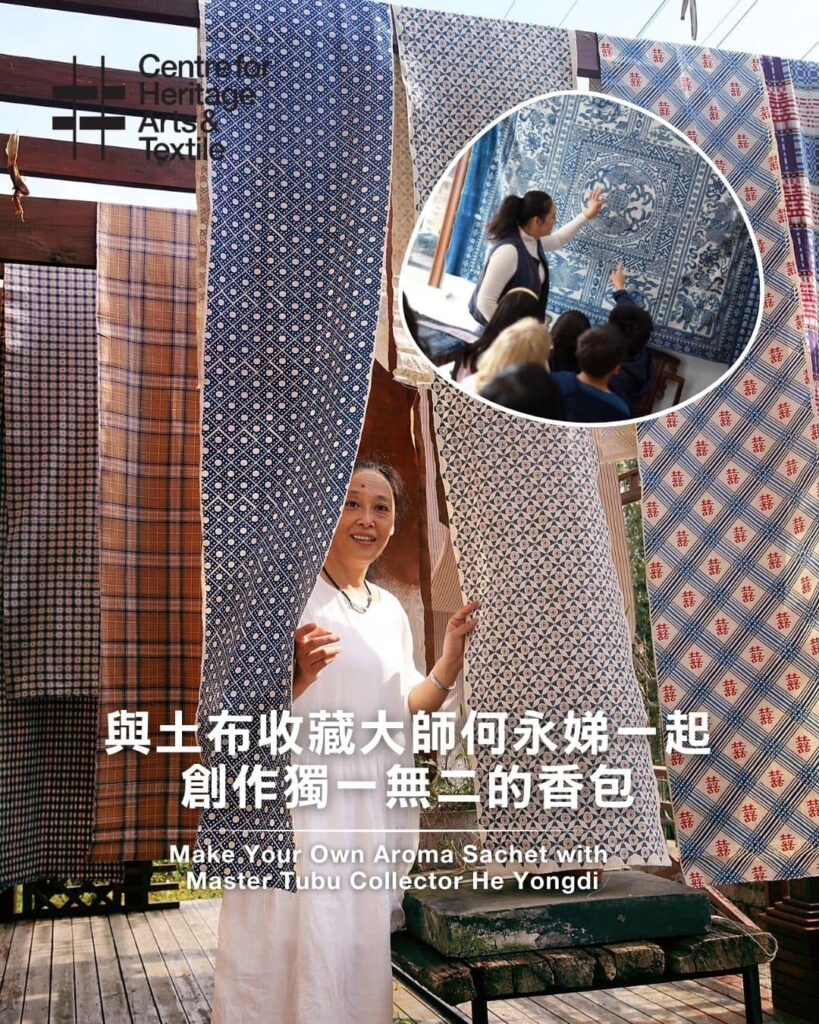
A workshop poster in 2025 from CHAT
2025年11月,我即将搬离上海,终于去崇明岛看了看“崇明土布”。因为没有提前做攻略,我差点跑了个空,但也比较幸运,最终还是看到了一仓库的布。
In Nov 2025, I was about to move out of Shanghai and finally managed to see the Chongming local cloth on Chongming Island. Not having done any research beforehand, I nearly ended up on a wasted trip. But by a stroke of luck, I was fortunate enough to have seen a storeroom full of cloth.
很多年前,我随同学包车去过崇明岛郊游,主要是在湿地公园游览,看海天一色的自然风光。到了要自己找路线去崇明岛时,才发现即使同在上海,要从市区往返这个岛屿也没那么方便。最终我打顺风车去了地图上的“永娣土布传承馆”,到达目的地时,连司机都怀疑我是不是找错了地方。
Years ago, I had visited Chongming Island on a private bus trip with classmates, mainly touring the wetland park and enjoying the vast seascape. When planning my own trip there, I found that even though it’s part of Shanghai, getting to and from Chongming Island from the city isn’t that convenient. Eventually, I took a rideshare to the “Yongdi Cloth Museum” shown on the map. Upon arrival, even the driver doubted whether I had set the right place.
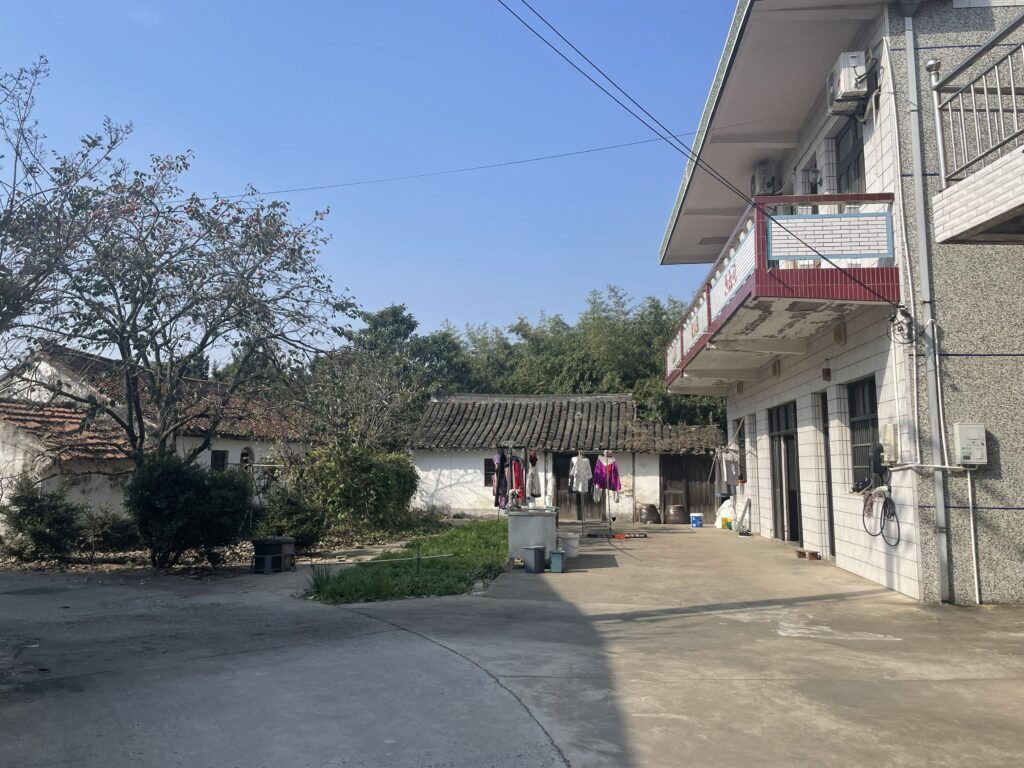
What I saw after arriving at Chongming Island
下车后是一片荒郊,周围有几户农家,但我一转身看到了一个木织机样的东西,就知道自己没有找错。按照路牌的指示,我找到了“永娣土布传承馆”,但守门的大狗凶得让我根本进不了院子。幸好隔壁有个阿姨在外洗衣,我向她求助,她很和蔼地带我找到了主人。
Getting out of the car, I found myself in a rural area with a few houses around. But as I turned, I spotted something that looked like a wooden loom. Then, I knew I was in the right place. Following the sign, I found the ‘Yongdi Cloth Museum’, but a fiercely barking dog stopped me from entering the yard. Luckily, an elderly woman was doing laundry in the neighbourhood. I asked for her help, and she kindly led me to the right person.
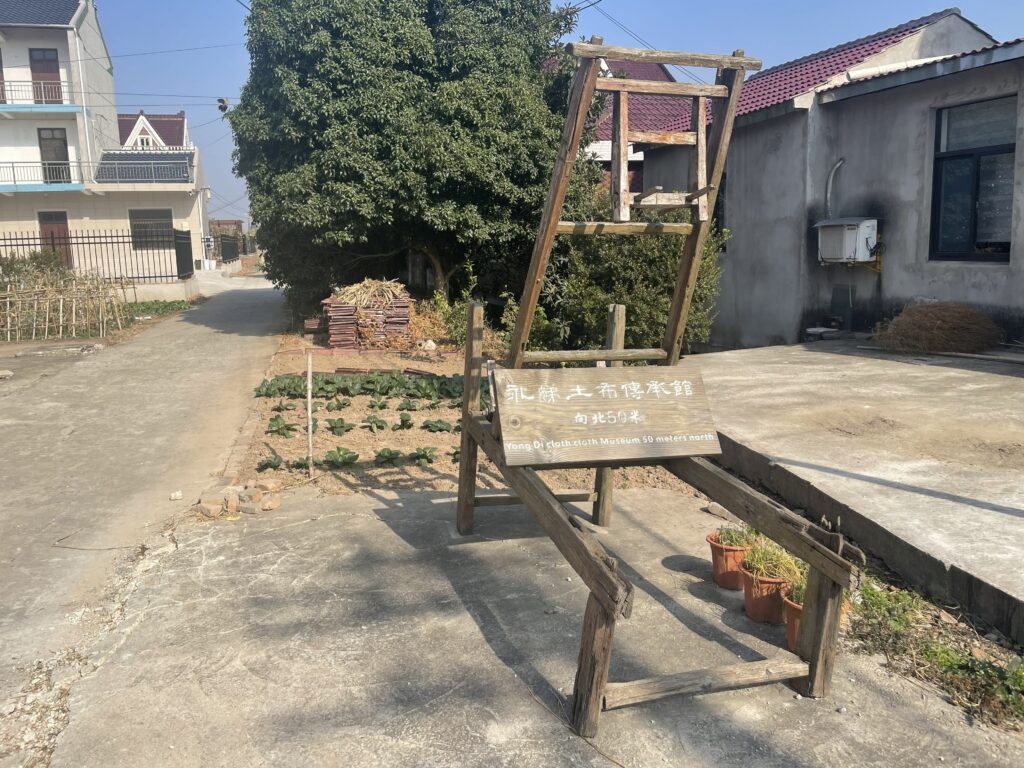
The loom I saw as I turned
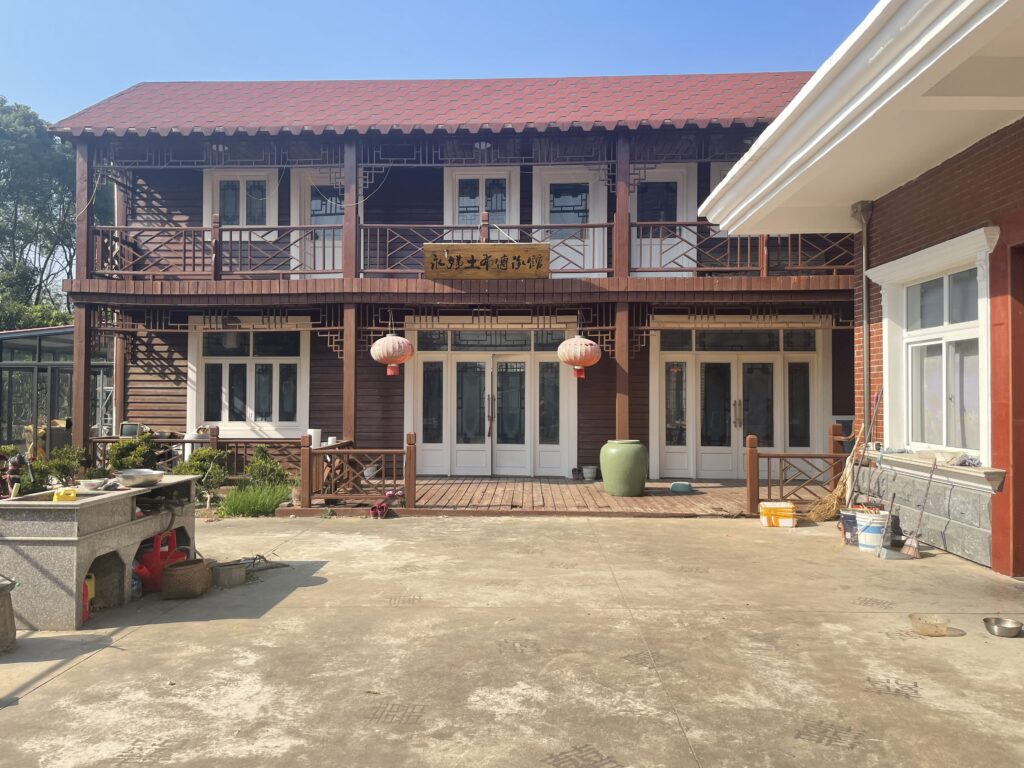
Yongdi Cloth Museum
那是何永娣老师的婆婆,她普通话不是特别清楚,但全程友善,跟我讲这是她儿媳妇开的传承馆,是要预约的。我没有预约,事先也没有找到预约信息,所以成了不速之客。
It was He Yongdi’s mother-in-law. She was very friendly throughout, though her Mandarin was not very clear. She told me that her daughter-in-law runs this museum, and it requires appointments to visit. I hadn’t made one, nor had I found any relevant information beforehand, so I turned out to be an unexpected guest.
何老师不在家,但她的婆婆给了我她的电话。我现场联系了一下,得知这里不对外开放,即使要预约,也只开放给学校或专门的研究人员。
Ms He was not at home, but her mother-in-law gave me a number. I called on the spot and learned that the place doesn’t usually open to the public; even with an appointment, it’s only for schools or specialised researchers.
我不研究崇明土布,但也算是个专业人士,挂电话前我稍微介绍了下自己和来崇明岛的目的。或许是因为我的专业,也或许是因为我专门跑一趟也不容易,本以为今天看不到布的我,过了一会儿又接到何老师的电话,说我可以去向化镇联系她的老公黄先生,那边有一些布可以让我看。
I don’t study Chongming cloth specifically, but I think I could be a professional in the field. Before hanging up, I briefly introduced myself and my purpose for coming to this land. Maybe because of my background, or maybe because I made quite an effort to be here, I received another call from Ms He just when I thought I wouldn’t get to see any fabrics that day. She said, I could contact her husband, Mr Huang, who was in Xianghua Town, where there were some fabrics I could have a look.
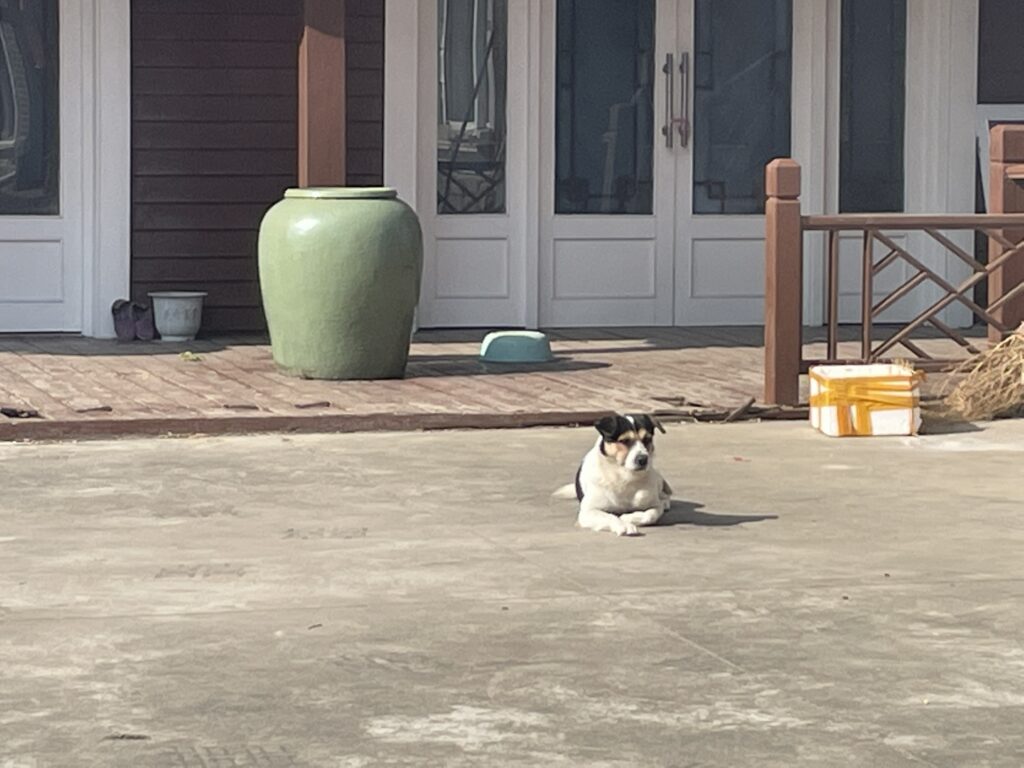
Yongdi’s dog
我走到了向化镇,还没拨通联系人的号码,就凭门口摆放的一些布卷找到了地方。在上海待久了突然看到这样的画面,还颇有些岁月静好的清新感觉。
I then walked to Xianghua Town, recognised the place before even dialling the contact number, by some cloth rolls stacked outside the door. Having lived in Shanghai for a long time, it felt refreshing suddenly seeing a scene like this.
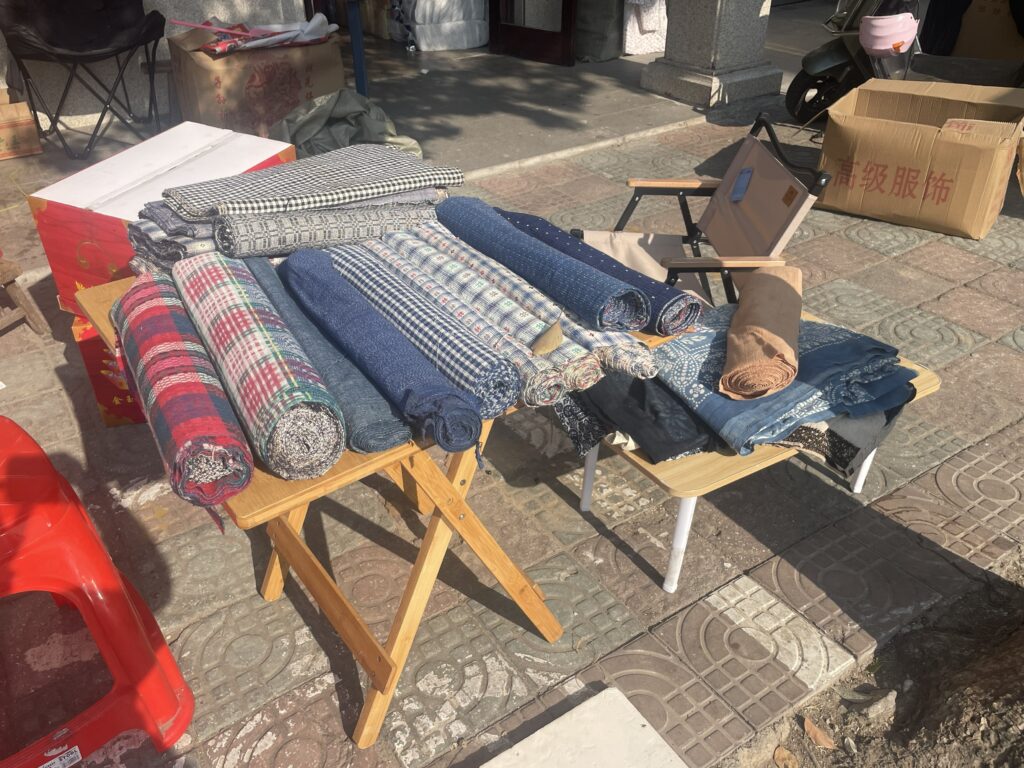
Cloth rolls by the road at Xianghua Town
何老师给我的地址是一个杂货店,我拨通电话,黄先生出来接待了我。他带我到了隔壁的一栋房子,打开大门,我看到了布山布海。这对织物爱好者来说,仿佛是打开了一个世界。
The address Ms He gave me is a grocery store. I dialled the number, Mr Huang came out to greet me and took me to a building next door. When he opened the door, I saw a full room of fabric rolls. As a textile enthusiast, I felt like opening a door to a whole new world.
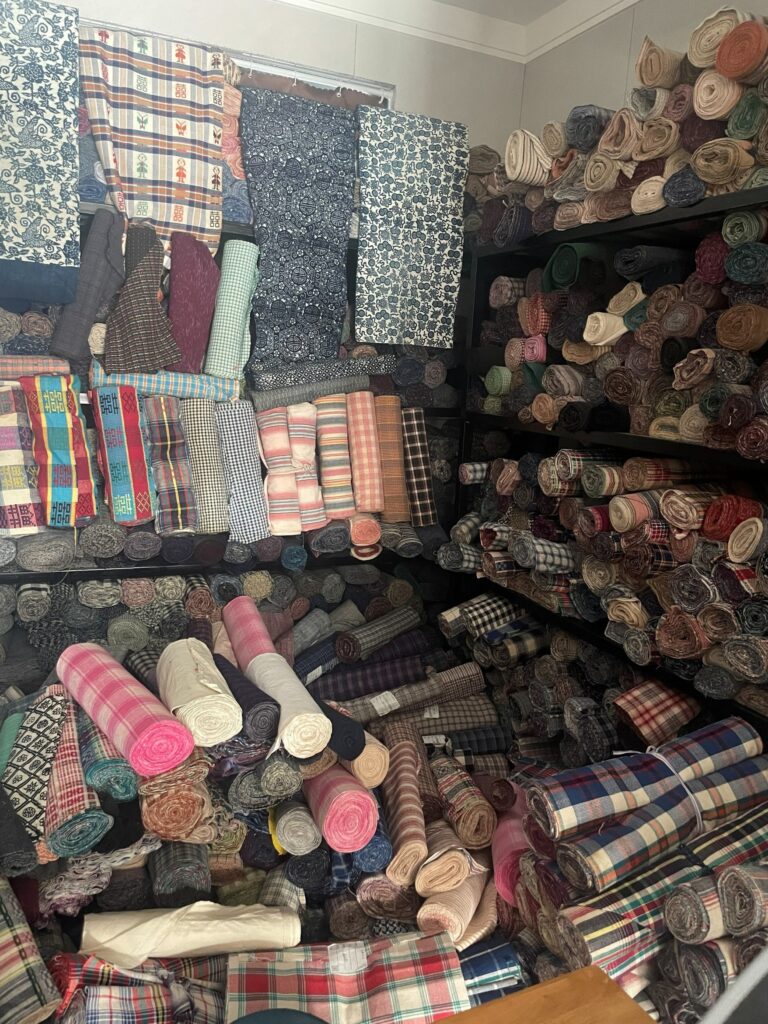
Local cloth in the storeroom at Yongdi’s
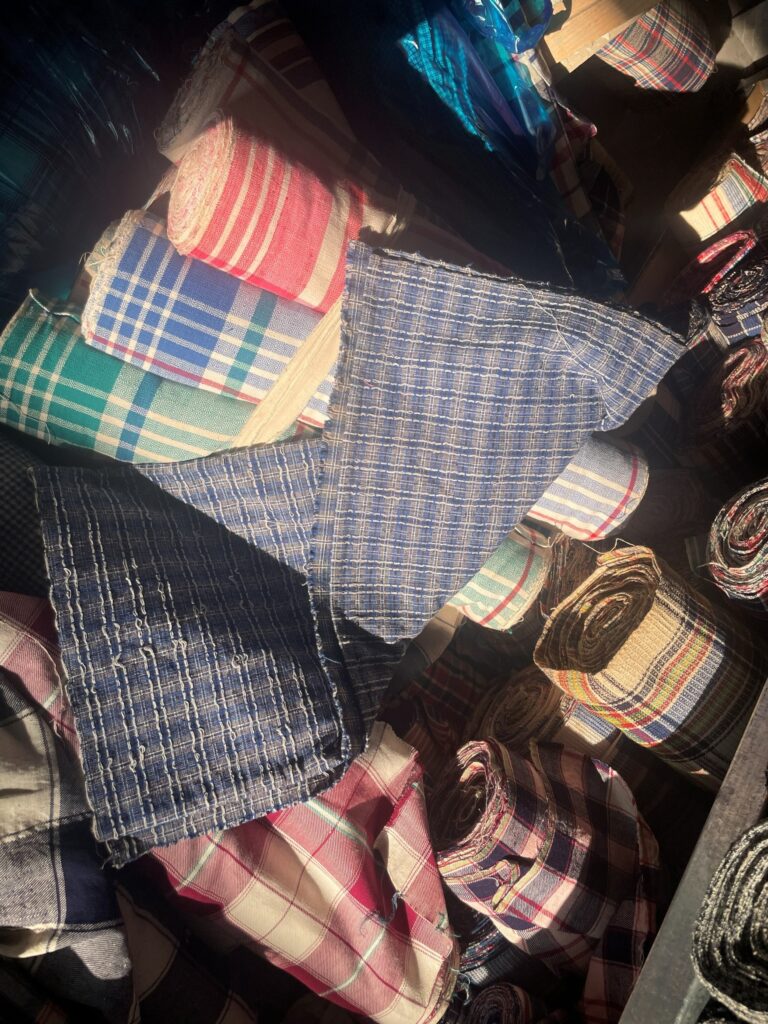
Local cloth in the sunshine
我如饥似渴地翻看不同的面料,感受它们的纹理,赞叹它们作为手织布还能如此规整而均匀。仓库还有一些标有纹样名称的布料样品,是何老师他们做展览用过的,我一边看,一边听黄先生给我介绍。
I excitedly browsed through the fabrics, feeling their textures, marvelling at how, as hand-woven cloth, they could be so even and fine. In the storeroom, there were also samples labelled with pattern names used for exhibitions. As I looked, Mr Huang introduced these textiles to me.
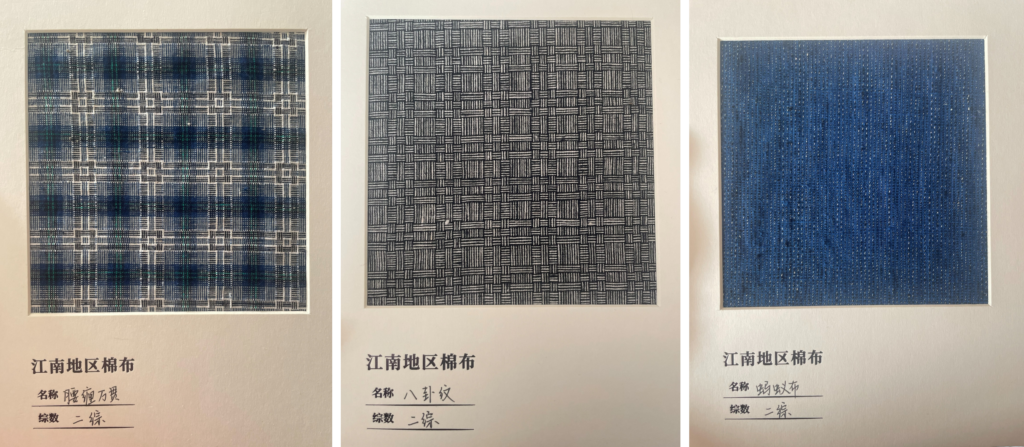
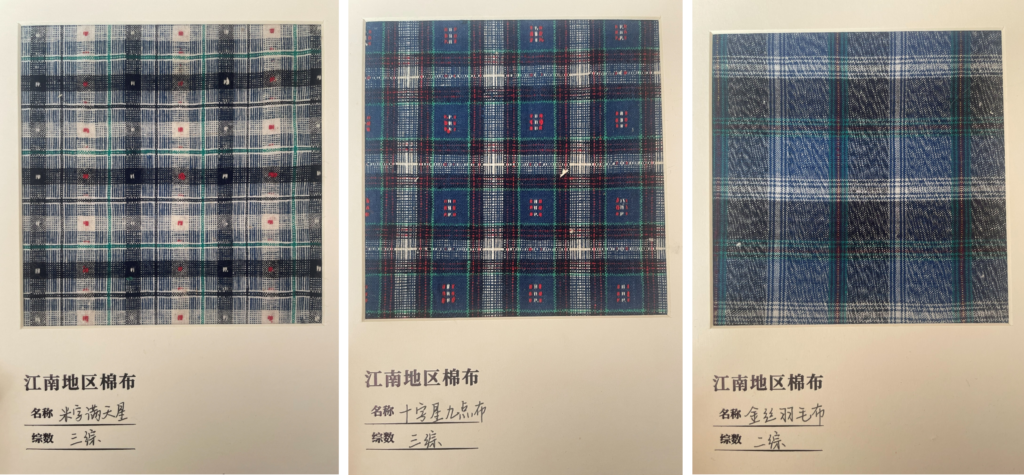
Some samples of the Chongming local cloth
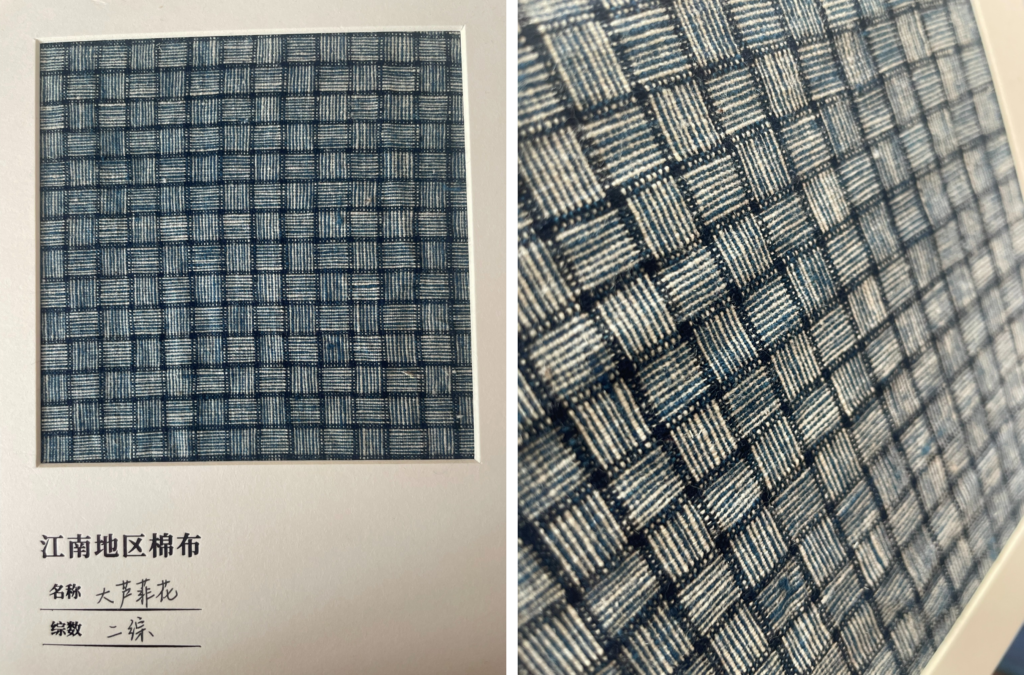
Sample in the Daluhua pattern
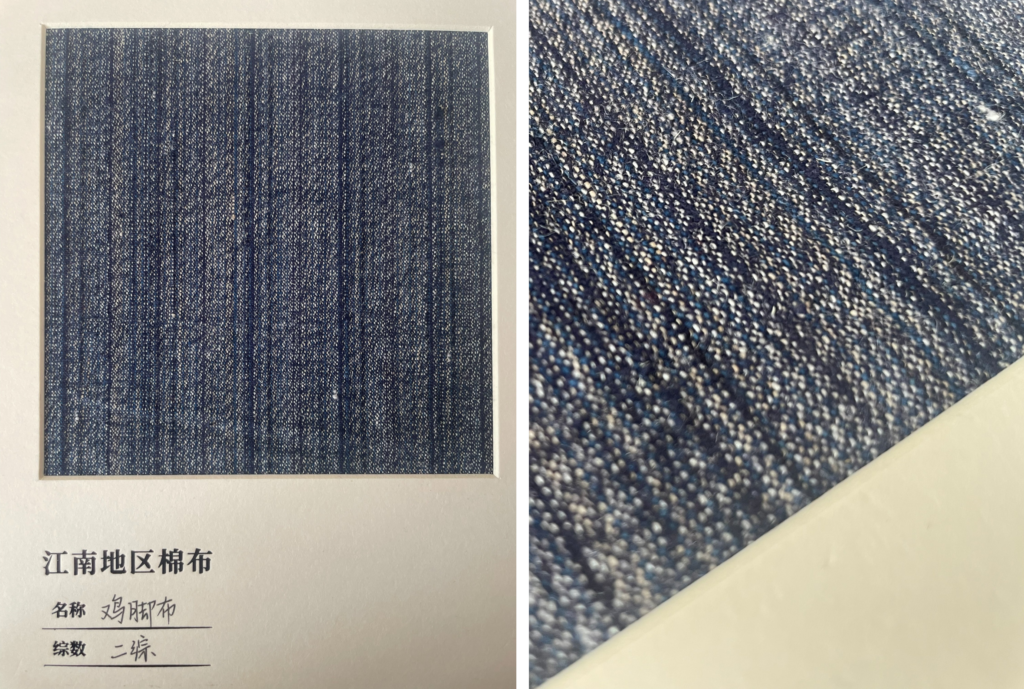
Sample in the Daluhua pattern
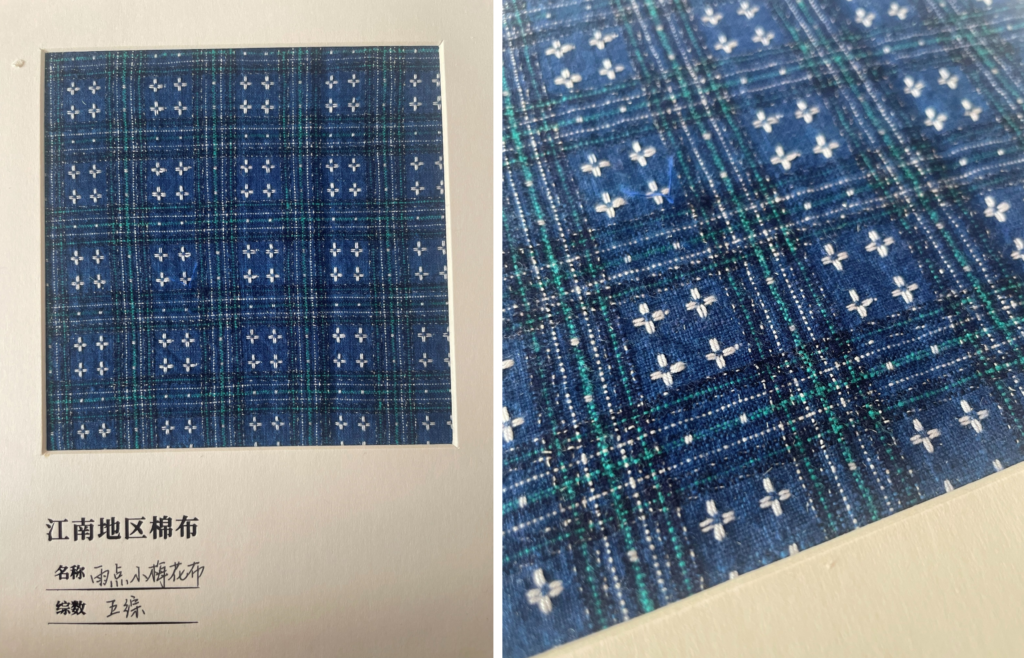
Sample in the ‘plum blossom with raindrop’ pattern
他说,上世纪的崇明岛几乎家家户户都有织机,大家自己取棉纺线,还有专门的染坊提供染线服务。大家把自己纺好的线拿到染坊染色后拿回家织布,便留下了一匹匹我们今天还能看到的土布。崇明的居民自己织布自己用,做衣服、做包包、做儿女的聘礼和嫁妆。
He said, last century, almost every family on Chongming Island owned a loom at home. People spun cotton into yarns themselves and dyed them in local dyeing workshops. After dyeing, they would bring the colourful yarns home to weave, making the local cloth we can still see today. Chongming residents wove their own fabrics for their own use, making clothes, bags, or passing them to their children as gifts or dowries.
不过,这种手织布在上世纪初受到了南通纺织工业化的冲击。崇明岛离南通比离上海更近,自张謇在南通创办纱厂引进纺织机械,便快速影响到了崇明岛的纺织生产。
However, this hand-woven local cloth faced challenges from the industrialisation of textile production in Nantong, a nearby city, in the early 20th century. Chongming Island is closer to Nantong than to Shanghai. Since Zhang Jian, a pioneering industrialist in Modern China, introduced textile machinery to Nantong in the late 19th century and established a spinning mill there, textile production in the Chongming area was quickly influenced.
南通纺织业发展起来以后,很多人开始购买机械生产的纱线回家织布,而不再用手纺线。再后来,大家也慢慢开始购买机械生产的棉布,自己在家织布的人变少了一些。
As the textile industry in Nantong developed, many people started buying machine-spun yarns to weave at home, instead of spinning yarns on their own. Later on, people started to buy manufactured cotton cloth, and fewer people wove at home.
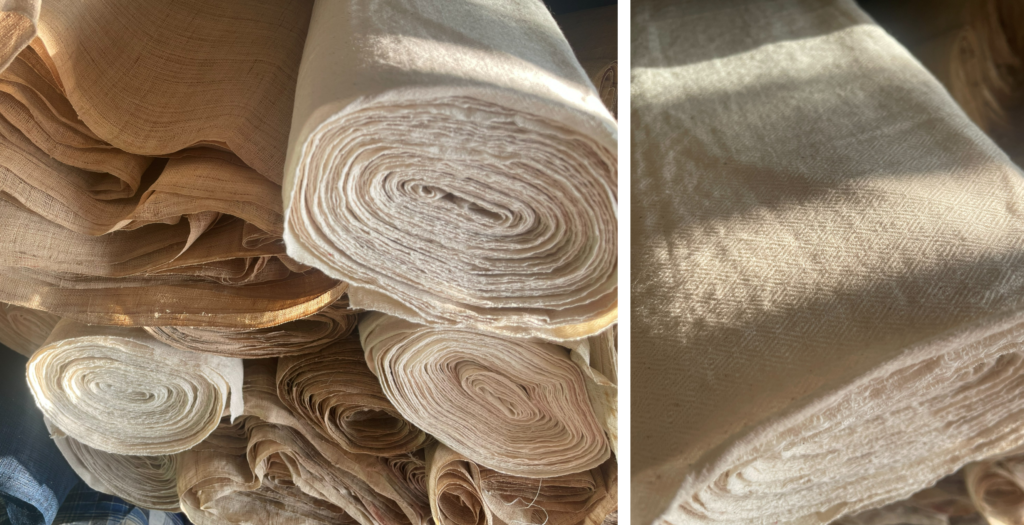
Single-colored local cloth in the sunshine
何老师从小织布,至今还在收购土布。崇明土布似乎成了她全家为之努力的事业:她本人致力于传统技艺的再现与传承,她先生会染线并参与和土布相关的运营,她儿子则在各大网络平台直播卖布。
Ms He started to weave at a very young age, and is still collecting local cloth from Chongming households today. Chongming local cloth seems to have become a cause for her whole family: she herself is dedicated to reproducing and preserving the traditional craft; her husband dyes yarn and helps with related operations; her son, however, sells the cloth through live streams on major online platforms in China.
在他们家的仓库里,有各种花色的崇明土布,也有一些来自南通的土布和来自西南一带的夏布,即苎麻布。据说以前在崇明岛,人们也可以从商人手里购买外地生产的苎麻布,用来做夏天用的窗帘。
In the storeroom of their family, there are Chongming local fabrics in various patterns, as well as some cloth from Nantong and some ‘summer cloth’ (ramie cloth) from southwestern China. Mr Huang said, in the past, Chongming residents could also buy ramie cloth produced elsewhere from merchants, to make curtains for summer.
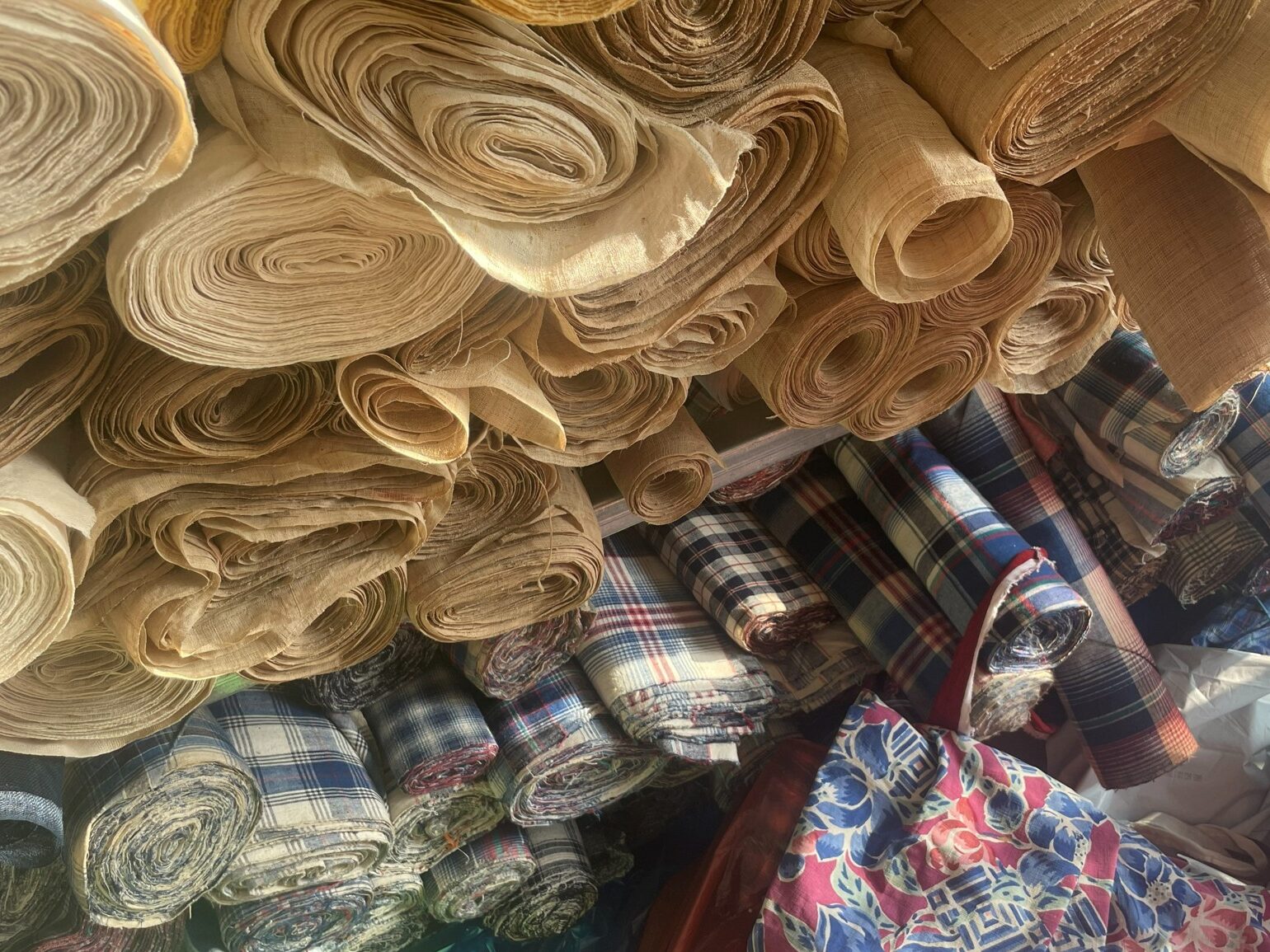
Summer cloth in the storeroom
每天都在战争,希望2026和平.
Very good i like it
wish you all the best
wish you best and best
Hahahaha You are so good
Good a blog toper
Great post,Thanks for sharing