感谢肖为本文提供英文朗读录音,点击上方音频可听。Thank Shaw for his English reading recording. You can listen to it by clicking the audio above.
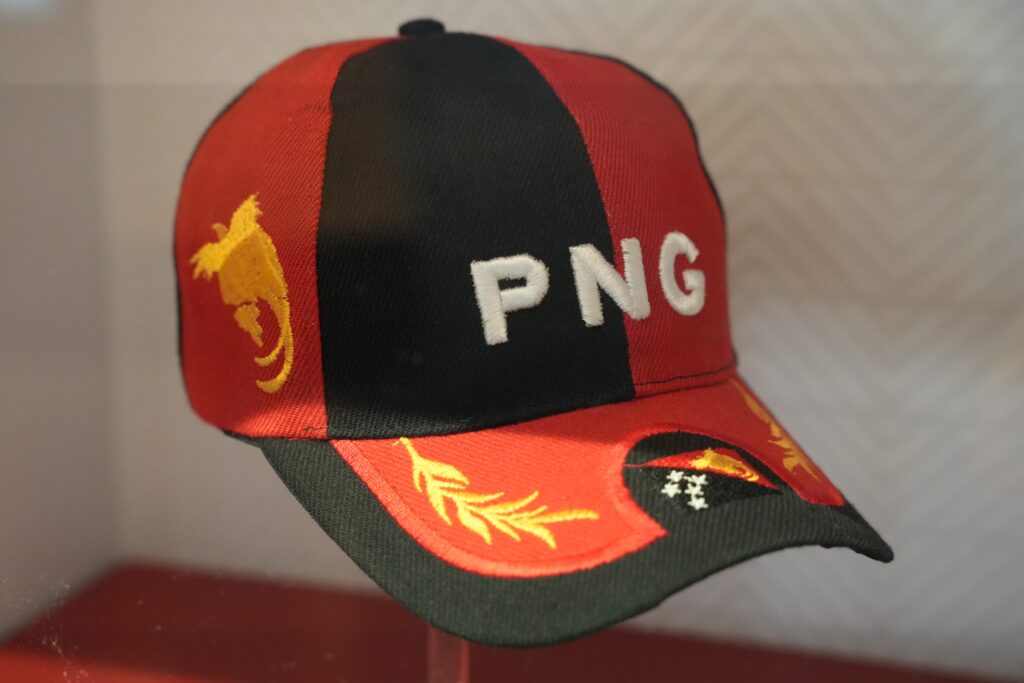
A cap with the abbreviated name of Papua New Guinea
2020年初新冠疫情暴发,我于居家隔离中因与书名的微妙连接,阅读了跨学科著作《枪炮、病菌与钢铁》。
At the beginning of 2020, when the pandemic started, I read the interdisciplinary book ‘Guns, Germs, and Steel’, because I felt a subtle connection to its title.
这本书的副标题是“人类社会的命运”,它在探讨造成不同社会间权力与技术差异的原因时,以其精巧的构思、严谨的逻辑和面面俱到的历史推论,令我拍案叫绝,曾启发我起草了博士论文,也让我对巴布亚新几内亚产生了兴趣。
The book has a subtitle, The Fates of Human Societies. It discusses the reasons for the gaps in power and technology between human societies. I was deeply impressed by its ingenious ideas, rigorous logic, and comprehensive historical reasoning. It even inspired my doctoral dissertation and sparked my interest in Papua New Guinea.
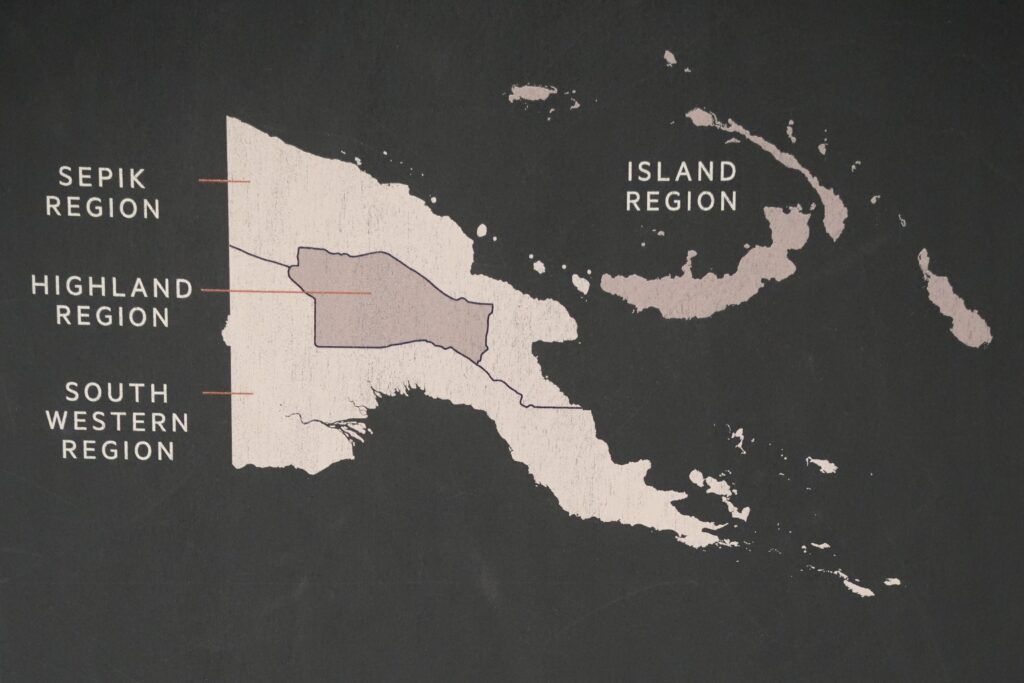
A map of Papua New Guinea
巴布亚新几内亚是位于太平洋西南方向的岛国,南同澳大利亚隔海相望。它曾长期被欧洲殖民者统治,但当地土著仍保留着一些原始时代的技术和文化,有时会成为人类学家研究史前社会的民族学材料。
Papua New Guinea (PNG) is an island country in the southwestern Pacific Ocean, just across the sea from Australia. It was ruled by European colonial powers for a long time, but Indigenous communities have preserved technological and cultural practices that date back to prehistoric times. And sometimes anthropologists study these communities to better understand prehistoric societies.
《枪炮、病菌与钢铁》这本书,是作者贾雷德‧戴蒙德在巴布亚新几内亚长期工作和生活后所作,全书的分析与推论都源自对当地土著和欧洲殖民者之间权力与技术差异的思考。因为这本书,我一直想去巴布亚新几内亚看看,但听说这里作为旅行目的地不是很安全,暂时还没找到机会。
The book, Guns, Germs, and Steel, was written by Jared Diamond after he spent many years living and working in Papua New Guinea. Its core ideas grew out of his observations of the differences in power and technology between Indigenous people and European colonists. Ever since I read it, I’ve wanted to visit Papua New Guinea myself. However, I’ve heard that it’s not safe as a travel destination. So, I haven’t had the chance to go.
Guns, Germs, and Steels
2025年7月,我意外抽到了澳洲打工度假签证,并于这一年年底开始了澳洲旅居生活。初次踏上澳洲的土地,我从西澳的小城珀斯入境,游玩三天之后便到昆州的布里斯班待了两周。
In July 2025, I was lucky enough to be selected for Australia’s Working Holiday Visa application (As Chinese citizens, we have to join a ballot before we can apply for this visa). Later that year, I started my working holiday in Australia. I first arrived in Perth, a city in Western Australia. After spending three days there, I stayed in Brisbane, Queensland, for two weeks.
我在布里斯班的住处离州立图书馆和博物馆都不远,我常常途经博物馆步行至图书馆写作。有一天,我随缘参观了昆州博物馆,然后在这里看到了一个关于巴布亚新几内亚的展。
My accommodation in Brisbane was within walking distance of both the State Library and the Queensland Museum. I often walked past the museum on my way to the library to write. One day, I visited the museum and came across an exhibition about Papua New Guinea.
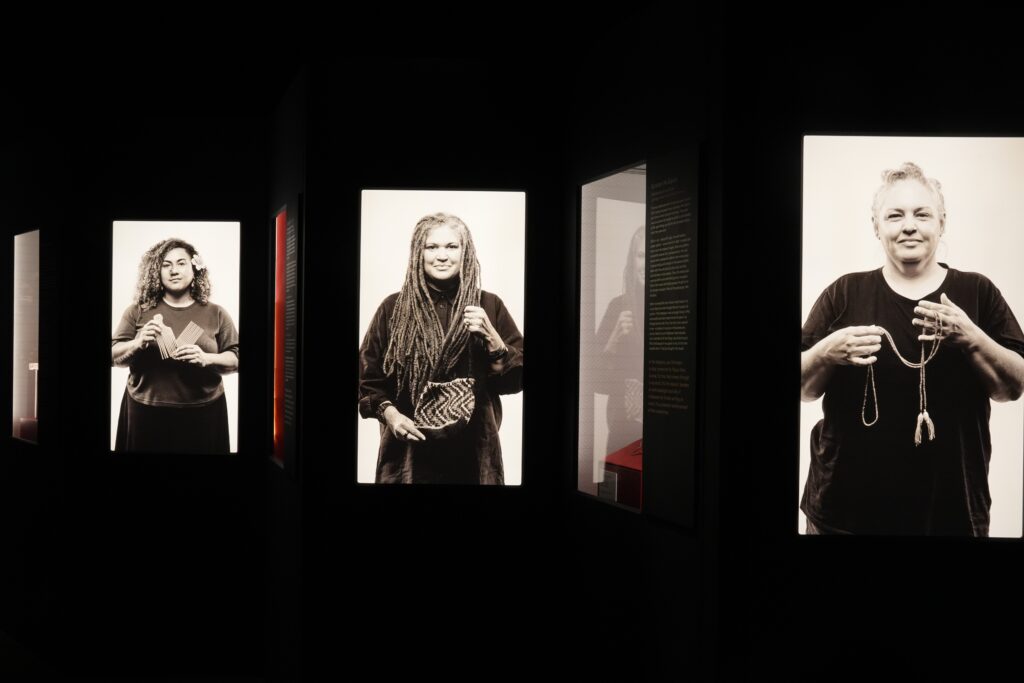
The exhibition Untethered at Queensland Museum
这个展览的名字叫“无界”,它通过六个生活在昆州的巴布亚新几内亚侨民社群的创意女性的故事,用一些承载了她们记忆的物件,探索身份的归属与连结。而这些物件里,有一些颇具史前风格的串饰和编织物。
The exhibition is named Untethered. It explored belonging and connection through the stories of six creative women from the Papua New Guinea diaspora community in Queensland, using objects that carried their memories. Among these objects, there were necklaces and woven items with a strong prehistoric style.
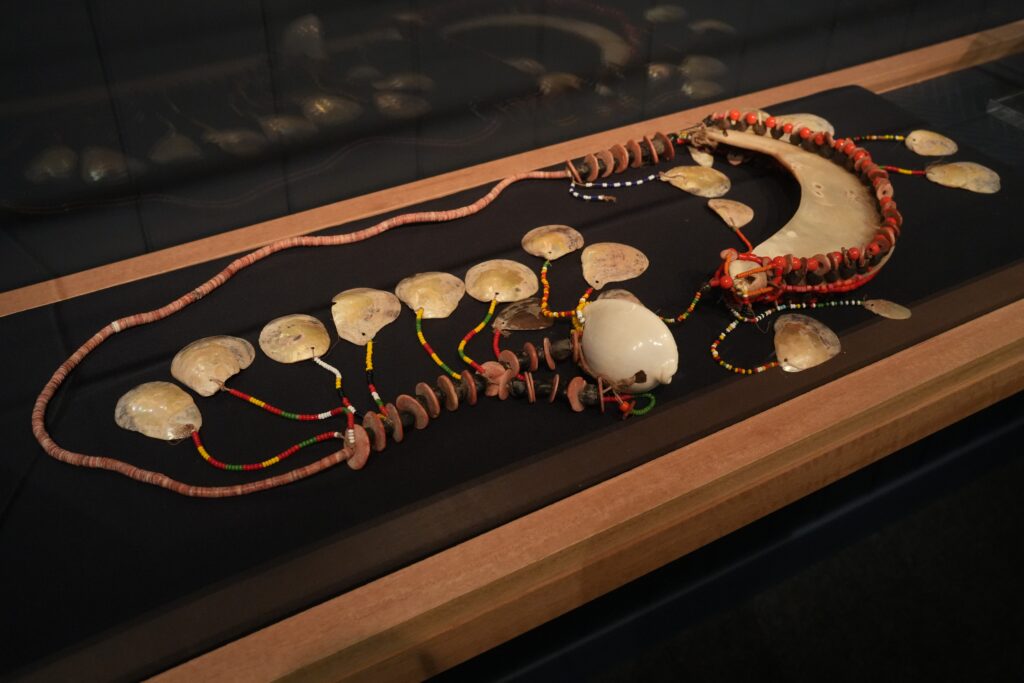
A necklace from Papua New Guinea
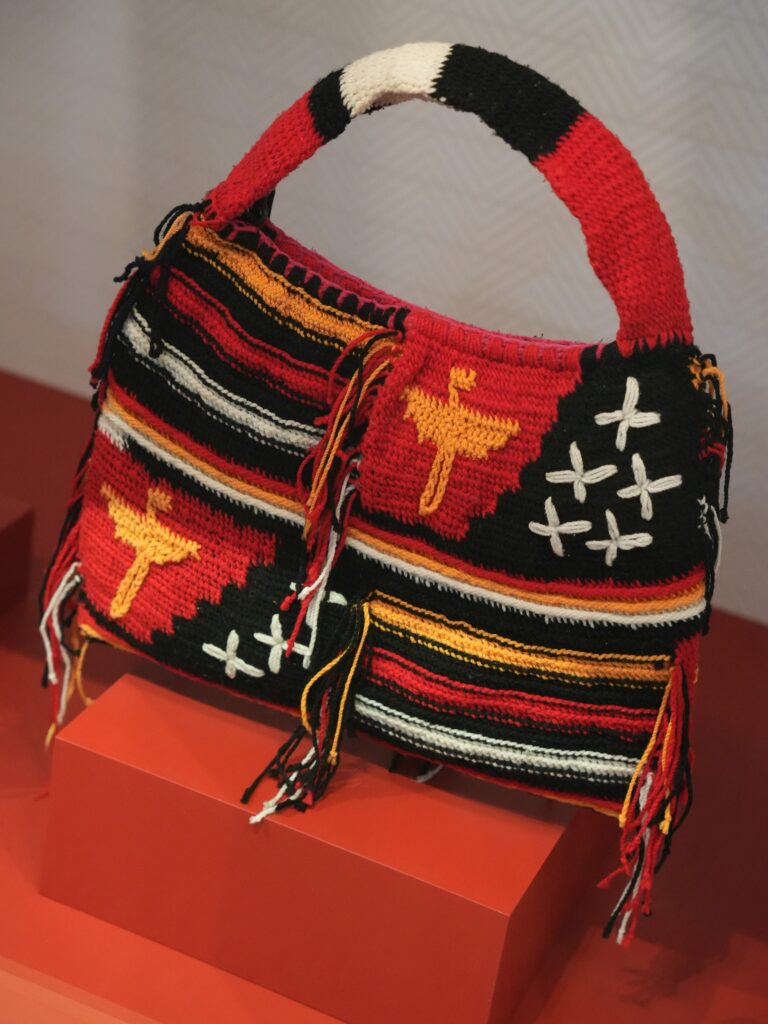
A woven bag from Papua New Guinea
这些串饰和编织物,刚好也呼应了展览想要传递的抽象含义。像其它的许多文明一样,它们内化进语言,塑造出“连接”、“牵系”、“编织”、“交织”等词汇,延伸来表达人们想要具象化的种种关系。
These necklaces and woven objects also reflected the exhibition’s deeper message. Like in many other cultures, words such as connection, ties, weaving, and interweaving have become part of the language itself to describe different kinds of relationships.
在展览展示的六位创意女性中,有一位叫Stephanie Donigi。她通过编织比鲁姆(Bilum,巴布亚新几内亚传统编织网袋),和原生社群保持着连接。据她说,比鲁姆能让她想起自己的亲人和祖先,也会让来自同种文化的巴布亚新几内亚人在澳洲街头彼此识别。在澳洲,把比鲁姆带在身上的人就相当于在说:“我来自巴布亚新几内亚。”
Among the six women featured in the exhibition, Stephanie Donigi keeps a close connection with her community by making bilums, the traditional string bags of Papua New Guinea. As she said, bilums connect her to her aunties and ancestors, and help bilum wearers recognise and acknowledge each other. In Australia, bilums are the one item that screams ‘I’m from Papua New Guinea’.
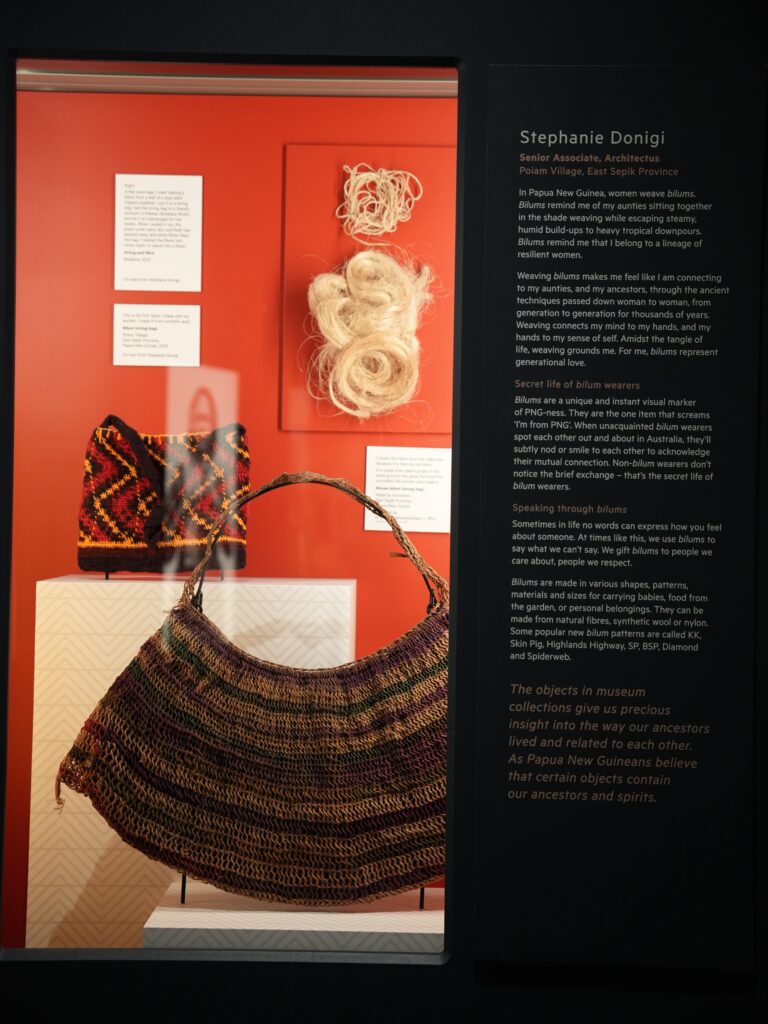
Stephanie Donigi’s section in the exhibition
在属于她的橱窗里,展示了一些巴布亚新几内亚女性编织的比鲁姆,看起来很像是没用到任何小工具的纯手工编结产物。这种编织网袋风格突出,以至于在承载着另一位女士童年记忆的巴布亚新几内亚房屋模型里,我也一眼捕捉到了它。
In the exhibition, Stephanie Donigi’s section displays several bilums woven by women from Papua New Guinea. They look completely handmade as if they were created without any tools at all. Their distinctive style stood out so much that I immediately recognised a bilum hanging inside a model of an old house, displayed in another woman’s section.
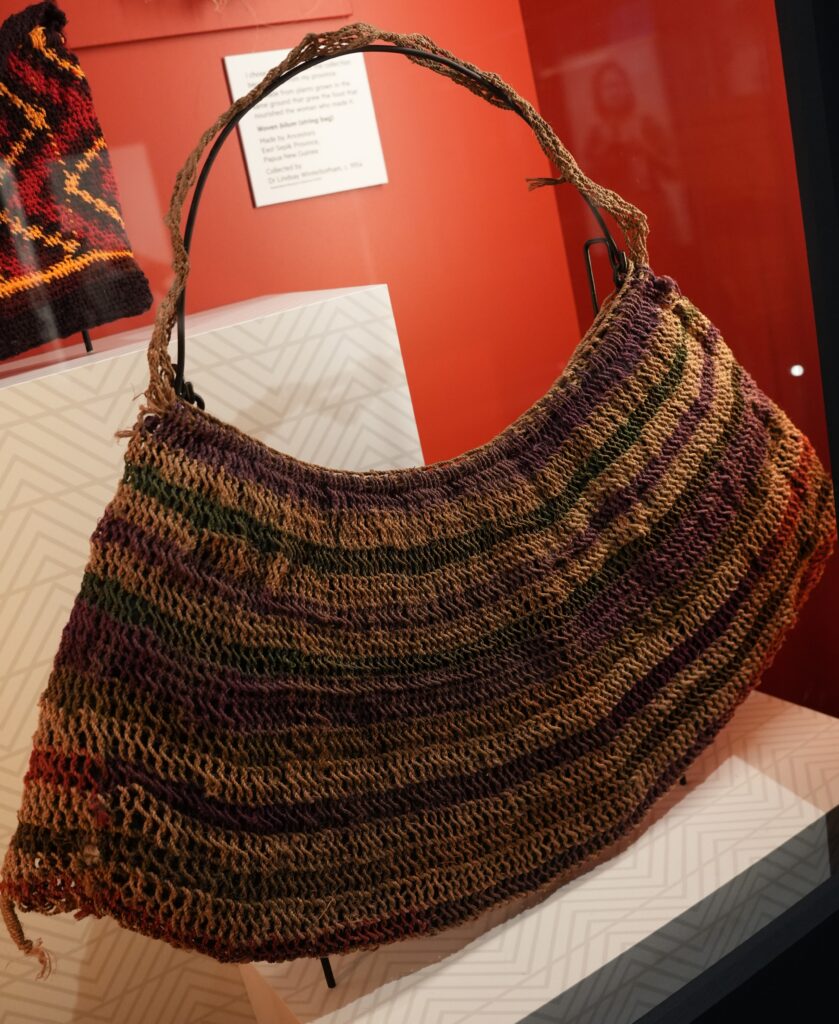
The traditional string bag bilum of Papua New Guinea
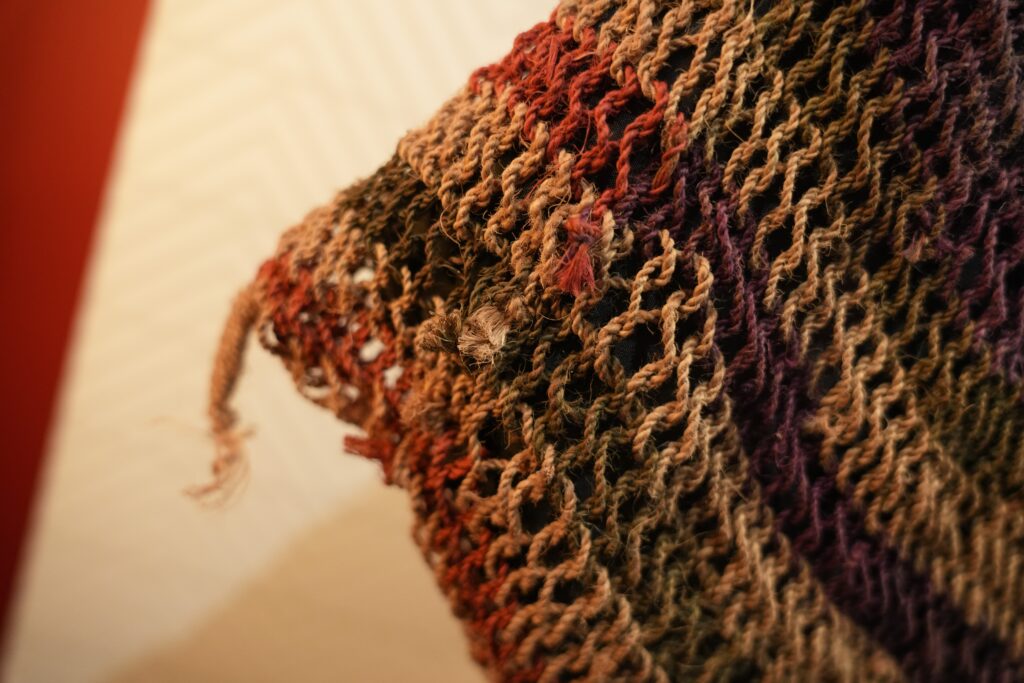
Details of the bilum
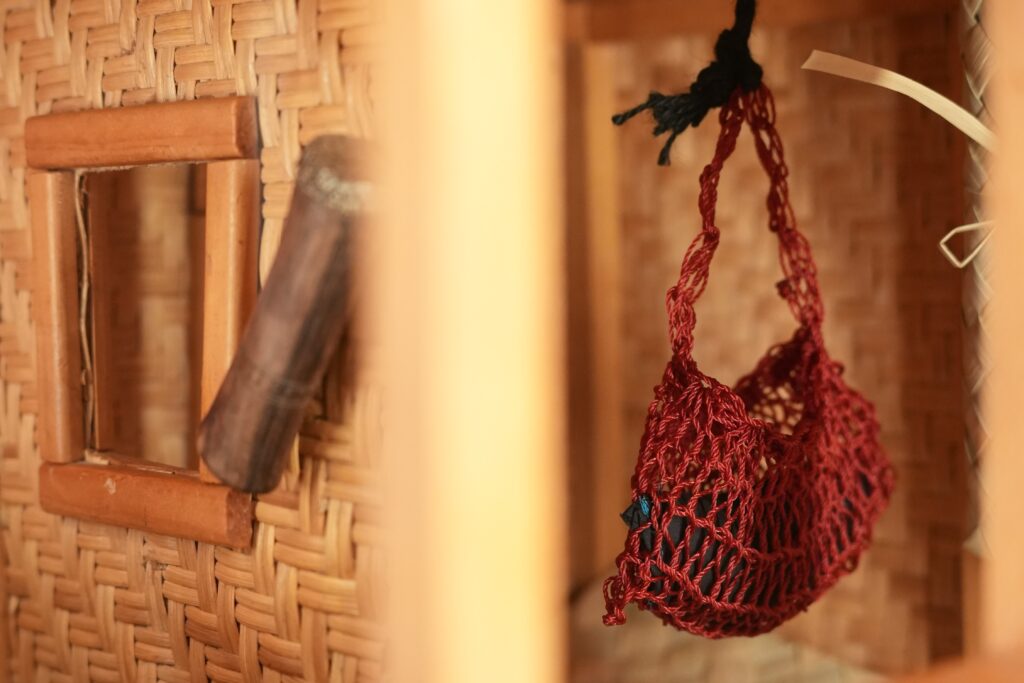
A bilum hanging inside a model of an old house
Stephanie Donigi第一次编织比鲁姆,是2003年和她的阿姨们一起完成的。这件比鲁姆用的材料是合成羊毛,可能指的是腈纶,因为这种纤维的性能和羊毛相似。
Stephanie Donigi made her first bilum with her aunties in 2003. According to the exhibition, it was made from synthetic wool. I suspect this refers to acrylic fibres, since their properties are similar to those of wool.