感谢肖为本文提供英文朗读录音,点击上方音频可听。Thank Shaw for his English reading recording. You can listen to it by clicking the audio above.
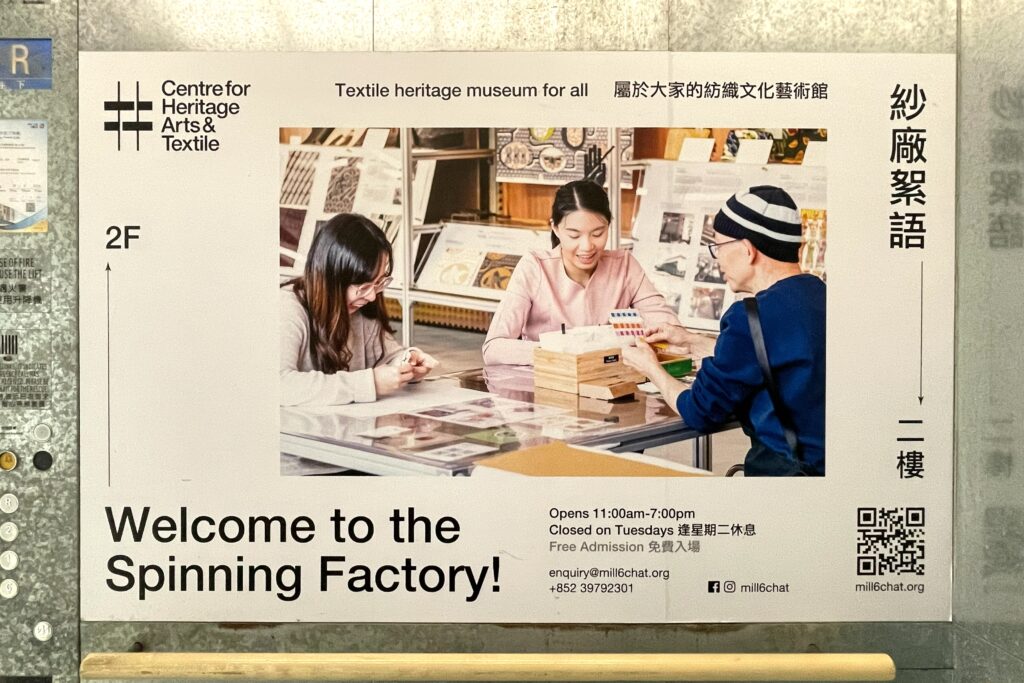
The poster of CHAT in its elevator
2025年9月,我有事去了趟华南,顺便到香港参观了六厂。六厂全称六厂纺织文化艺术馆,位于香港荃湾地区,前身是南丰棉纺厂的第六厂房。
In September 2025, I happened to travel to South China and then visited CHAT in Hong Kong. CHAT, Centre for Heritage Arts & Textile, is located in Tsuen Wan. It used to be the Mill 6 of Nan Fung Textiles, a big producer of cotton yarns in Hong Kong’s history.
几年前,我通过社交媒体第一次知道六厂。2024年因为一个偶然的活动,我在上海听到了六厂策展人王慰慰女士的分享。她说,纺织业是香港1960-1980年代 的主要产业,荃湾地区就是因为纺织业而发展起来的。现在香港已经没有纺织业了,也没有所谓传统的纺织工艺,六厂在旧纱厂的基础上建成,致力于香港纺织工业文化与社区的连接。
Several years ago, I heard about CHAT via social media. In 2024, I came across an event in Shanghai and listened to a lecture by Weiwei Wang, a curator of CHAT. According to her introduction, textile production was the main industry in Hong Kong during the 1960s-1980s, leading to the development of Tsuen Wan area. Nowadays, there is no textile industry in Hong Kong anymore, nor is there the so-called traditional textile craft. CHAT was founded based on the old spinning mills, with a mission of connecting Hong Kong’s textile industrial cultures and its local communities.
如今的六厂,是坐落于南丰纱厂旧址二楼的展览馆。而纱厂本身,也已改造成了汇聚服装店、文创店、咖啡店和餐厅等场所的艺术中心,融合了文化、艺术、纺织等元素,对于偏好文化体验的旅行者来说,是值得一逛的地方。
The CHAT today is a museum located on the second floor of the former cotton-spinning mills of Nan Fung Textiles. And The Mills itself has been transformed into a complex of clothes stores, creative shops, cafes, and restaurants. It incorporates elements of cultures, arts, textiles, etc., deserving a visit from travellers who prefer cultural experiences.
进入六厂,我首先看到了熟悉的纺纱设备,是一台并条机。在它旁边的展板上,也有图示和说明,展示了从棉花到棉线的生产工序。在这个展板的旁边,还有一块屏幕正在播放纺纱厂纺纱的过程,勾起了我本科阶段的实践记忆。
Walking into the galleries of CHAT, I saw familiar equipment. It is a draw frame used for drawing fibres in the process of making yarns. On the board next to it, there are diagrams and texts explaining the process of making yarn from cotton fibre. And next to them, a video of spinning in a mill is on display, reminding me of my practice of textile production long years ago.
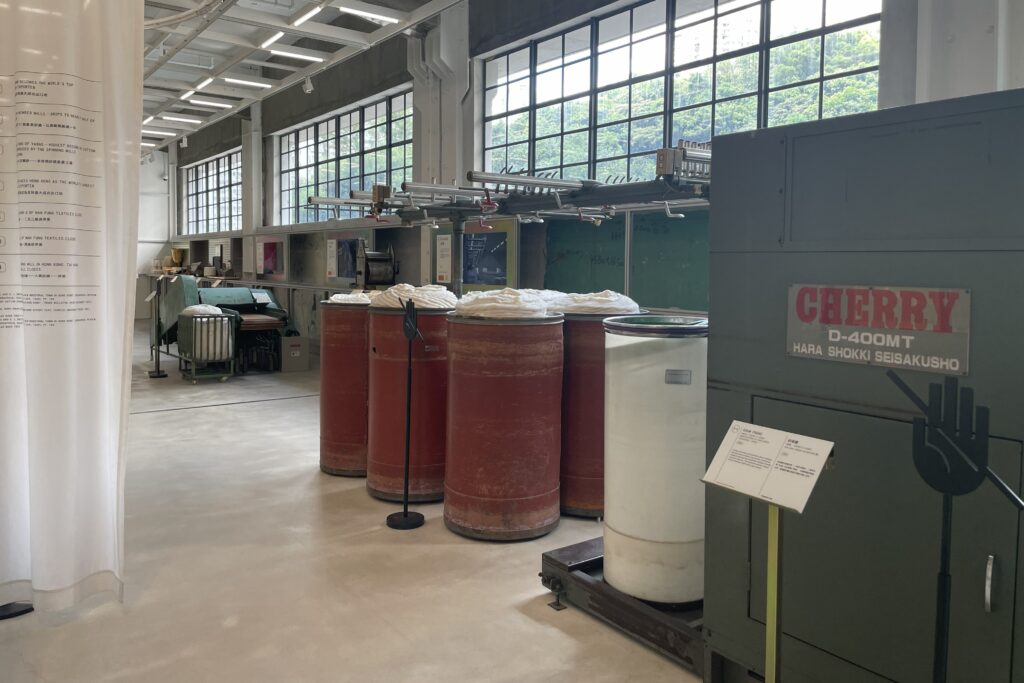
A draw frame in the gallery of CHAT
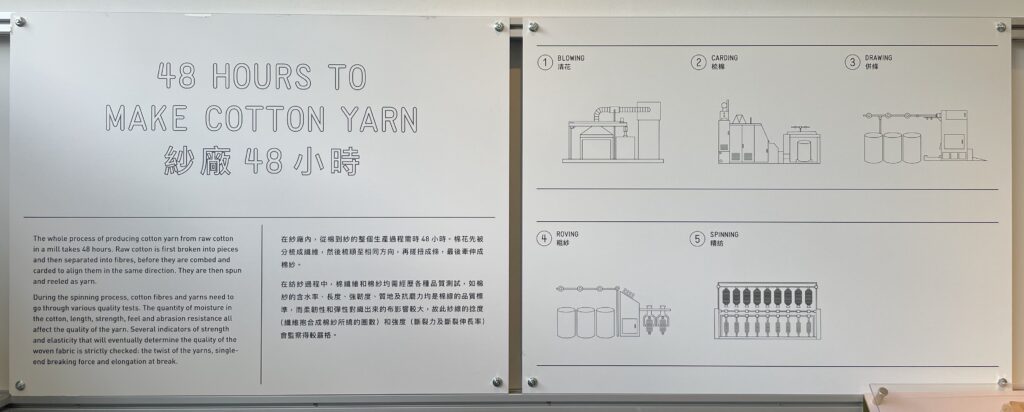
Diagrams and texts for the industrial spinning process
按王慰慰老师的说法,如今香港已经没有纺织厂在生产纱线了。我特别留意了一下,这个纺纱的纪录片确实不是在香港,而是在内地某纺纱厂拍的。想到我本科时学过的东西、自己生活的地方还存在的生产,在这里已经是进入博物馆展览的遗产了,就有点穿越时空的感觉。
As has been said by Ms Wang, there is no factory producing textiles in Hong Kong anymore. I noticed that the video was not taken in Hong Kong but in a spinning factory in the Chinese Mainland. Watching the video made me feel like travelling through time, as what I had learned in the university and is still ongoing in the mainland has become a heritage exhibited in a museum here.
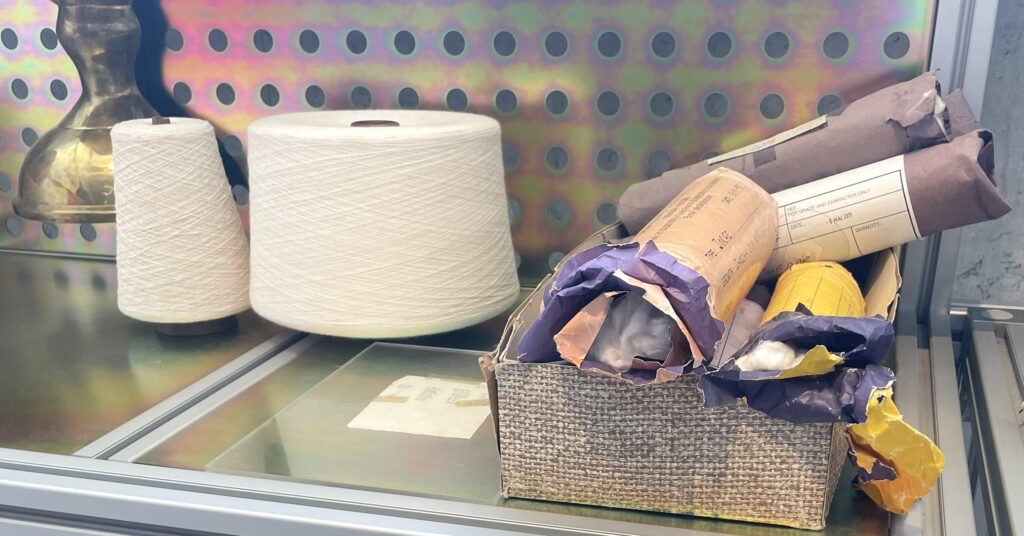
Cotton yarns produced by Nan Fung Textiles
在一系列与棉纱生产有关的设备和产品的展示之后,有一些关于纱厂工人的展品和介绍,比如刊登了当年南丰纱厂招工信息的旧报纸、员工服务证明书、培训证明、工资袋等等。这些展品脱离纱线的生产,更贴近当时在香港的纺纱工人的生活和他们对待工作的朴素观念。
After a series of objects relevant to cotton yarn production, there are some about people as well, such as an old newspaper with the recruitment advertisement, a proof of employment letter, certificates of training, salary bags, and so on. These objects are a bit away from yarn production, but are much closer to the lives of workers in Hong Kong at that time.
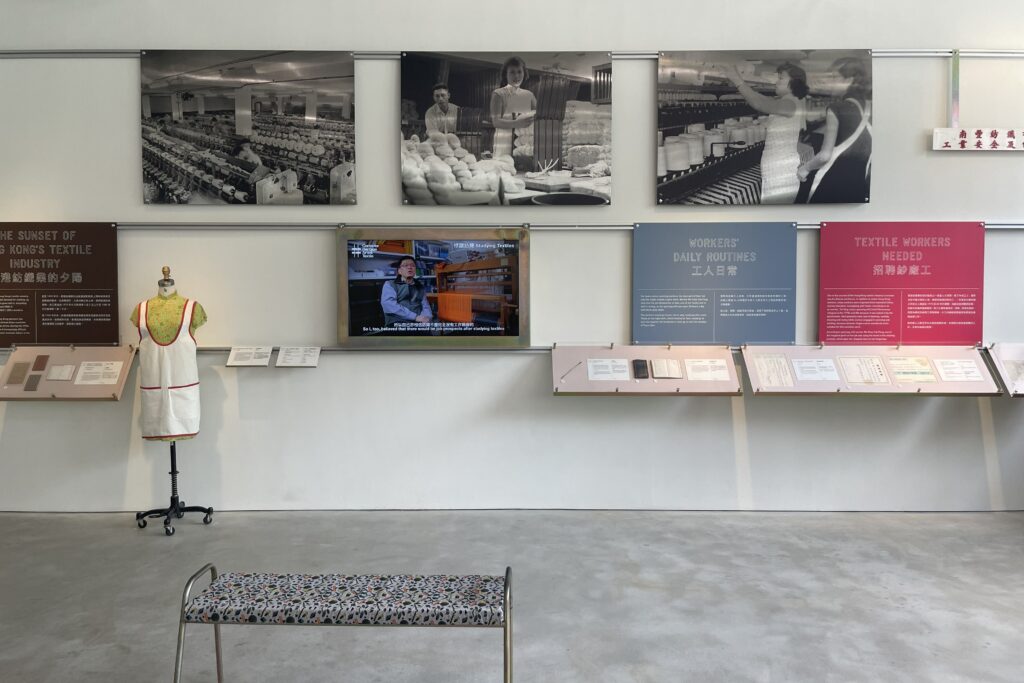
Exhibition about workers in the mills
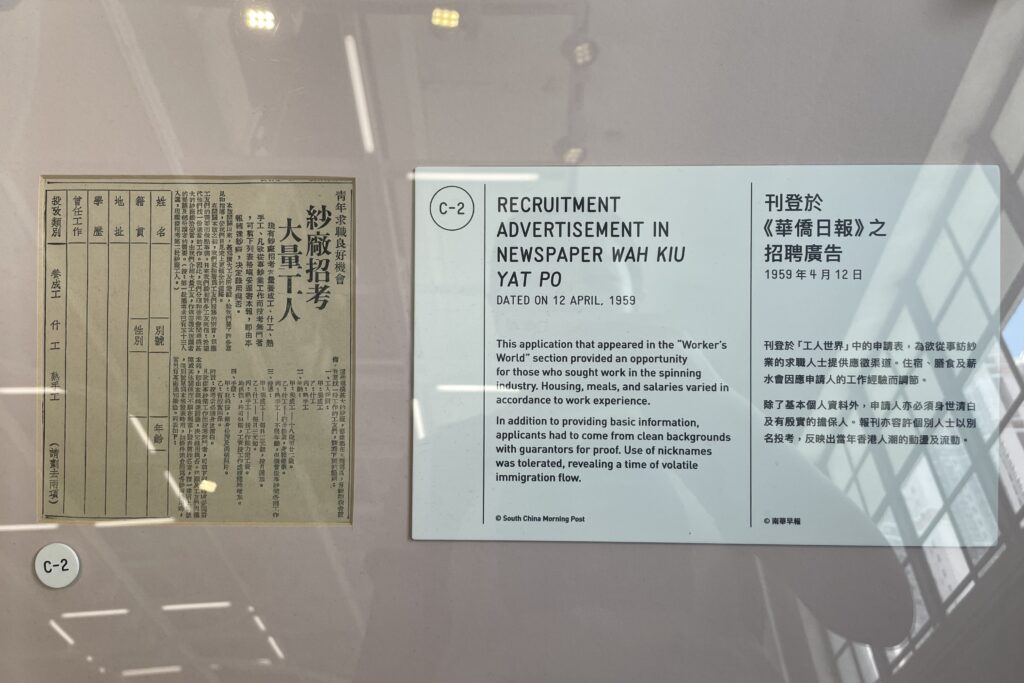
A recruitment advertisement in an old newspaper
再往前走,有一排设计精美的橱窗,展示了与南丰纱厂同时代的香港时尚,让我感受到纱厂随香港贸易环境的变化而留下的生产历史与人文情调。这些内容引人深思,对于想要研究香港服装史、制造业发展史或国际贸易史的人来说,想必都具有重要的参考价值。
Moving forward, there are well-designed windows showing fashion in Hong Kong at the time of Nan Fung Mills. They made me feel the historical and humanistic sentiment of Nan Fung Textiles in the changing trade environment of the last century. The content here is thought-provoking. I think it must be invaluable for people who are interested in Hong Kong’s fashion history, manufacturing industry, or trade history.
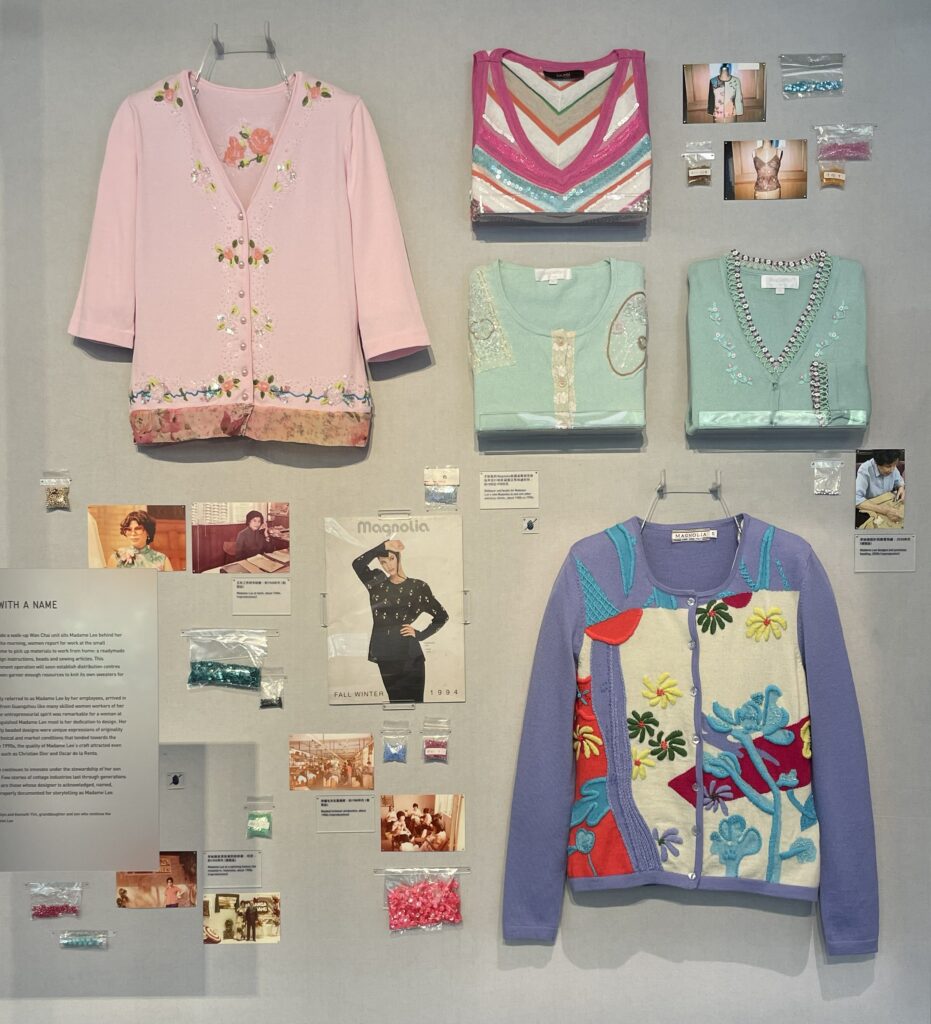
A window display
在这些橱窗里,我注意到一种以前从未听说也没见过的纺织品——抽纱,它是把线从织好的布料中抽出而形成蕾丝效果的一种织品。这种技术于19世纪由传教士传入中国,在1940年代的汕头形成生产高峰。当时多达30万名汕头居民参与抽纱的生产制作,主要供应到欧洲市场。
In these windows, I noticed a kind of textile that I had never known, the drawnwork. It is a type of product made by drawing out threads from a woven cloth. And the craft came to China with Western preachers. In the 1940s, drawnwork production reached its summit in Swatow, a place in Guangdong Province of China today. At that time, up to 300 thousand residents in Swatow were involved in drawnwork production for the European markets.
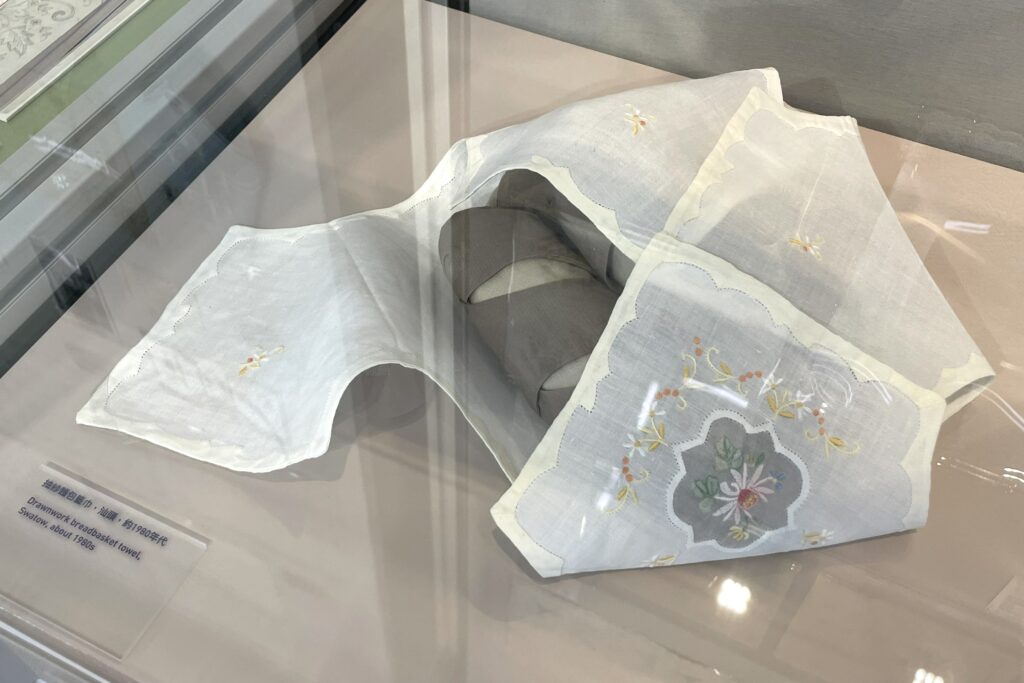
A drawnwork breadbasket towel made in Swatow
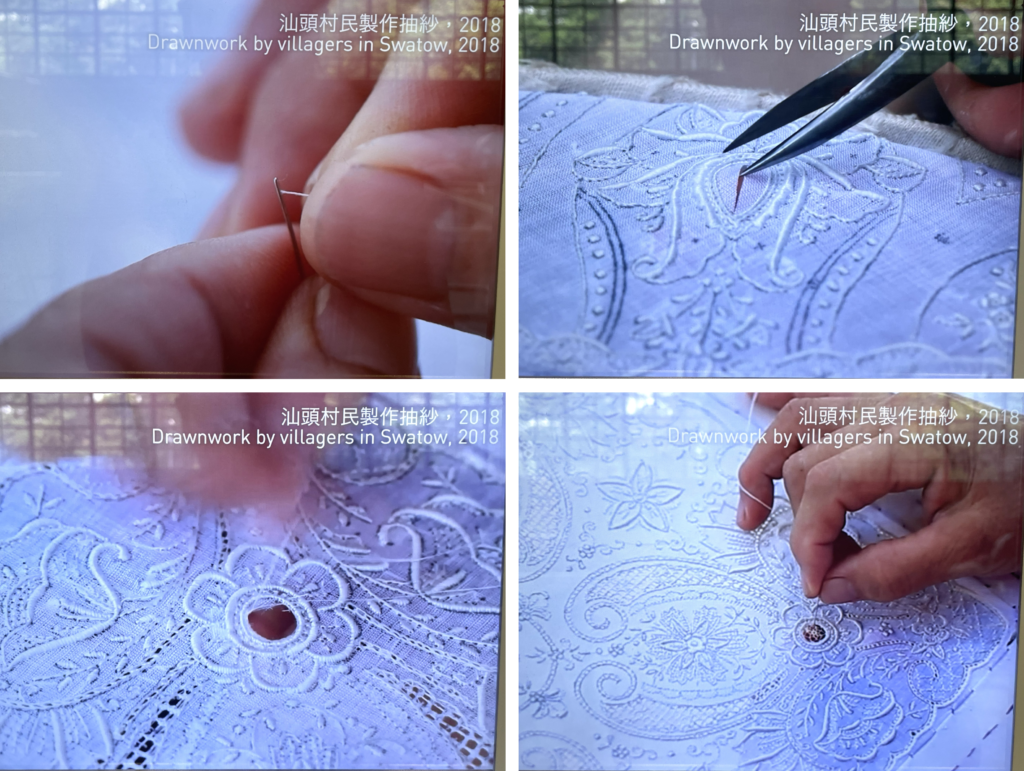
Process of making a drawnwork product
汕头地区数百年来擅长制作色彩鲜艳且层次分明的刺绣,对于制作抽纱的当地居民而言,这种产品不仅荒谬,其纯白的颜色和镂空的设计还被视为不吉利。然而,当抽纱变得商业化且脱离原有的传教含义,便在汕头地区形成独特的工艺传统。他们把中国传统的意象、图案、技法和材料融入出口欧洲的纺织品中,取得了巨大的商业成功。于是,这些抽纱产品也被称为“汕头蕾丝”。
Swatow has had a knack of embroidering with dazzling colours and raised textures for hundreds of years. To the makers, drawnwork products were not only ludicrous but also inauspicious in their use of negative space and the colour white, which has funereal associations in traditional Chinese culture. However, as drawnwork became commercialised and divorced from its original missionary context, a distinct craftsmanship emerged. People in Swatow integrated traditional Chinese imageries, patterns, techniques, and materials into textiles exported to Europe, and achieved great commercial success. So, their products were also called ‘Swatow laces’.
汕头蕾丝的生产于1980年代开始衰退,如今已不再流行,但还有大量库存,保留着这种工艺曾灵活应对不同地区、完美平衡商业与文化的历史记忆。
Swatow laces have been less produced since the 1980s and have fallen out of fashion. But, there are still lots of products in store, preserving the historic memories that they once cleverly negotiated with different places and perfectly balanced commerce and culture.
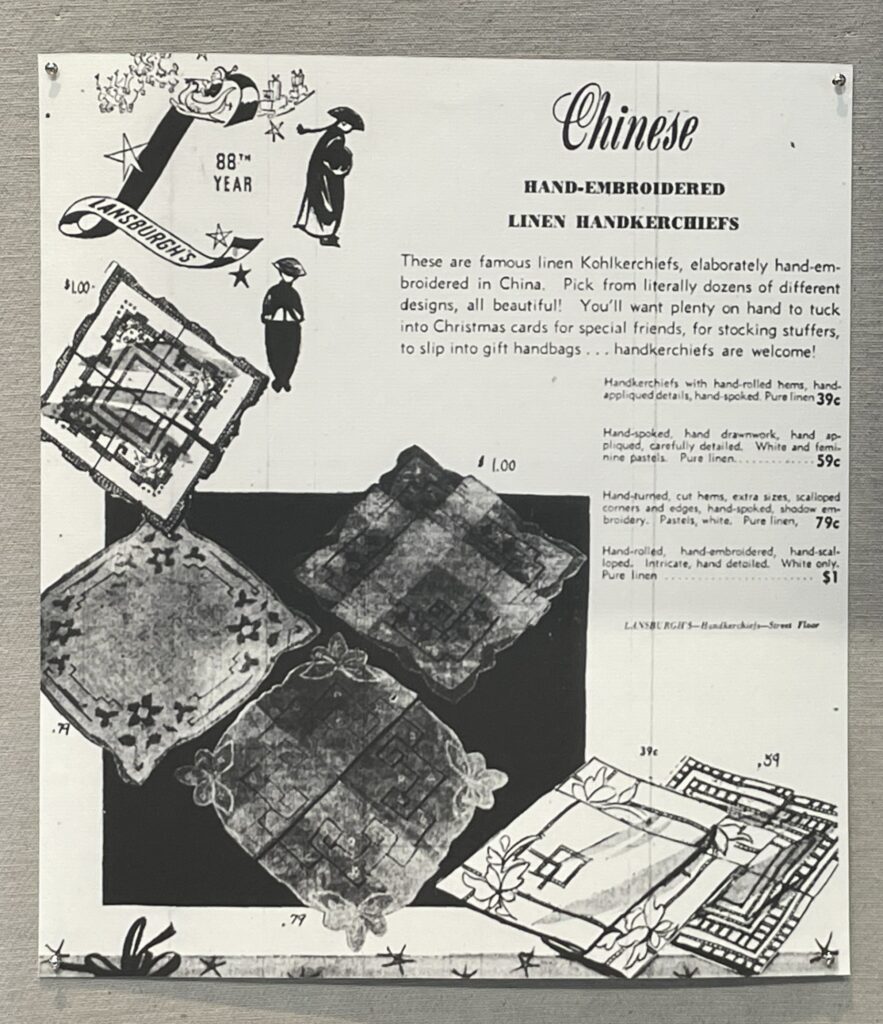
Advertisement for Chinese drawnwork products in The Washington Post, USA, 1948
六厂的其它展馆一般会举办一些特展,我参观时看到的内容更偏向当代纤维艺术和以香港为中心的亚洲地域文化。在“种学织文2025”中,我看完了关于艺术家追忆位于荃湾的母校葵涌公立学校的纪录片,对香港的印象也不再是刻板的摩天大楼与都市繁华,而多了些岁月温度和人文情感。
In the other galleries of CHAT, there are usually special exhibitions. When I was there, they exhibited contemporary fibre art and regional cultures centred on Hong Kong. In the exhibition ’Seed to Textiles 2025‘, I watched a documentary in which the artist recollects memories of her childhood school in Tsuen Wan. In the end, my impression of Hong Kong is no longer skyscrapers or prosperous night city views; it has been enriched by the warmth of time and human connection.
六厂于2019年才开馆,比我第一次到香港旅行晚了两年。这次参观让我看到香港不太为大众所熟知的一面,感觉不虚此行。对于想要沉浸式了解香港文化遗产或纺织业发展史的人来说,可以把它加入参观列表了。
The CHAT was opened in 2019, which is two years after I visited Hong Kong for the first time. And this time, as I returned to Hong Kong, I had the chance to visit it, and discovered another side of the city that is not well-known. So, for people who wish to experience Hong Kong’s cultural heritage or textile history in an immersive way, I would highly recommend adding CHAT to your list.