感谢肖为本文提供英文朗读录音,点击上方音频可听。Thank Shaw for his English reading recording. You can listen to it by clicking the audio above.
(Image from the website of ACM)
2025年11月,我离开上海准备前往澳大利亚,途经新加坡看望了一些朋友,顺便又参观了亚洲文明博物馆。
In November 2025, I left Shanghai for Australia and stayed over in Singapore, visiting some friends and going to the Asian Civilisation Museum (ACM).
我第一次到亚洲文明博物馆还是2020年初,当时我对世界纺织品以及境外历史文化的了解还不够多,对这座博物馆的印象只有海洋贸易和唐代沉船。时隔五年再次参观,我有幸能从自己熟悉的物件里看到亚洲文明的繁荣与丰富,并在这座连接了东方和西方的城市,感受到一种世界互联的壮阔。
The first time I visited ACM was at the beginning of 2020. At that time, I was not familiar enough with world textiles, nor the histories and cultures outside China. The only memories I have of this visit are related to maritime trade and the Tang shipwreck. This time, five years later, I got to see the richness and prosperity of Asian civilisations from objects I am familiar with. And I really feel how vast and interconnected the world is, in a city between the East and the West.
第一次参观亚洲文明博物馆的人,或许都会从“唐代沉船”开始,因为这是进入博物馆的第一个展厅。在这里,可以窥见一千多年前远航经商的百姓生活。
Anybody who comes to ACM will probably start with the Tang Shipwreck, as it is the first gallery that one will see entering the museum. Here, we can gather small insights about the lives of those who sailed far away for business, over 1000 years ago.
比如在一些并不精致的瓷碗里,有一件写了“领钱”字样,让人不禁想象,当时有一位伙计就像现代打工人期待发薪一样,用这种方式克服着海上生活的种种苦闷。这是我在这个展厅最喜欢的一件文物。
Take my favourite object in this gallery for example, a ceramic bowl. Among plenty of rough bowls, it has Chinese characters on it, meaning ‘receiving money’, making me imagine that a guy was struggling with life at sea, just like how people hold on with hard work by thinking of their salaries.
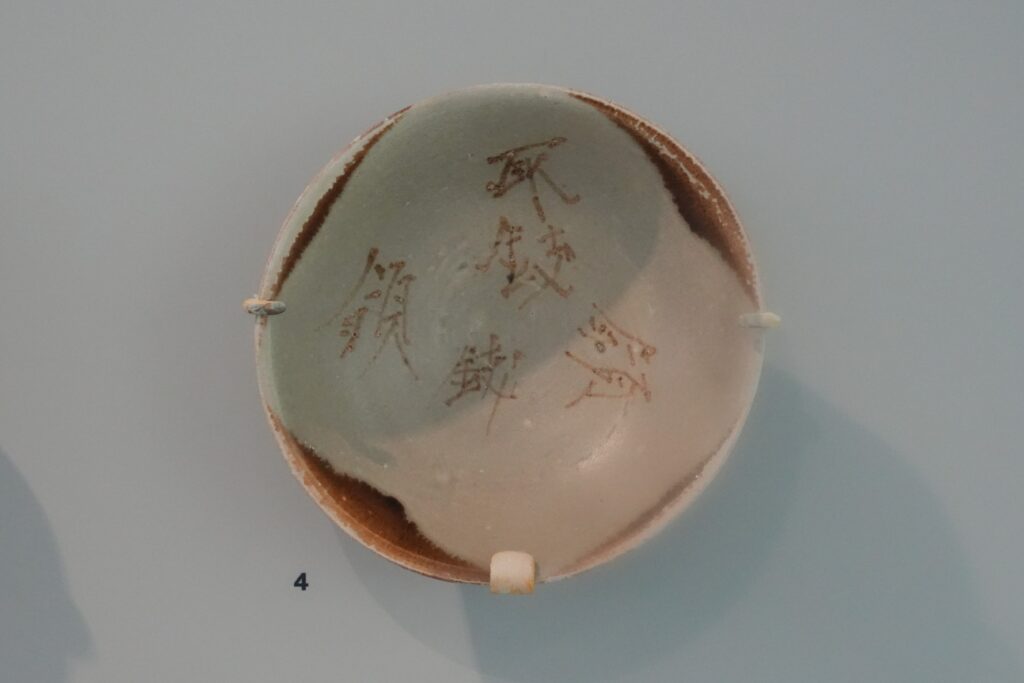
A ceramic bowl inscribed ‘receiving money’
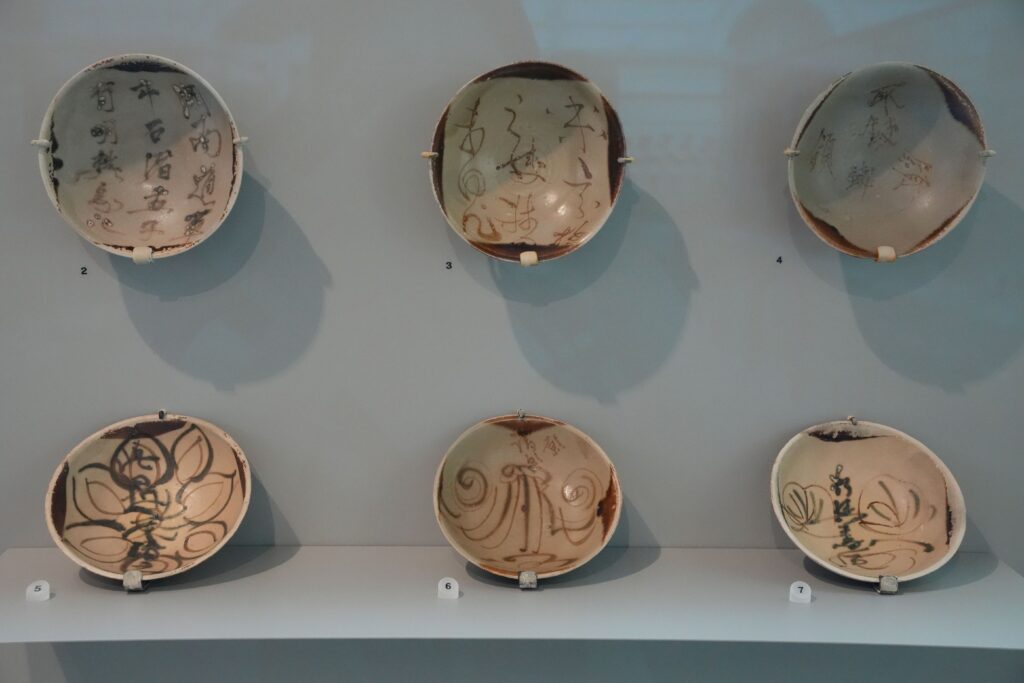
Ceramic bowls in the Tang Shipwreck
新加坡地处太平洋与印度洋之间,自海洋贸易开始便忙于沟通来自中东、印度、东南亚和中国等地的船只。这些船不仅带来了货物和生意,也连接了技术与思想,让不同的文化互取灵感,塑造出新的风格。
Singapore lies between the Pacific Ocean and the Indian Ocean. It has been a busy port since the start of maritime trade, welcoming ships from the Middle East, India, Southeast Asia, and China. These ships came with goods and business, leading to the exchange of technologies and ideas. Cultures met and inspired each other, thus forming a new style in the land.
在宗教信仰展厅,我第一次看到绣出来的唐卡。虽然对它们的图样非常陌生,对其宗教含义也不甚了解,但在色彩丰富还透着光泽的细密针线里,我总觉得有一丝神圣与庄严的气息。
In the galleries regarding faith and belief, I saw thangkas that are embroidered for the very first time. In spite of being alien to the patterns and their religious meaning, I could always sense something sacred and solemn in the finely stitched, colourful, and gleaming threads.
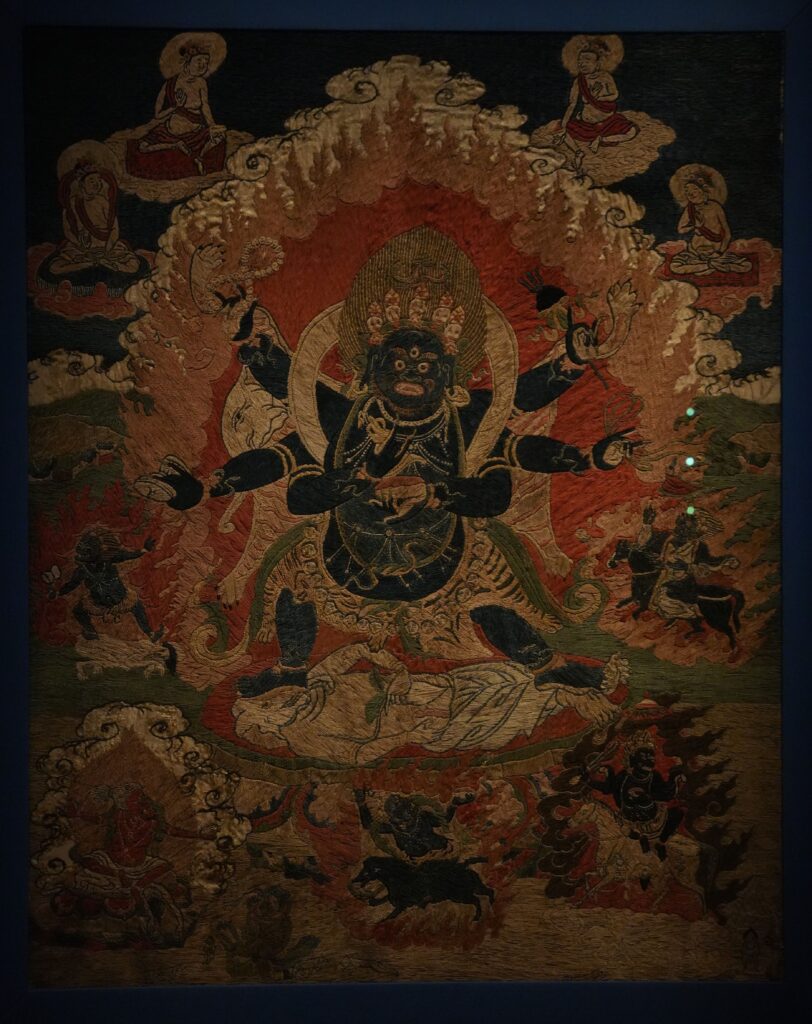
Silk embroidered thangka of Mahakala
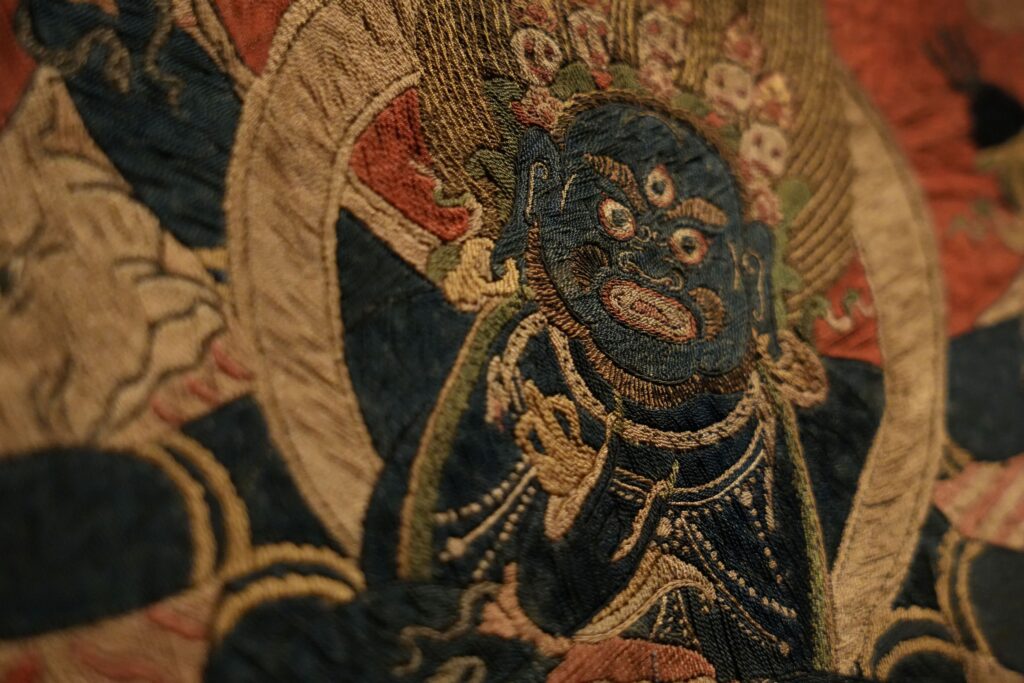
A partial detail of the Mahakala thangka
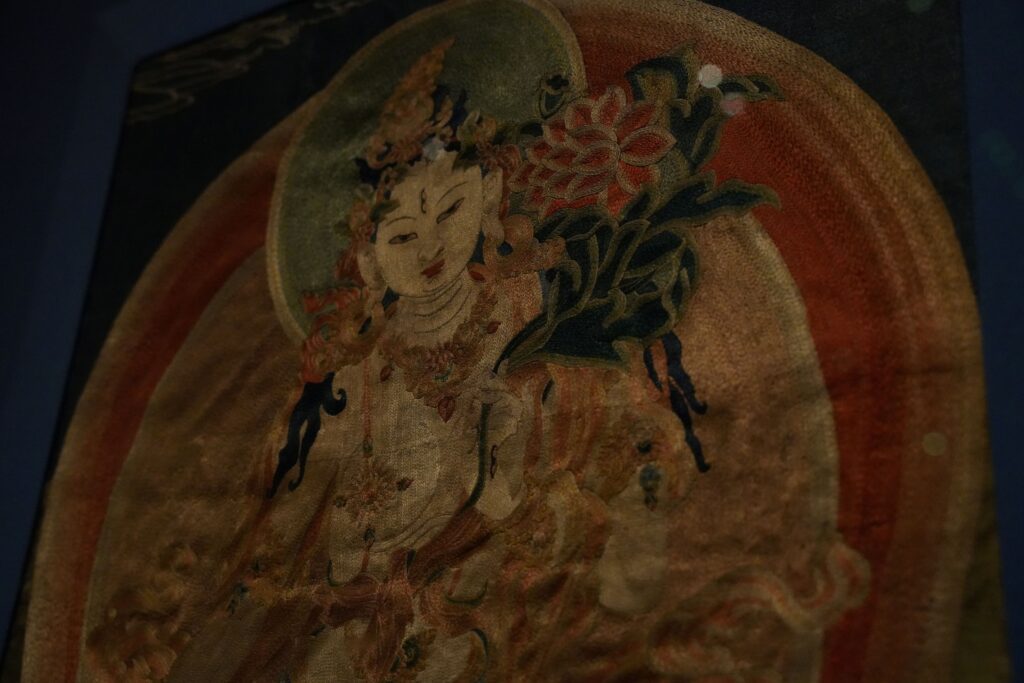
Embroidered thangka of White Tara
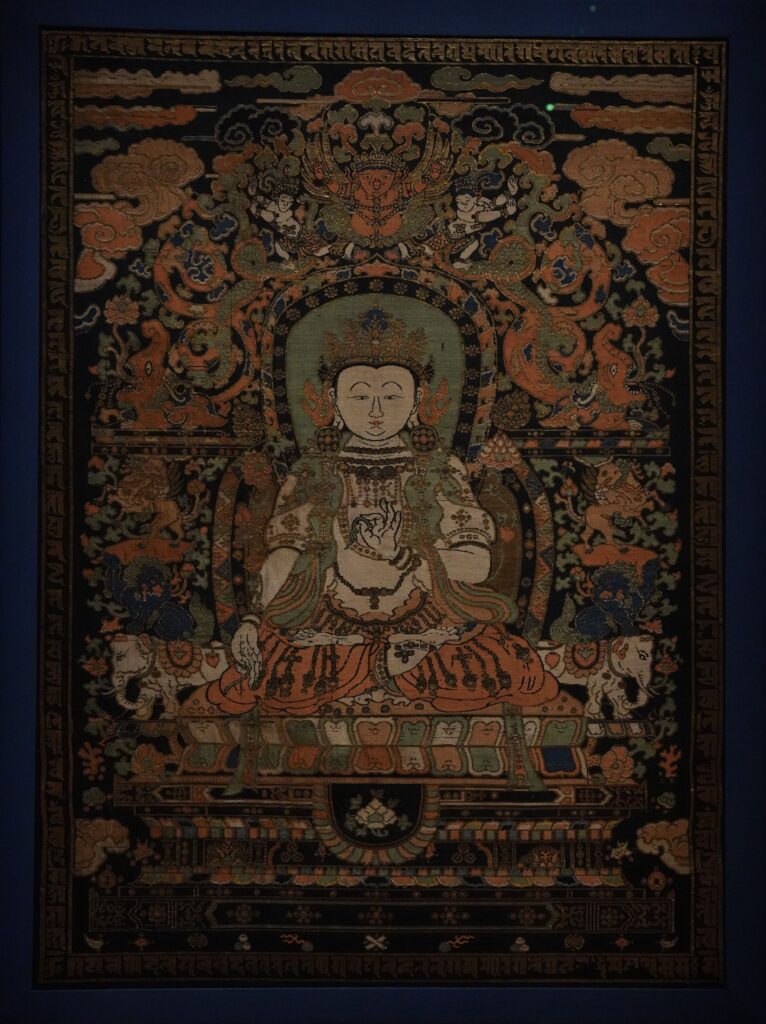
Brocaded thangka of Padmapani
这座博物馆的顶层有一个“材料与设计”的展览大类,包括纺织品、珠宝和瓷器。其中纺织品展厅汇聚了亚洲各地不同类型的织物与服装,就像一本巨著的前言一样,让人还没去亚洲诸国,就能预览这里百花齐放的针线产物,真不愧是叫“亚洲文明博物馆”。
On the top floor, there are exhibitions under ‘Materials and Design’, related to textiles, jewellery, and ceramics. The gallery for textiles houses various types of fabrics and garments from different areas in Asia. It is like the preface to a great work, inviting people to preview the dazzling diversity of textiles from Asian countries, even before they set foot in them. No wonder the museum is called ‘Asian Civilisation Museum’.
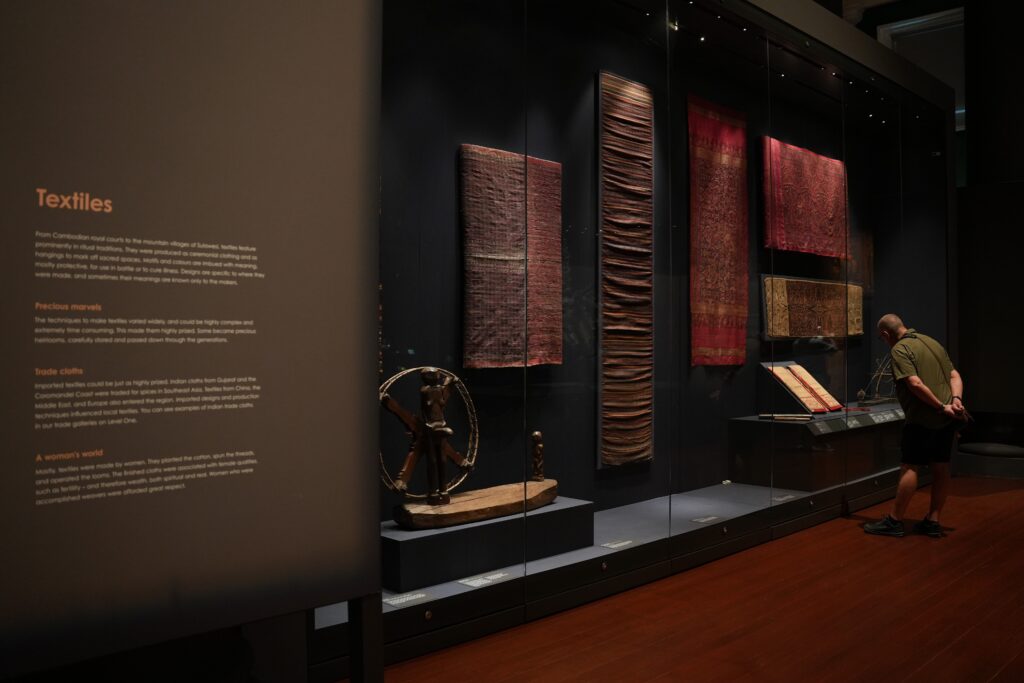
The exhibition for textiles
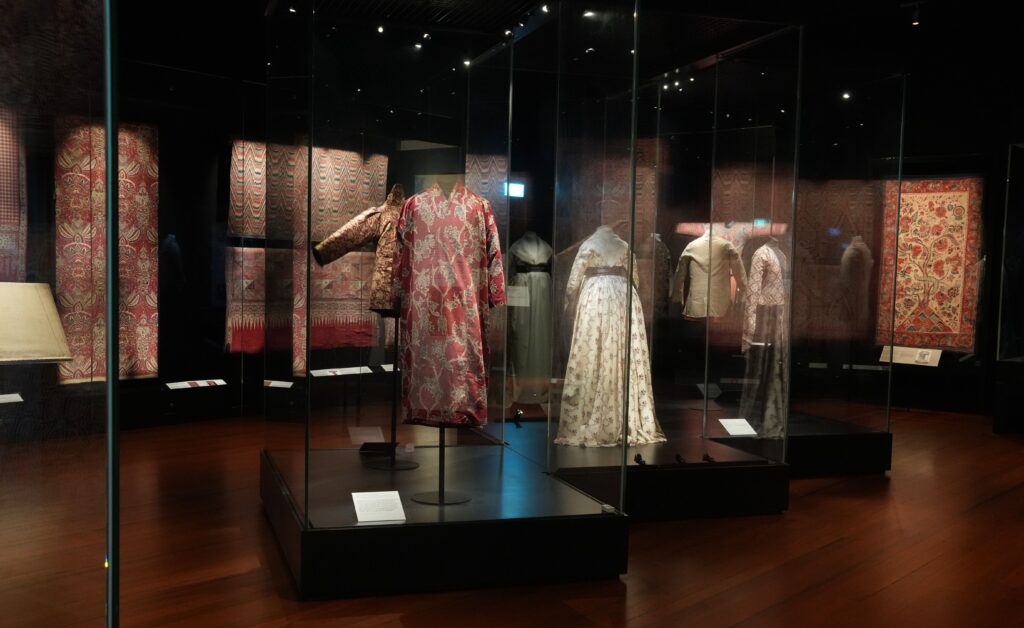
The gallery ‘fashion and textiles’
不过严格来说,这里的物件也不全属于纺织品,比如树皮布做的衣服。
But strictly speaking, objects in this gallery are not all textiles, such as garments made of tapa, also called bark cloth.
树皮布是通过拍打树皮制成的面料产品,在海岛之类的地方比较常见。虽被称之为“布“,却和一般的纺线织布完全不同,所以有时也被归为“无纺布”或“不织布”。
Bark cloth is a type of fabric made by beating tree bark into thin sheets, often seen in island regions. Although called “cloth,” it is quite different from ordinary cloth woven with yarns. So, it is sometimes classified as a type of non-woven fabric.
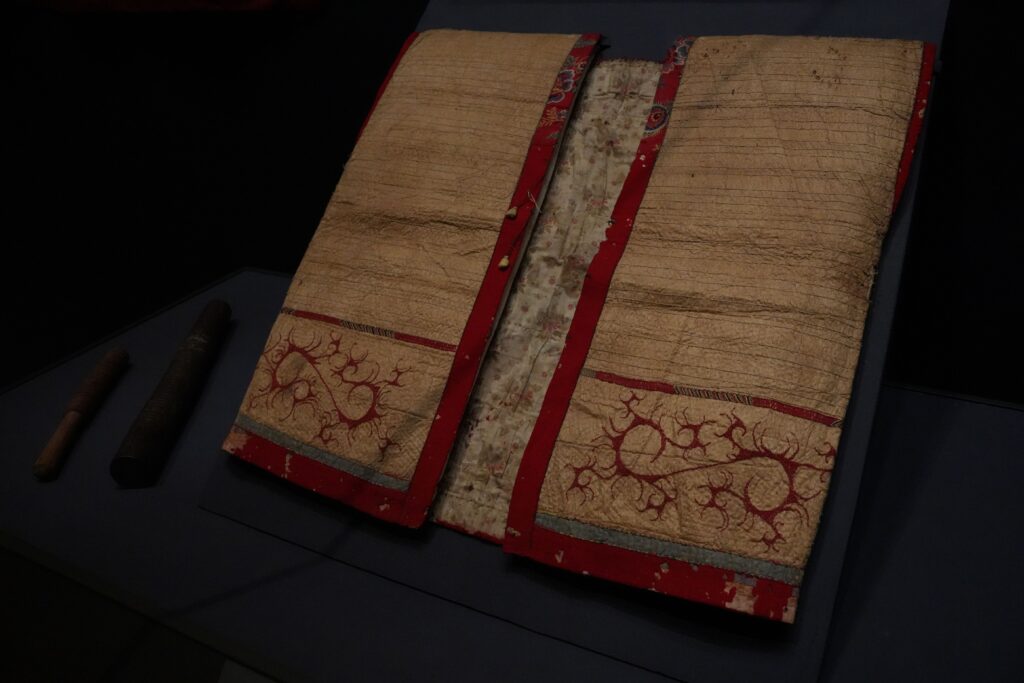
A jacket made with Southeast Asian bark cloth and European cotton fabric
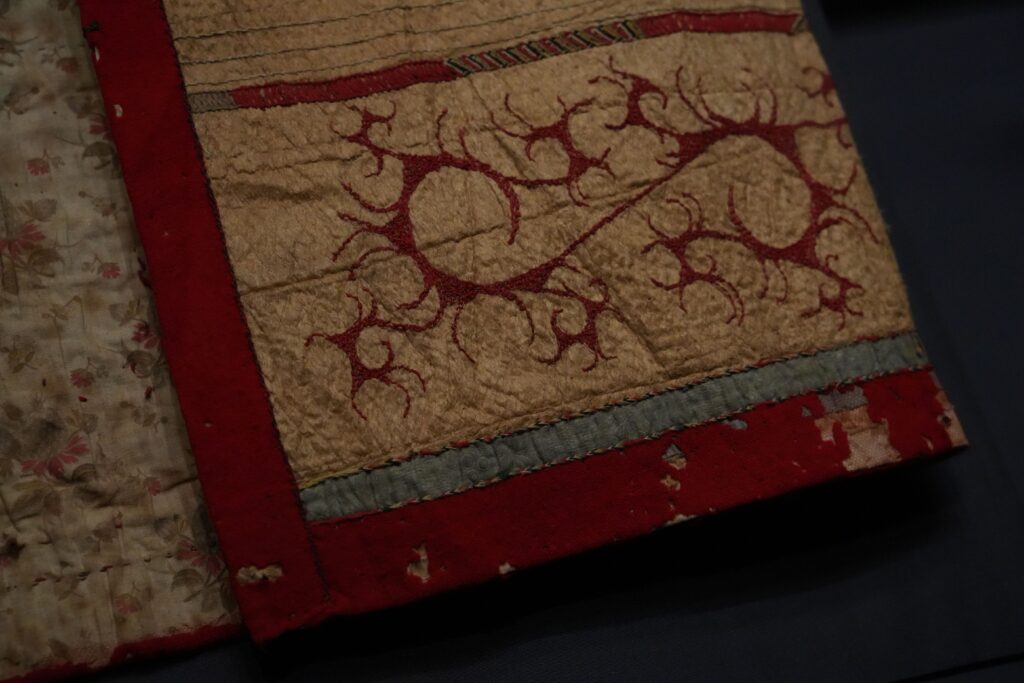
A partial detail of the jacket
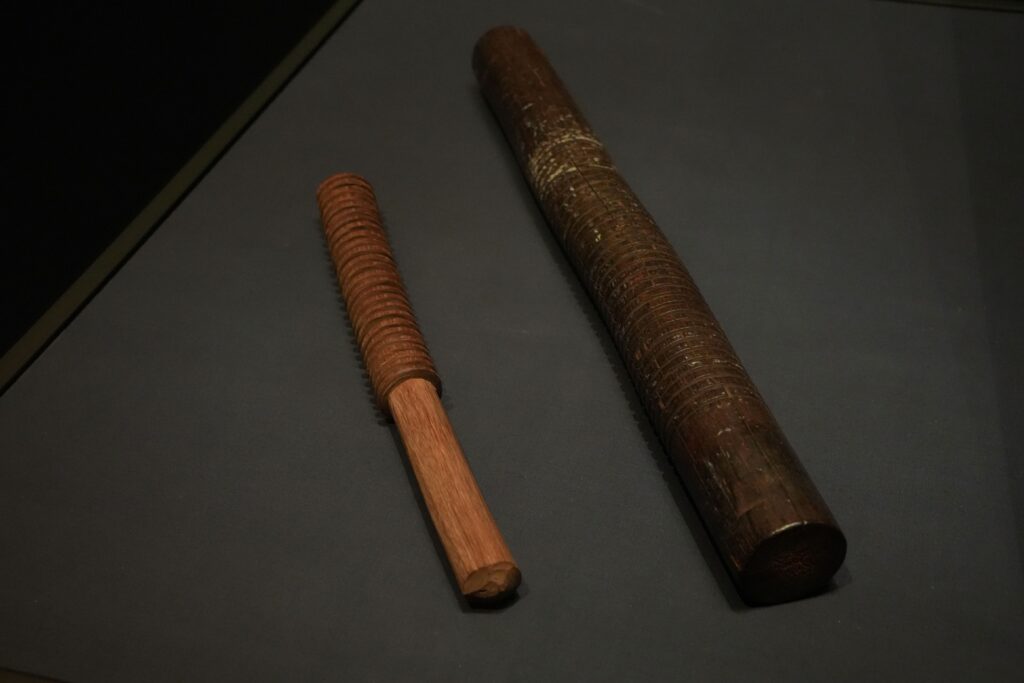
Bark cloth beaters
在亚洲,中国和印度算是两大纺织品生产巨头,而亚洲文明博物馆的展览则让人深信,自古便是如此。中国丝绸声名远扬,而印度把棉花带给了全世界。东南亚诸国从中汲取养料滋养自己的土壤,打造了丰富多彩的东南亚纺织品。我还没怎么去过东南亚,也没去过印度,在这个博物馆参观就像是一场盛大的纺织品预习。
In Asia, China and India are two superpowers in textile production. The exhibitions at ACM also convince me that it has endured for a long time. Chinese silk has long been renowned worldwide, while India introduced cotton to much of the globe. Countries in Southeast Asia drew on these influences to enrich their own traditions and created a rich and diverse range of textiles. I have not yet had much chance to visit Southeast Asia or India, but visiting ACM feels like a grand preview of the textile heritage there.
在中国,经常有人问我为什么想到学纺织,好像这是一个非常奇怪的专业。甚至有人听到这个专业后会一脸疑惑:纺织有什么好学的。可如今,即使博士毕业,我依然觉得纺织品里有一个宏大的世界,好像一辈子也学不完的样子。
In China, I often hear people asking me why I chose to study textiles, as if it were a weird subject. Some even look puzzled when they hear my major, wondering what there is to study about textiles. But even now, with a PhD, I still feel that there is a vast world within the subject, something that seems impossible to fully explore in my lifetime.
想来这世间万事万物,术业专攻,大抵都是如此吧。
It seems to me that, in this world, all things are much the same. Every field has its own depth, and each requires dedicated expertise. In the end, that is probably how the world works.
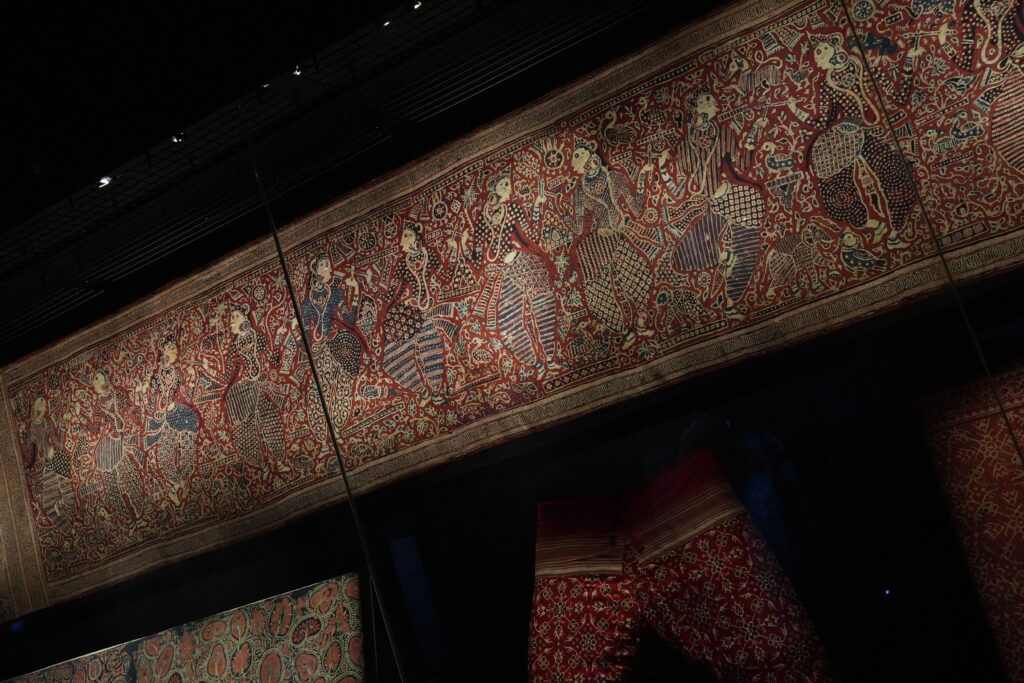
Indian cotton fabric
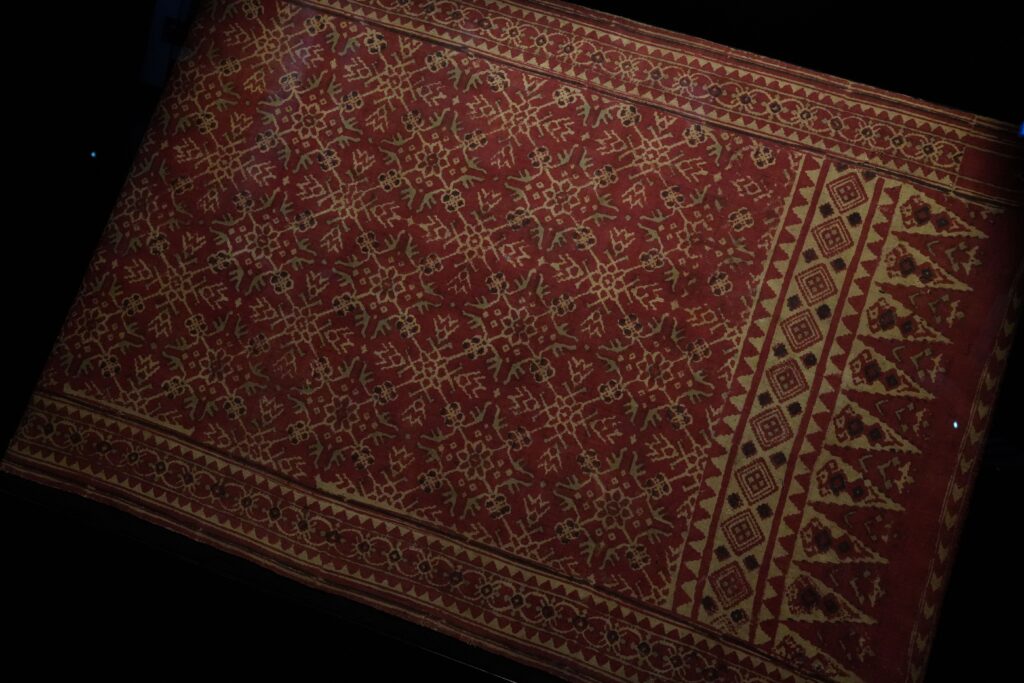
Indian cotton fabric
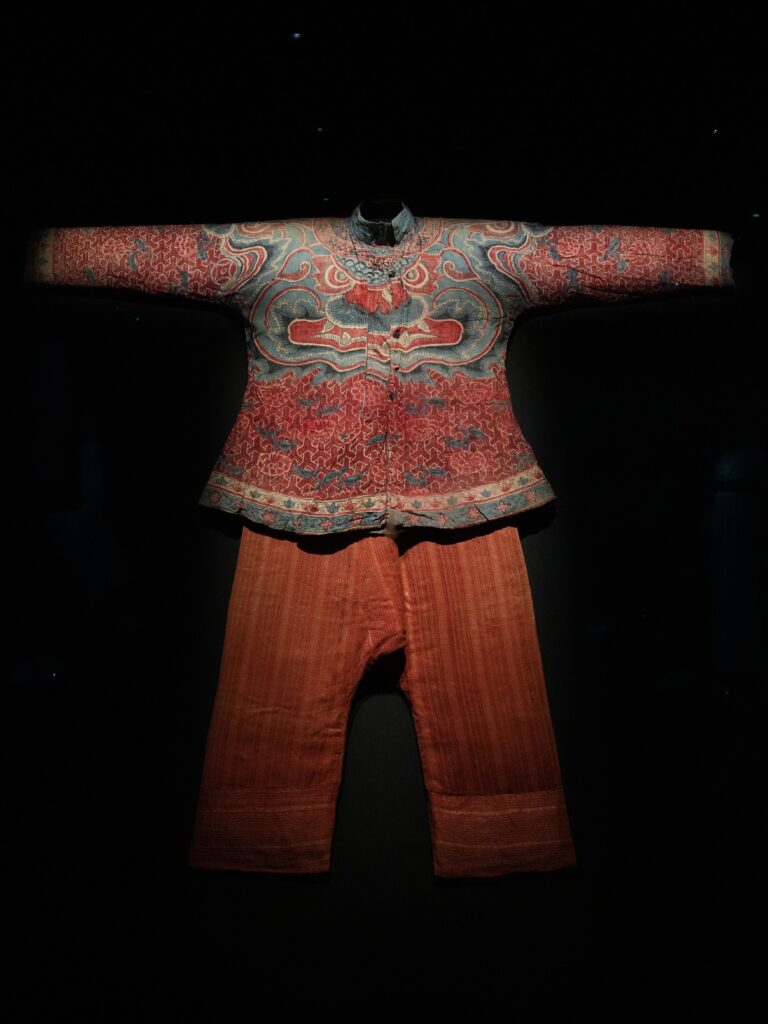
Siamese soldier’s uniform in a desgin incorporating Siamese and Chinese elements, made with cotton cloth from India