感谢肖为本文提供英文朗读录音,点击上方音频可听(这次有巴赫背景乐!)。Thank Shaw for his English reading recording. You can listen to it by clicking the audio above (with Bach BGM!).

The exhibition poster from the Shanghai Museum
2024年11月至2025年3月,上海博物馆有一个名为“寰宇东西:马可波罗眼中的中国和世界”的特展。我在2024年快结束时去看这个展览,意外发现有不少精美织物,于是春节过后我又专门去了一次,还租了一台微单相机探索织物摄影。
From Nov 2024 to Mar 2025, there was a special exhibition at the Shanghai Museum, named WONDERS OF THE WORLD: China and Beyond in the Eyes of Marco Polo. I visited it near the end of 2024 and encountered many beautiful fabrics. Then, I rented a mirrorless camera and went there again after the Spring Festival, to further observe the objects and explore fabric photography.
此展主要展出了马可波罗所处时空即13世纪左右的意大利和中国的文物,其中包括一批来自威尼斯的织物和几件中国元代的纺织品。这些织物铭牌上的中文名称比较泛,最多详细到纹样名,而英文名称让我得以仔细研究了下此前没搞清楚过的织物品类,主要是lampas和samite这两种。
This exhibition displayed antiques mainly of around the 13th century from Italy and China, the time and space in which Marco Polo lived. It included a series of fabrics from Venice and several textiles of the Chinese Yuan Dynasty. From their labels, I saw their Chinese names were not very specific, but the English names enabled me to recognise the types of fabrics that I had never been clear about, mainly lampas and samite.
这两个词汇都是特定织物的名称,在涉及古代纺织品的外文文献或资料库里十分常见,而我目前还没看到有通用的中文译名。在这次马可波罗展中,对照织物的实物与英文名称,我仔细观察了下lampas和samite的特征,初步只能看出它们都是精细奢华的漂亮织锦。
The two words are both fabric names. They are commonly seen in Western documents or databases related to ancient textiles, yet I haven’t found universally used Chinese terms referring to them. In this exhibition, I observed the characteristics of lampas and samite by combining their objects and names. However, I could only recognise that they are both exquisite and luxurious brocades.
于是我上网查资料,再对照所拍摄的织物照片,大概可以将这两种织锦介绍如下。
With further searching on the internet and comparing the information with the photos I took, I could probably describe the two kinds of brocades as follows.
Lampas是一类双层提花织物,它在地组织的基础上靠纬线起花,用经线接结,一般由彩色蚕丝线织制,有时也会加入金线、银线等,图案精细,极尽奢华。这种织物可能源自中亚或中东地区,至迟于13世纪成为意大利丝织业的主要产品。词源方面,“lampas”本是一个古法语词汇,有“闪亮”含义。
Lampas is a type of double-layered figured fabric. The motifs on it are formed with weft floats bound by binding warps on the basis of a ground weave. It is usually woven with silk threads, sometimes with gold or silver added to be more exquisite and luxurious. Lampas probably originated from Central Asia or the Middle East. It started to be manufactured in Italy no later than the 13th century. Etymologically, the term lampas was initially a French word implying a meaning of shining.
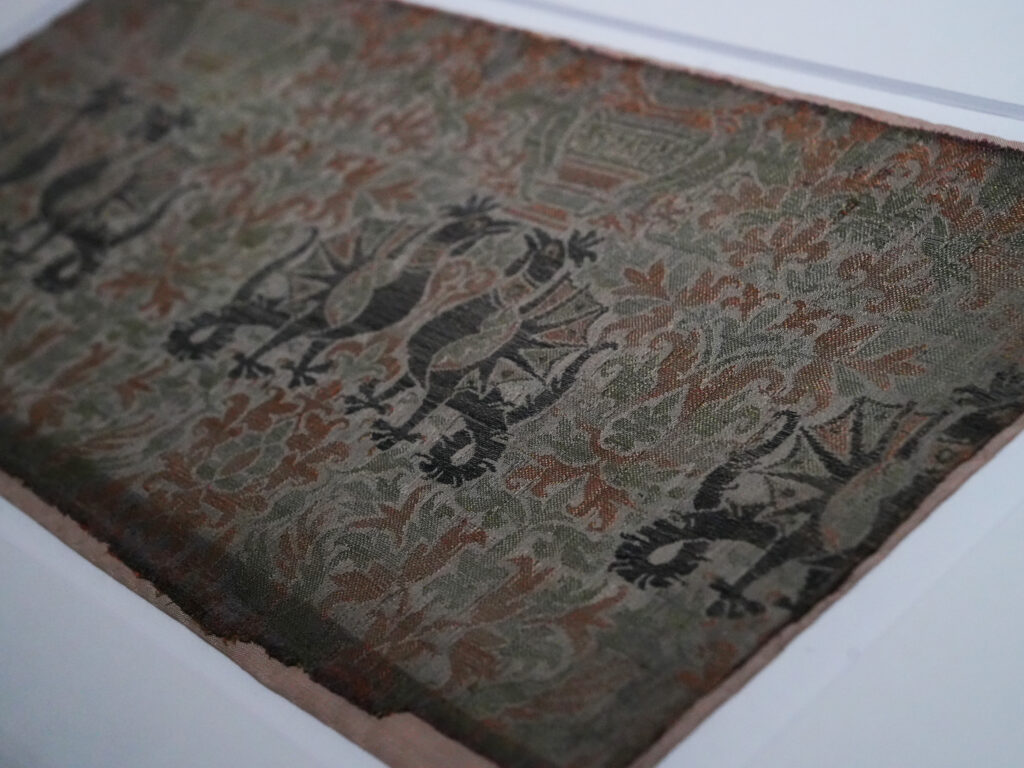
A lampas produced in Italy in the 14th century
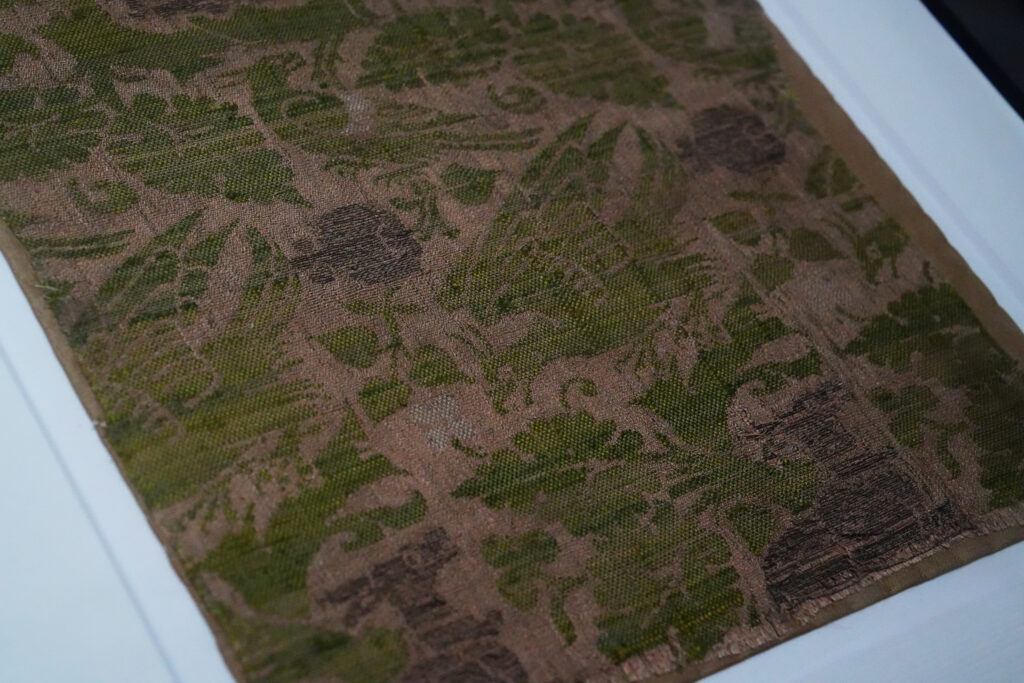
A 14th-century lampas produced in Italy
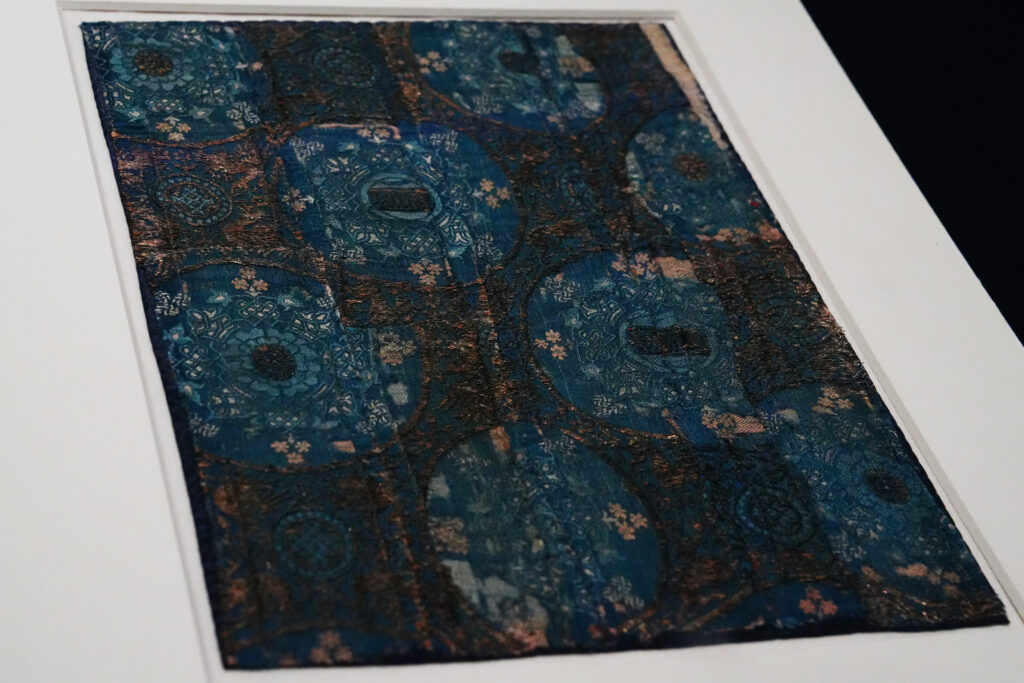
A 14th-century lampas produced in Italy
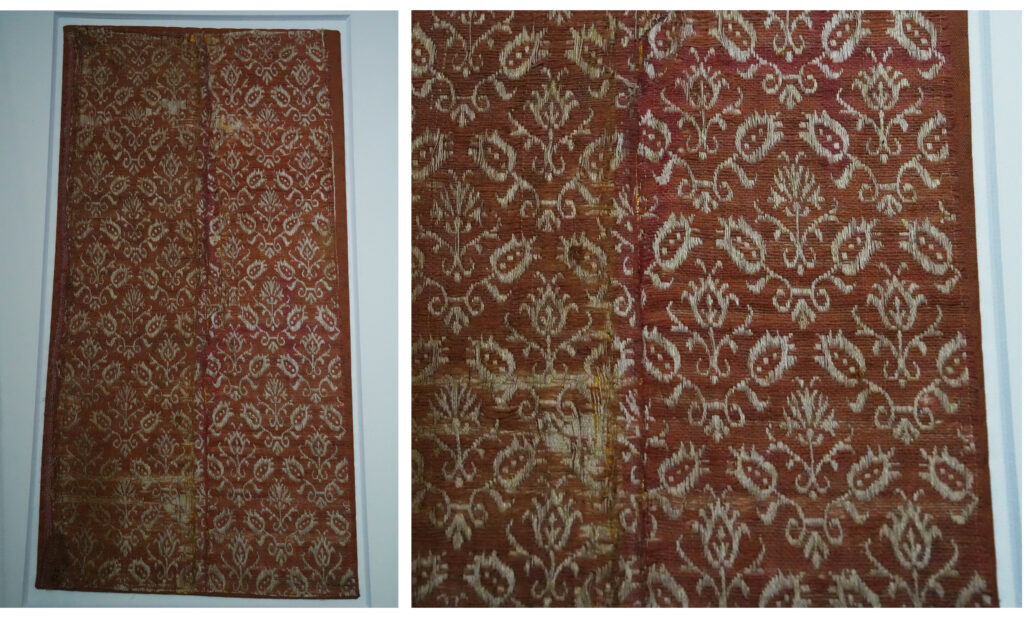
A 14th-century lampas produced in Italy, and its partial details
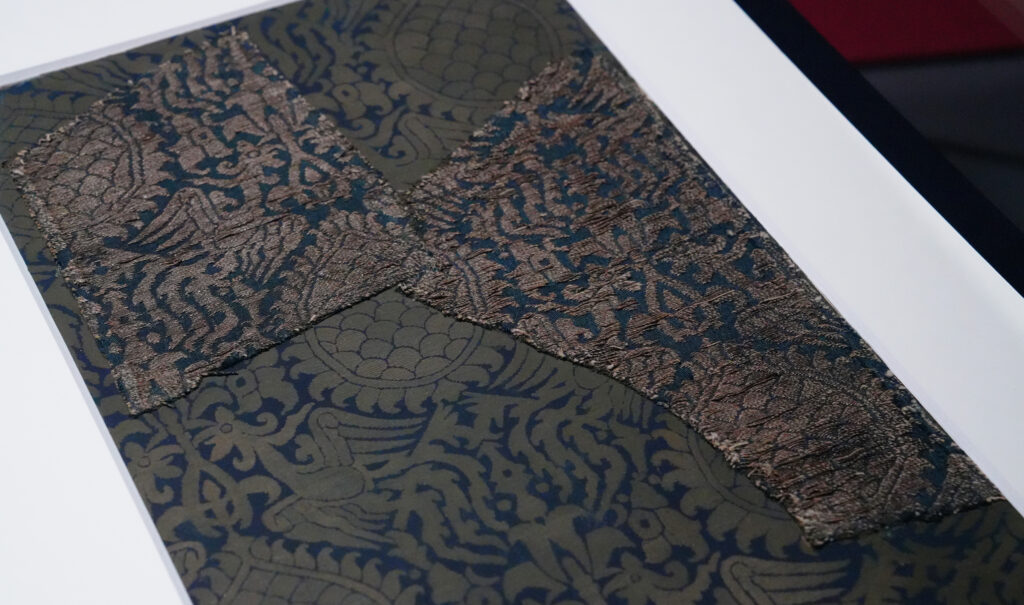
14th-century lampas fragments produced in the Middle East
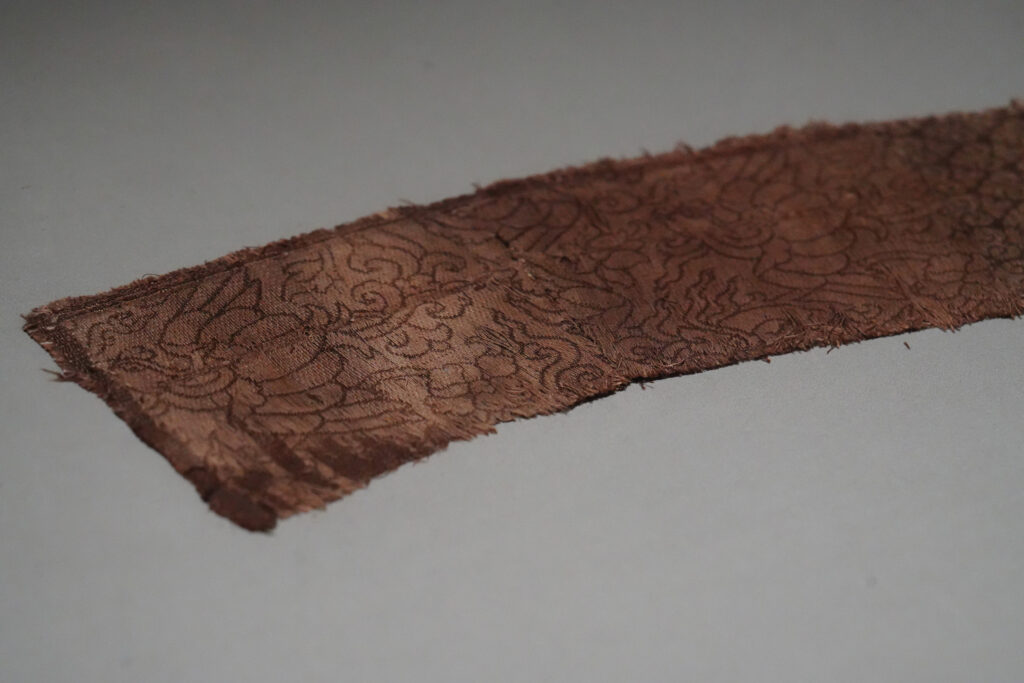
Gold woven lampas of the Chinese Yuan Dynasty
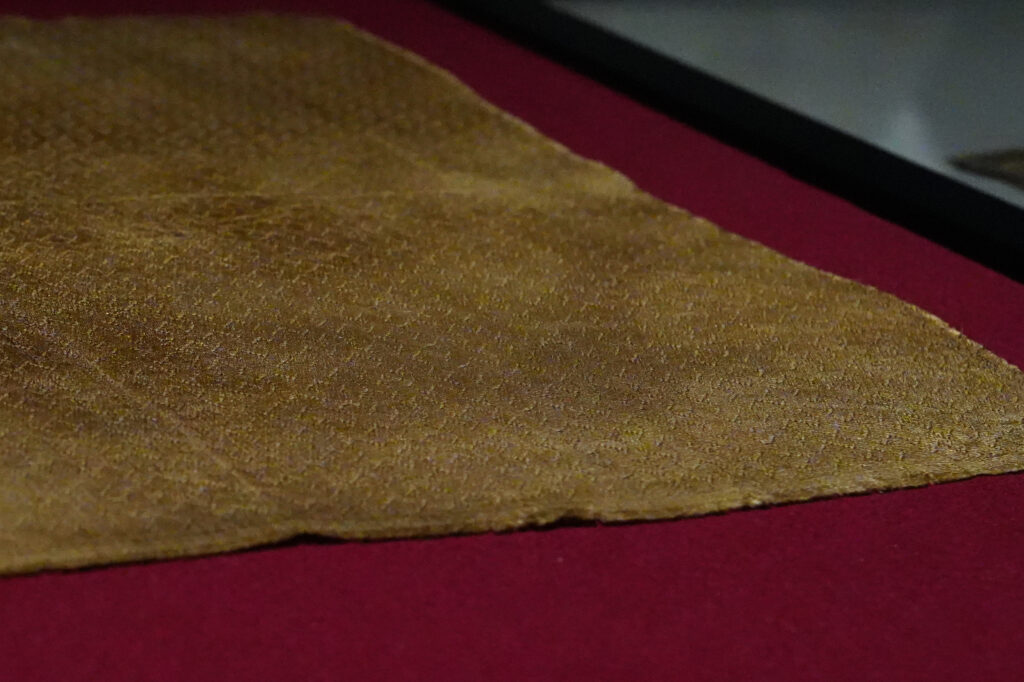
Gold woven lampas of the Chinese Yuan Dynasty
Samite是一类地组织为斜纹的厚重丝织物,一般也会加入金线或银线,也是一种奢华的纬锦,可能起源于伊朗地区的萨珊王朝(公元224-651年),隋唐时期在中国出现,9世纪进入欧洲,在欧洲的中世纪是经常被穿用的面料。从词源上说,“samite”一词可追溯至拜占庭时期的希腊语,本意为“六根线”,可能指织造时使用了六重经纱。
Samite is a type of heavy silk with a twill ground, also a luxurious weft-patterned brocade usually added with gold or silver threads. It might originate from the Sasanian Empire in Iran and appeared in China during the Sui Dynasty. It entered Europe in the 9th century and was often worn in medieval times. Etymologically, the term samite can be traced back to the Byzantine Greek meaning “six threads”, probably referring to the use of six groups of warps in the weaving process.
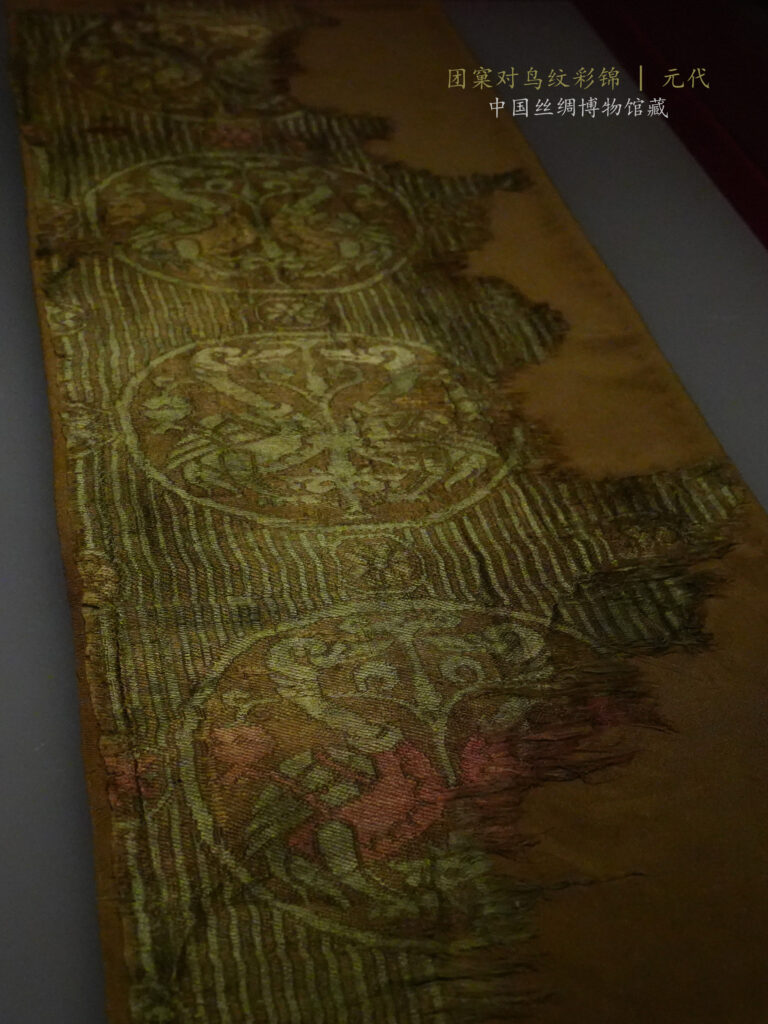
A samite fragment of the Chinese Yuan Dynasty

A samite fragment of the Chinese Yuan Dynasty
总的来说,samite和lampas都是源于中亚或中东的奢华纬锦,它们都靠纬线起花,用经线接结。不同的是,samite以斜纹组织为地,有更多层结构,织物更为厚重,它的主经纱从织物正反面都看不见,除纬线外,只有接结经能显露出来。这大概就是为什么,在博物馆凭肉眼很难分辨两者的区别。
In general, samite and lampas are both luxurious weft-patterned brocades derived from Central Asia or the Middle East. They both show the patterns with weft threads and fix the floats with binding warps. What differentiates samite from lampas is that it has a twill ground, more layers on the fabric structure, and a heavier feeling. The main warps of samite are hidden on both sides of it by the floats of the ground and patterning wefts, with only the binding warps visible. This might be the reason why it is very hard to recognise the difference between lampas and samite in the museum with my bare eyes.
除了图案精细的织锦,这里也展出了几块来自意大利的天鹅绒织物。天鹅绒是一类织造时利用额外的绒经与假纬交织起圈,然后将绒圈割开形成簇绒的织物。我曾读到过一篇对天鹅绒介绍非常详细的推送,这里就不详写了,推荐感兴趣的朋友点击阅读《天鹅绒的故事》。
Apart from intricate brocades, there were also several velvets from Italy. Velvet is a kind of pile fabric made by cutting loops formed by interlacing extra warps with fake wefts. I once read an article on Wechat introducing velvets perfectly in detail. Therefore, I would not explain them here. Anyone interested can enter the link here 天鹅绒的故事 for further reading.
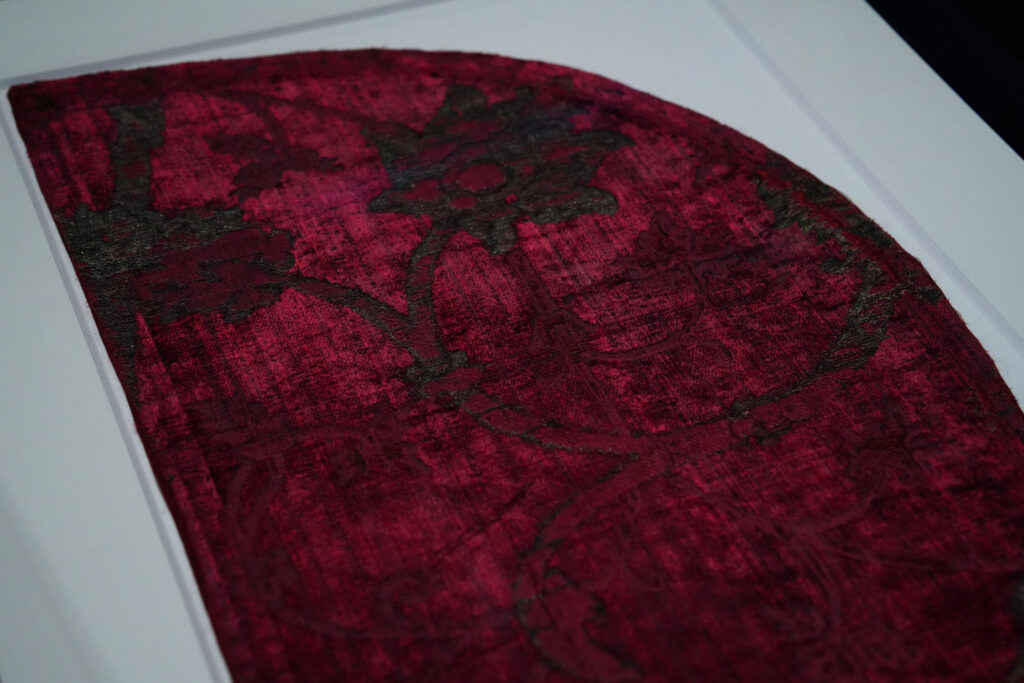
A 15th-century velvet fragment produced in Italy
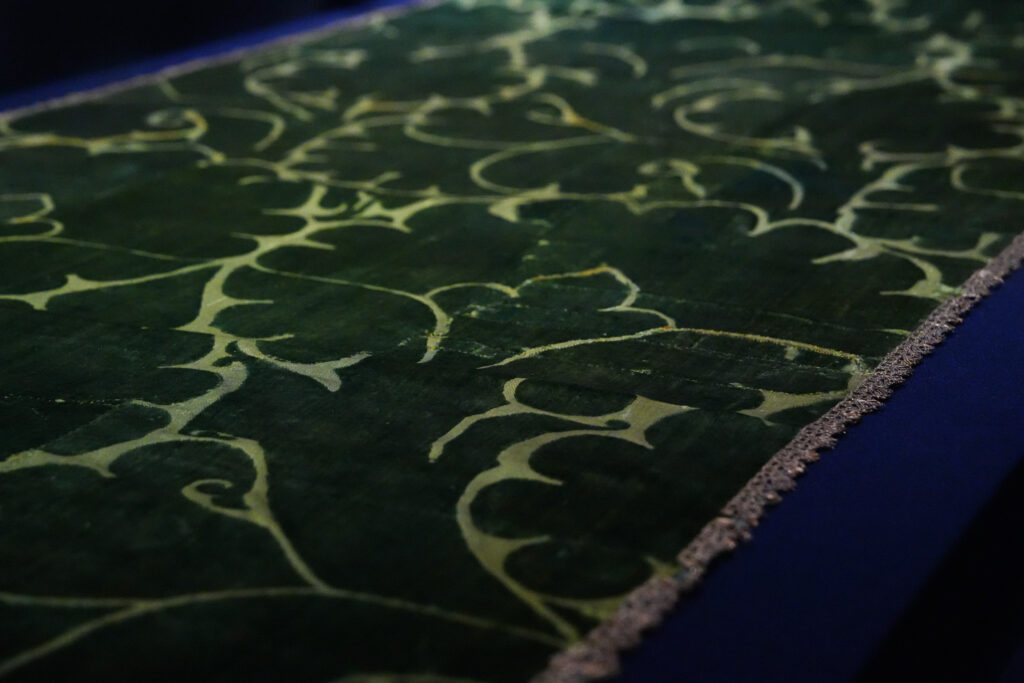
A 15th-century velvet produced in Italy
最后,我在这个展览上还有一个新奇收获,就是第一次了解到了罟罟冠。据介绍,罟罟冠为元朝蒙古贵族妇女流行的礼冠,因饰于最显眼的头部位置而最能反映佩戴者的身份和地位。
At last, I also got something new from this exhibition, that I first learned about Gugu Hat. It was introduced to be a headdress for Mongol noble women in the Chinese Yuan Dynasty, which could best reflect the identity and status of the person who wears it by wearing it on the most visible part of the body.
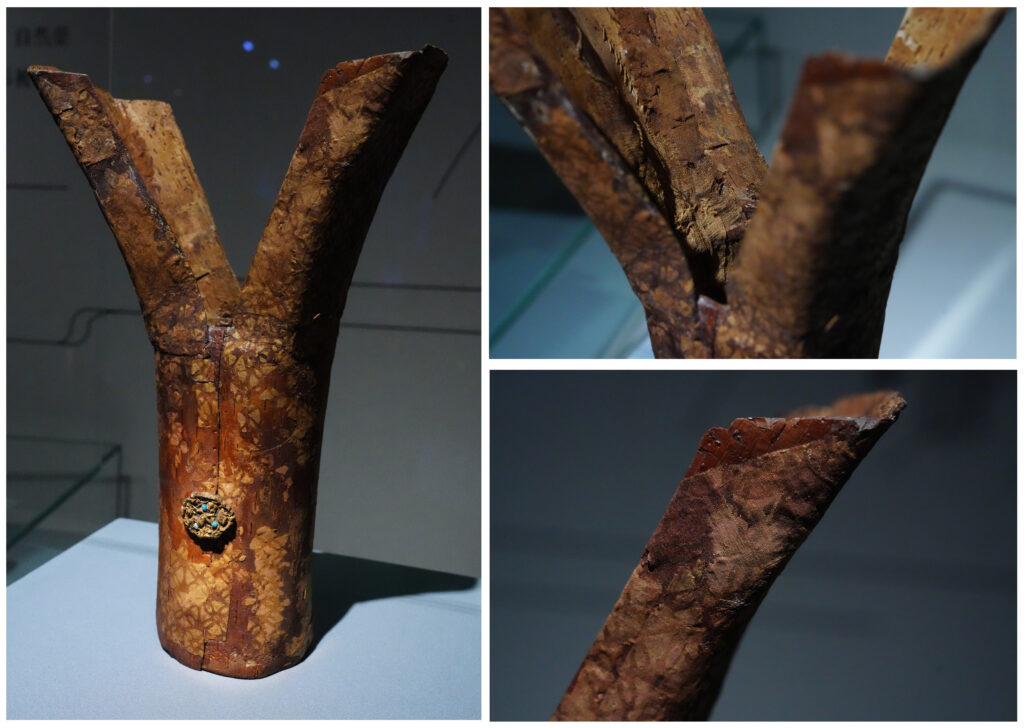
The crown of a Gugu Hat with silk fabrics
罟罟冠本由兜帽、高冠和羽饰三部分组成,此次展览展出了一件内蒙古博物院馆藏的高冠和一件上海博物馆馆藏的兜帽。高冠由桦树皮做胎骨,内外皆包裹丝织品,外面能看到印金绢,内部还能看到有褐色的罗织物。兜帽佩戴在头部可用于固定高冠,所用织物为元朝蒙古贵族所喜爱的纳石失,即织金锦。
A Gugu Hat contains three parts: a hood, a crown, and a feather ornament. In this exhibition, a crown from the Inner Mongolia Museum and a hood collected by the Shanghai Museum were on display. The crown is made of birch bark and wrapped with silk. Tabby silk printed with gold motifs can be seen on its outside, and brown leno can be seen inside. The hood is used to wear on the head to fix the crown. It is made with Nashishi (Nasich in Persian), a gold-wefted brocade that is popular among Mongol aristocrats in the Chinese Yuan Dynasty.
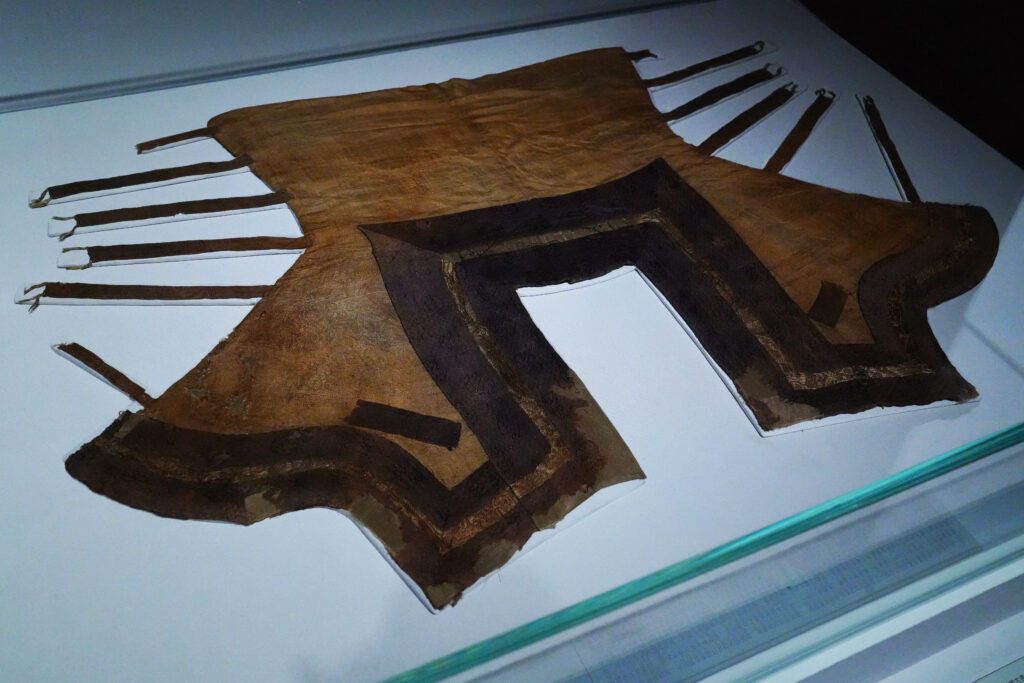
The hood(or cover) of a Gugu Hat
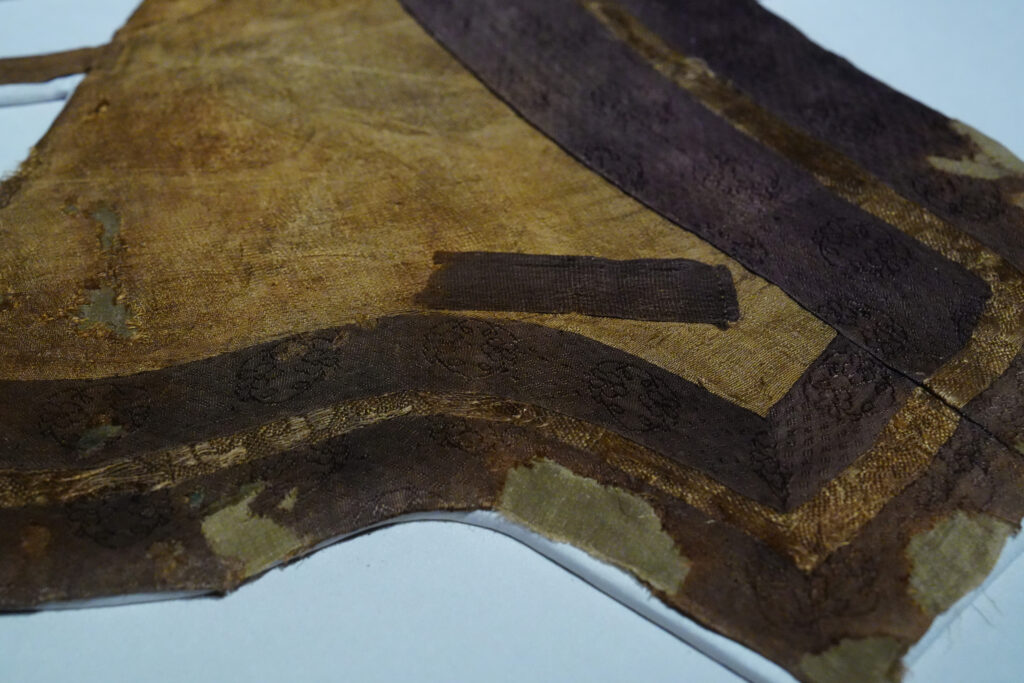
The partial detail of the Gugu Hat Cover