Thank Shaw for his English reading recording, which you could listen to by clicking the audio above.
感谢肖为本文提供英文朗读录音,点击上方音频可听。
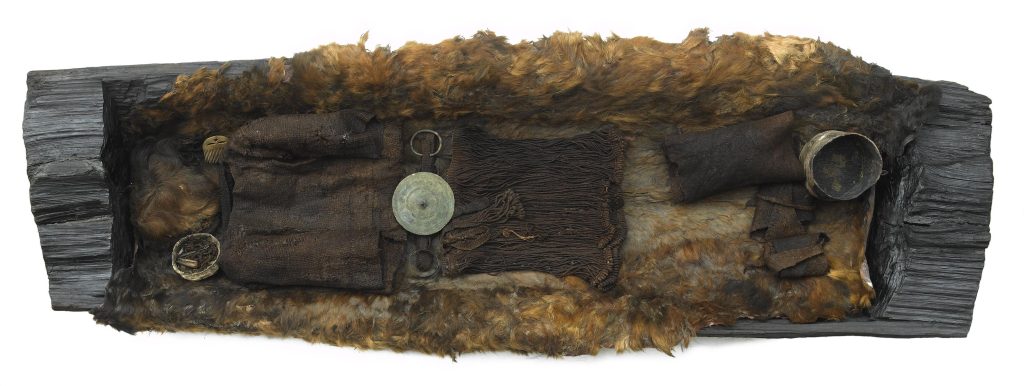
艾特韦女孩(图片来自丹麦国家博物馆网站)
Since I first heard about the Egtved Girl on Eva’s course Scandinavian Cloth Culture 700-1100, I have encountered this name several times for the past half year. Her burial reminds me of a similar archaeological find in China, the Princess of Xiaohe (Chinese: 小河公主), in which the female corpse wears wool products too. Then I searched for more information about the Egtved Girl and was sparked a strong interest because they resemble a lot.
第一次听说“艾特韦女孩”是在外导的“斯堪的纳维亚维京时代布文化”课程中,自那以后,我经常能在不经意间听到这个名字。她让我想起了在中国发现的一个和她情况相似的女尸“小河公主”,两者都穿羊毛。于是我多了解了一些关于艾特韦女孩的信息,发现她和小河公主真的很像,这激起了我的强烈兴趣。
The Princess of Xiaohe is a female corpse unearthed from Xiaohe Cemetery, along with other mummies at Taklamakan Desert in Northwest China. She was buried approximately 3800 years ago in a wooden coffin made into the shape of a boat and well-preserved with clothes, hair, face and even eyelashes. Thanks to her well-preserved beauty and the site where she was discovered, she is called the Princess of Xiaohe. She is not usually shown to the public but I was lucky to have visited her at an exhibition in Dec 2019, Fusion of Colors: Special exhibition on the civilization of the Silk Road, held at the Arthur M. Sackler Museum of Art and Archaeology at Peking University.
小河公主是在位于塔克拉玛干沙漠的小河墓地与其它墓葬一起出土的一具女尸,大概于3800年前被埋葬在一个做成船形的木棺中。她在出土时被发现保存得非常漂亮,其衣物、头发、脸孔甚至眼睫毛都被保留了下来,也正因如此,她被称为“小河公主”。小河公主一般不对公众展出,但我有幸曾于2019年12月在北京大学赛克勒考古与艺术博物馆举办的“千山共色:丝绸之路文明特展”中一睹其芳容。
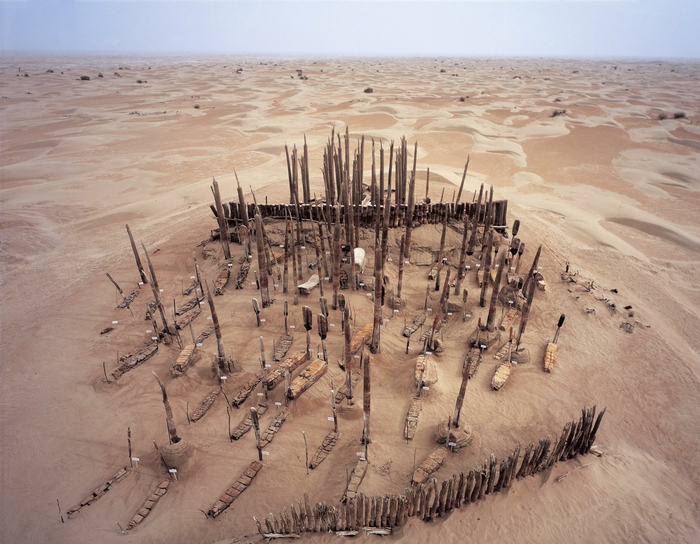
小河墓地(李文瑛拍摄)
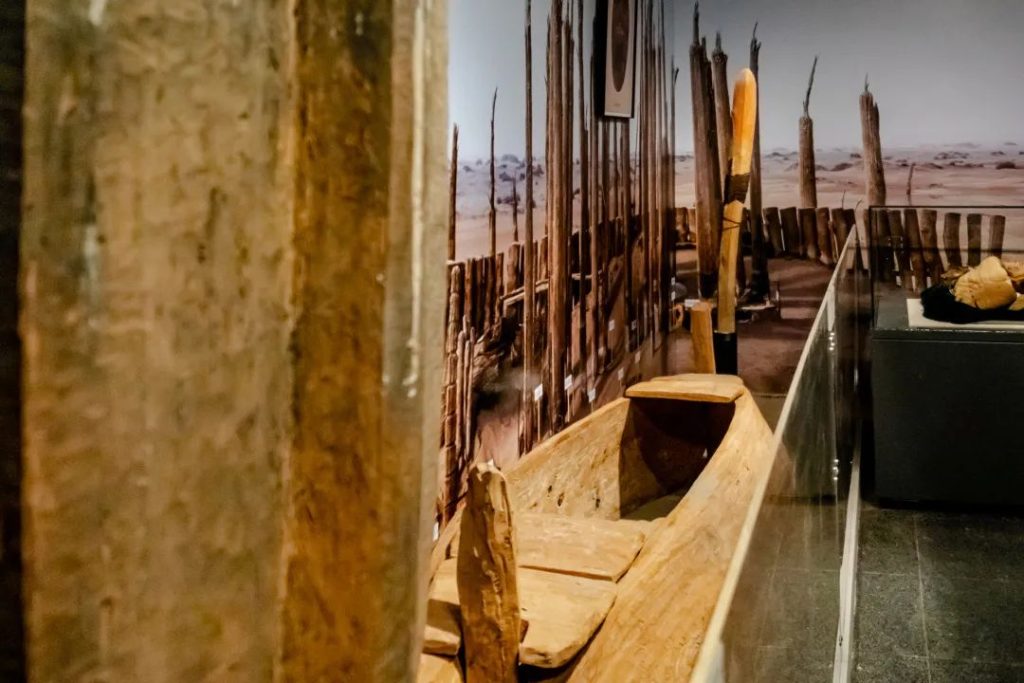
北京大学赛克勒考古与艺术博物馆展出的小河公主船棺(照片来自博物馆公众号)
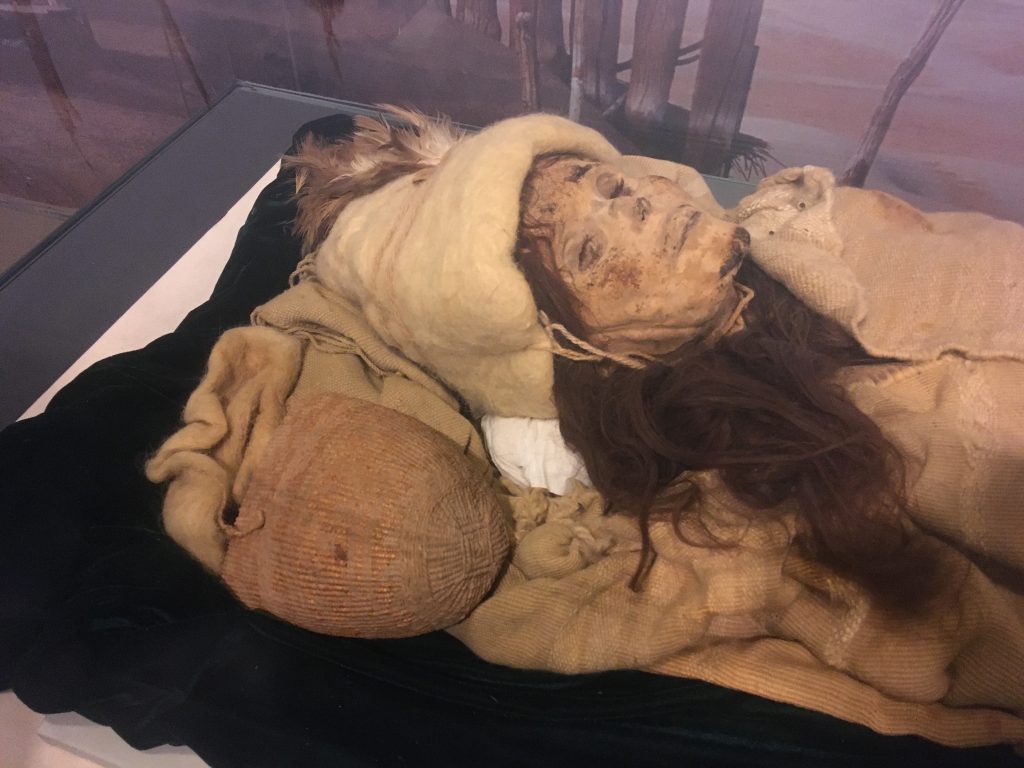
北京大学赛克勒考古与艺术博物馆展出的小河公主
The Egtved Girl is also a female corpse, discovered from the barrow Storehøj near Egtved in Southern Denmark, buried around 3400 years ago in a split, hollowed-out oak trunk coffin. She is not preserved as well as the Princess of Xiaohe, with nearly no body part seen today. It is reported that her hair, brain, teeth, nails and a little skin remain but I didn’t recognize them too much except for her hair in the National Museum of Denmark, where she is exhibited in the Danish Prehistory part with her coffin, clothes and goods permanently. The same as the Princess of Xiaohe, Egtved Girl was also named after where she was found.
艾特韦女孩也是一个女尸,是在南丹麦地区艾特韦附近的Storehøj古墓被发现的,大概于3400年前被埋葬在一个用橡树的树干劈开挖空做成的木棺中。她连同她的木棺、衣物和随葬品被放在丹麦国家博物馆的丹麦史前史展厅常年展览,不如小河公主保存得好,如今已几乎看不见尸体了。据说她的头发、脑部、牙齿、指甲,还有一点皮肤留存了下来,但我在博物馆除了头发没看出什么别的。同小河公主一样,艾特韦女孩也是根据其发掘地命名。
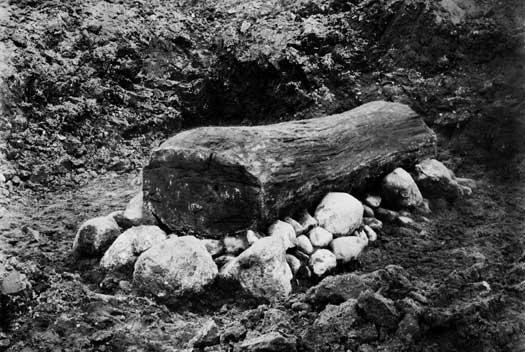
发掘时的艾特韦女孩棺木(照片来自丹麦国家博物馆网站)
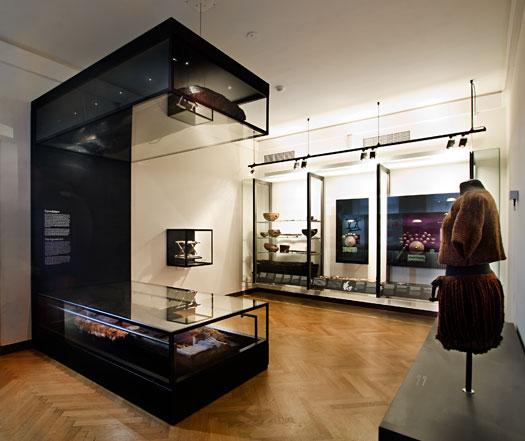
(Photo from the website of National Museum of Denmark)
丹麦国家博物馆的艾特韦女孩展厅(照片来自丹麦国家博物馆网站)
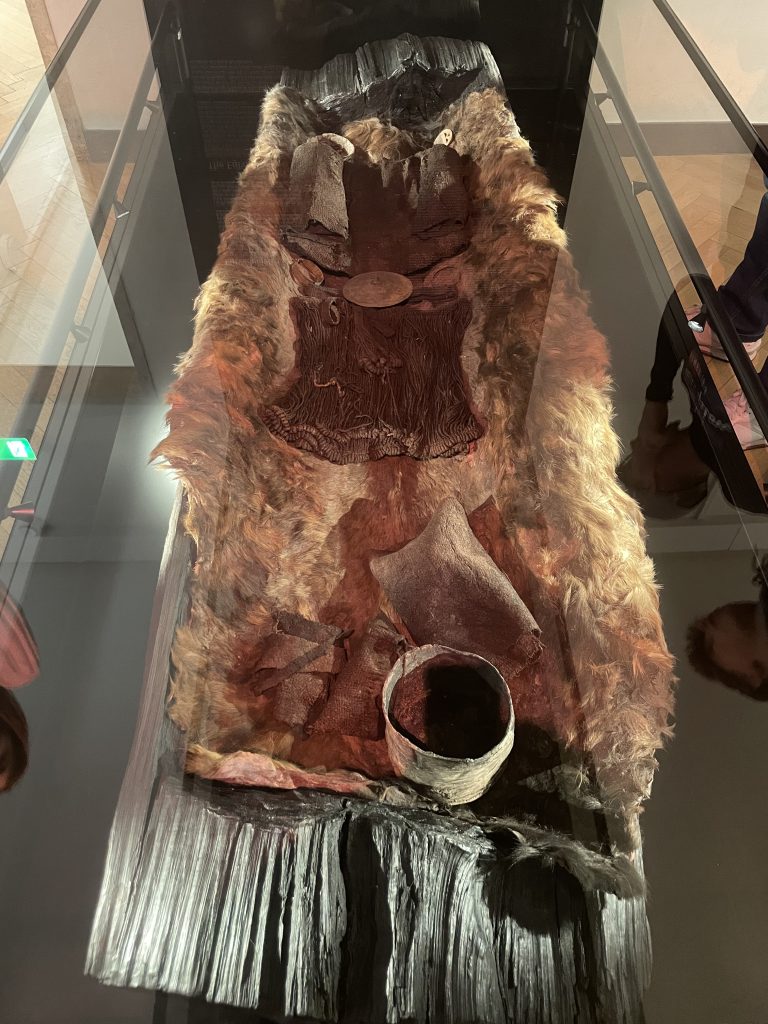
展览中的艾特韦女孩
Two burials resemble each other in different aspects such as their age, gender, hair colour and the use of wool etc. The appearance of Egtved Girl cannot be observed today but researchers proposed that she had likely come from the Black Forest region of what is now Germany but married and moved to Denmark, based on strontium isotope analysis. The Princess of Xiaohe, however, kept her face with dairy products applied to it, with her long and curled eyelashes remaining, appearing to have Western ancestry. Both of them wear wool garments, even with similar styles.
两个墓葬在许多方面都很像,比如它们的年代、墓主性别、墓主发色,以及对羊毛的使用等。艾特韦女孩的面容如今已不可见,不过研究人员通过锶同位素分析得出,她可能来自现在德国境内的黑森林地区,结婚后移到了丹麦。小河公主的脸孔与涂在她脸上的奶酪制品一起被保存了下来,其眼部还残留着又长又翘的睫毛,看起来像是有西方血统。两位都穿羊毛服装,甚至连服装风格都相似。
Egtved Girl’s outfit caused a sensation when it was unearthed in the 1920s, which is the best-preserved example of a style now known to be common in Scandinavia during the Bronze Age (1700-500 BC). She wore a short blouse and a knee-length cord skirt made of wool. She had a belt plate of bronze decorated with spirals on her stomach, a comb of horn attached to her belt, two arm rings of bronze and a slender ring in her ear. Next to her coffin in the National Museum of Denmark, a copy of her costume reconstructed by the Lejre Experimental Centre is on display too.
艾特韦女孩的着装在她于1920年代被发现时曾引起轰动,是如今已被熟知的北欧青铜时代(1700-500 BC)服装风格被保存最好的样本。她身穿一件短上衣和一条及膝线裙,都是用羊毛做的。她肚子的位置放着一个有螺旋装饰的青铜腰带盘,腰带上有个角质的梳子,手臂位置有两个青铜臂环,耳部还有一个细耳环。在丹麦国家博物馆她的棺木旁边,还有一套由莱尔实验中心复刻的艾特韦女孩服装。
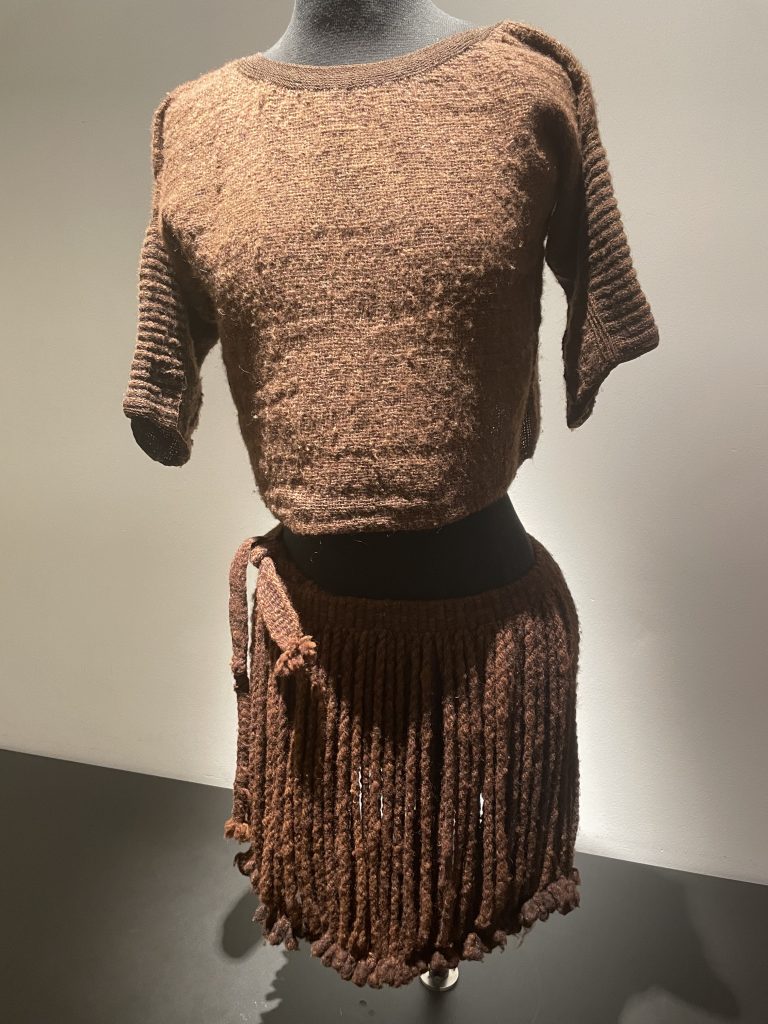
复刻版艾特韦女孩服装
The outfit of the Princess of Xiaohe seems to be less of a focus and it is not in a typical Chinese style. From what can be seen in the exhibition, she was wrapped in a white wool cloak with tassels, wearing a white felt hat with feathers on her head. Next to her head, there was a wool braid that seemed to be used for storing stuff. Looking up at pictures of her outfit inside the cloak and descriptions from archaeologists, she wore only a wool cord skirt with ephedra twigs and branches placed on her upper body and fur-lined leather boots on her feet. She had a red rope necklace and a bracelet with one jade bead on her right arm.
小河公主的服装似乎不怎么被关注,也不是典型的华夏风格。我在展览中只能看到她被包裹在一件带繐的白色羊毛斗篷中,头上戴有插着羽毛的白色毛毡帽,头边还有一件看起来像是装东西用的毛编物。通过查找她被覆盖在斗篷内的服装照片以及考古工作者的描述,她只穿有一条毛线半裙。她的上半身放着麻黄枝,脚上穿了双内衬毛皮的皮靴,脖子上有红绳,右臂上有只带玉珠的手镯。
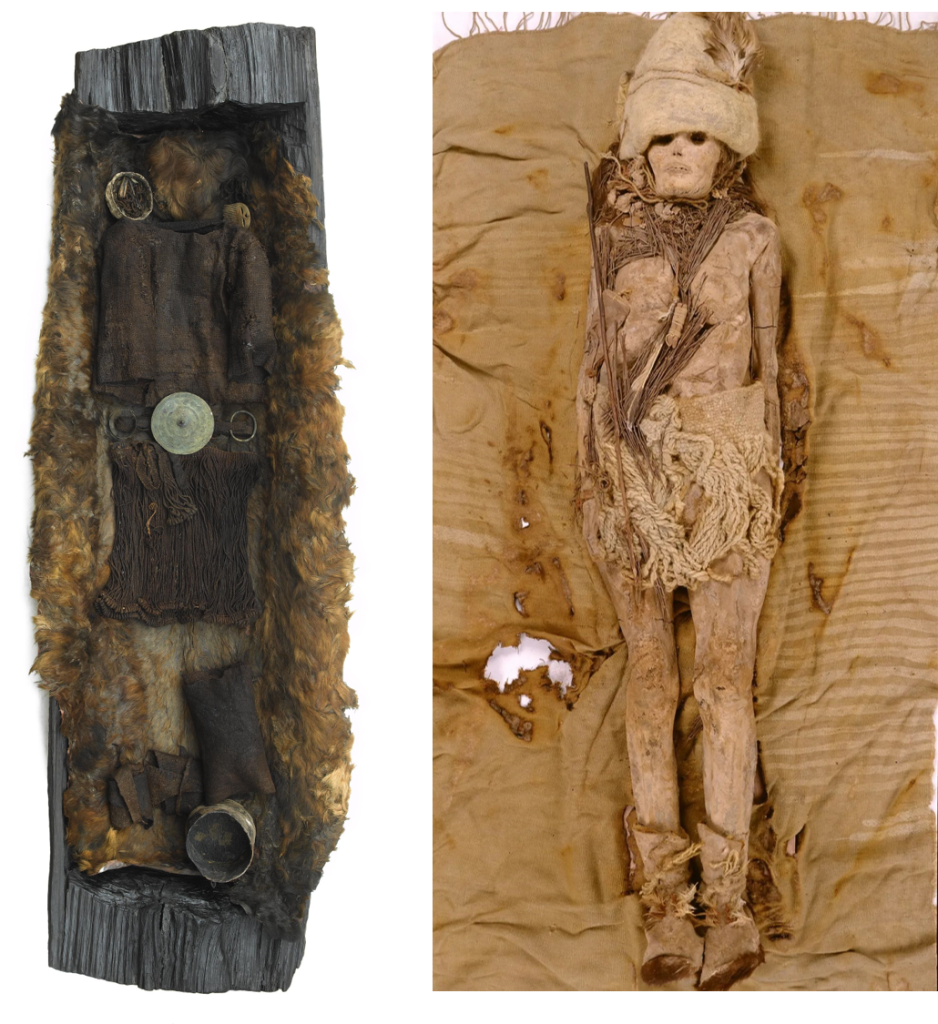
艾特韦女孩(左,图片来自丹麦国家博物馆网站)和小河公主(右,图片来自网络)服装对比
I am not an expert in wool history and its ancient costume but I was amazed by the same cord skirt and wool materials of two corpses thousands of miles apart. They look the same, aren’t they? I couldn‘t help guessing if the two might have had bonds in some way but I haven’t found any evidence or research about the possibility of them being related. The newest study on ancient DNA of mummies from the Tarim Basin including the Princess of Xiaohe revealed that they were from a genetically isolated local population. They adopted the pastoral and agricultural practices of their neighbours but maintained their own culture and genetics. (research article available at https://doi.org/10.1038/s41586-021-04052-7)
我不怎么了解羊毛的历史及其古代服装,但我为这两位相隔千里的女尸所穿的毛线裙所惊叹,看起来简直一模一样。我忍不住猜测这两位古代女子之间是否存在某种程度上的关联,但我没找到相关证据,也没找到相关研究。最新针对塔里木盆地干尸(含小河公主)的古基因研究表明,这些人来自一个在基因上和其他人群存在隔离的本地群体,他们吸收了周边人群的畜牧与农业操作,但保持了自己的文化和基因。
I have never seen what other mummies unearthed from the Taklamakan Desert were wearing. Apart from the clothes of Egtved Girl in the National Museum of Denmark, there are also some interesting objects of cord skirts which are said to have been used throughout the Bronze Age in Denmark (1700-500 BC). They are bronze tubes with wool cords inside, which were made from a bronze sheet bent around a cord. The exhibition shows that these bronze tubes are known from more than 50 finds in Denmark and Sweden. From the remains exhibited in the museum, these bronze pieces wrapping around cords on the skirt were near the waist. They might have been used for decoration or status demonstration, like other ornaments shown in the same showcase.
我没见过塔克拉玛干沙漠出土的其它干尸都穿的什么。在丹麦国家博物馆,除艾特韦女孩的服装以外,还有一些和毛线裙有关的有趣物件,是一些内有毛线的铜管。这些铜管是由青铜片卷在一根根毛线上做成的,据说存在于丹麦的整个青铜时期(1700-500 BC),在丹麦和瑞典超过50个考古发掘中都有发现。从博物馆内展览的一些遗物可以看出,这些包在线裙毛线上的铜片管应该是在靠近裙腰的部分,它们可能像同展柜展出的其它饰品一样,被用作装饰或身份地位的彰显。
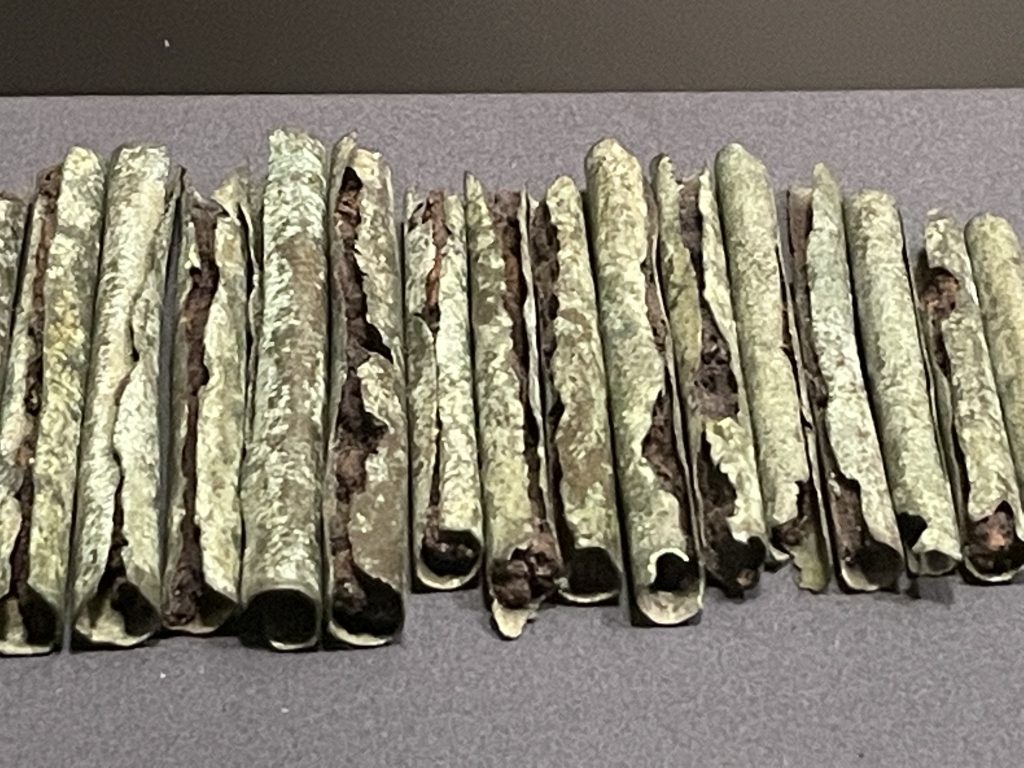
内部残留羊毛绳线的青铜管
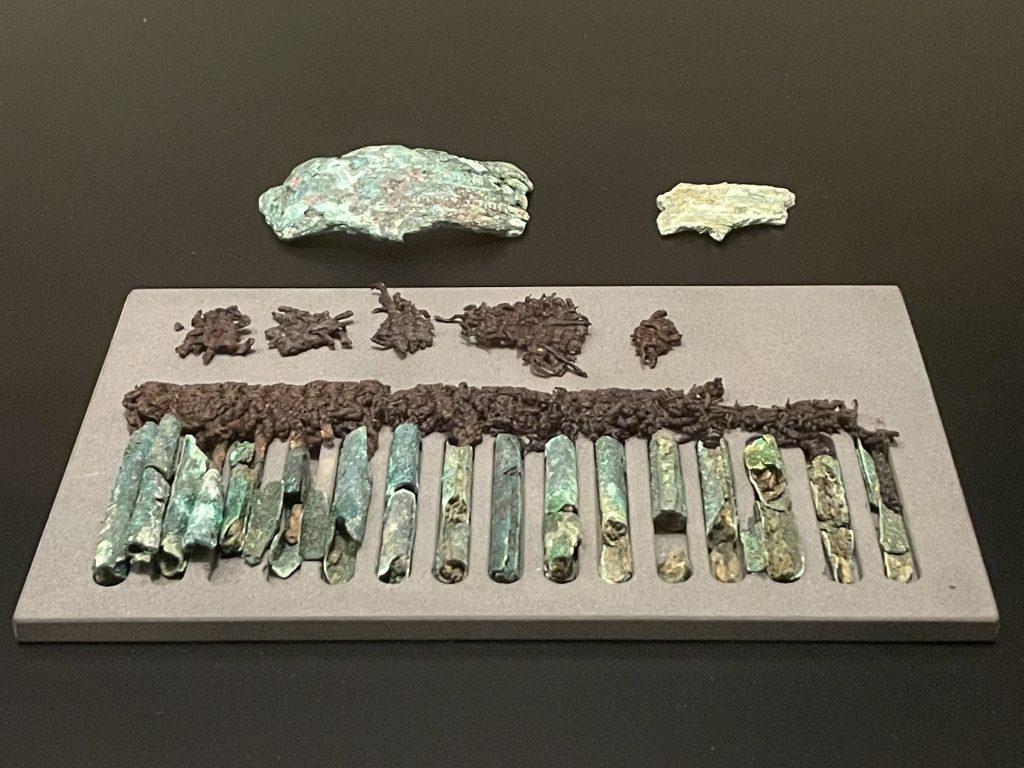
排列有致并附有毛织物残留的青铜管
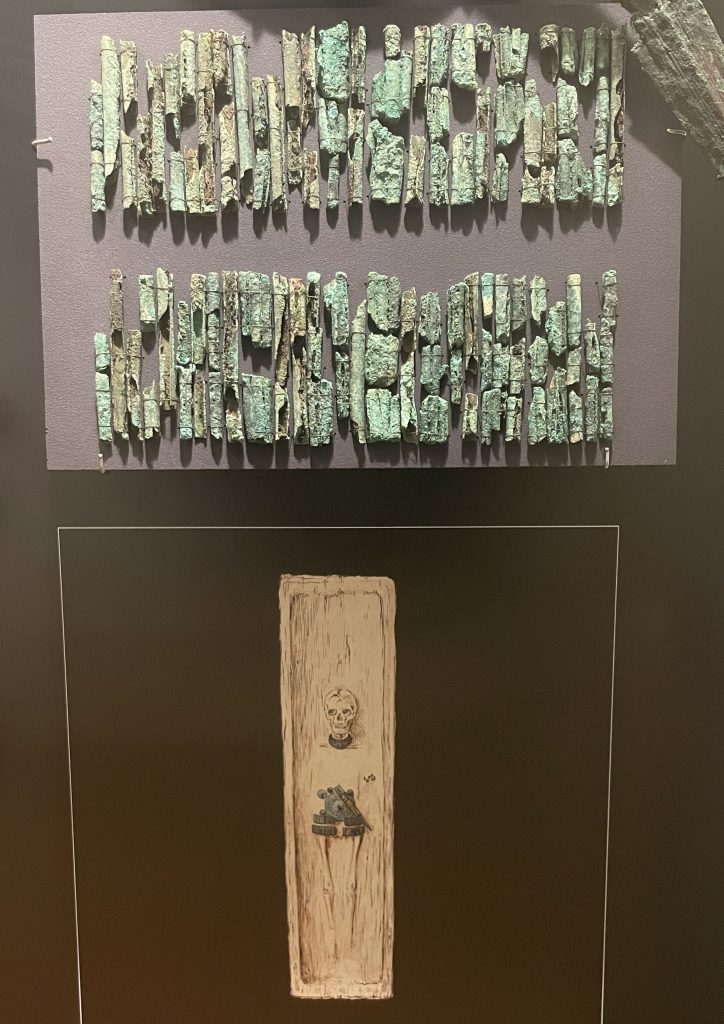
排列有致并附有毛织物残留的青铜管
You helped me a lot with this post. I love the subject and I hope you continue to write excellent articles like this.
Thanks for your support!
As I site possessor I believe the content material here is rattling magnificent , appreciate it for your hard work. You should keep it up forever! Best of luck.
Thanks for sharing your expertise! Every section was helpful, and I appreciate how you kept it concise but comprehensive. Bookmarking this for later!